
6kw Off Grid Inverter: Understanding the 6kW Class and Why It Fits Many Real-World Applications
By hqt
2026.05.20Related Posts
48V 6kW Off Grid Inverter: Why 48V Battery Systems Are Common for Higher-Power Solar Systems
August 31, 2026

Residential Solar System Installation: Technical Sizing, System Matching and Installation Guide
August 31, 2026

48 Volt Inverter for Solar Battery Storage: Key Specifications Buyers Should Compare
August 27, 2026
When selecting a 6kw Off Grid Inverter, the number "6" is not arbitrary. It represents a calculated balance between capacity, cost, and practical usability. For many buyers—whether equipping a remote workshop, a countryside home, or a small business—the 6kW class hits a sweet spot that smaller 3kW or 5kW units cannot reach, while avoiding the excess cost of 10kW or 15kW systems.
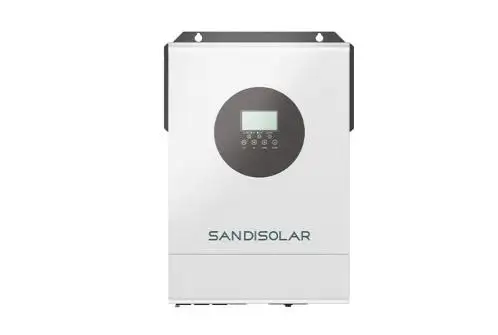
This article informs readers on the actual functionality, strengths, and market position in 2026 of the SANDISOLAR SD 6.2kW 48V, for the SANDISOLAR 6kW Off Grid Inverter.
Understanding "6kW"
A 6kW Off Grid Inverter powers 6,000 watts of continuous AC power. This is the unit's capacity for hour-long powerful performance. This rating is something buyers must be aware of when purchasing a device, to pair it with proper loads.
The maximum load for a typical 6kW Off Grid Inverter is as follows:
• Refridgeration: A refrigerator with power of 150-400W, a freezer of 200-500W, a microwave of 800-1200W, and a washing machine of 500-1000W.
• Workshop Tooling: A table saw of 1500-2500W, a dust collector of 1000-1500W and 200-500W dust collector lights.
A 6kW Off Grid Inverter means not running multiple devices simultaneously is a requirement. There must be a maximum load capacity of 6,000W, and a starting surge necessitates a margin. For householders with 3-5 members, or small remote businesses, 6kW is often adequate.

6kW vs. Smaller Inverters (3kW-5kW): The Difference
Inverters in the lower allocator range often have a lower cost, but come at the trade-off of constant load management. This requires users to choose to run one device in place of another.
A 6kW off-grid inverter has advantages over 3kW or 5kW inverter options, including the following:
• Allows more simultaneous loads: A 3kW inverter allows you one primary appliance at a time, while a 6kW inverter allows a refrigerator, pump, and a power tool to all operate simultaneously.
• Allows better starting surge handling: Surge watt draw on motors for compressor and saws will be 3 to 5 times greater than the running watt draw for 1-2 seconds during startup. The higher inverter capacity of a 6kW inverter allows the inverter to absorb those surges and not shut down.
• Requires less attention: Smaller inverters may require near constant attention to avoid inverter overload. A 6kW inverter sized properly manages the daily flow of activities with less disruption.
This is the case for existing customers that are current owners of 3kW to 5kW systems and regularly trip overloads on their inverters. Upgrading to a 6kW Off-Grid Inverter is the logical 'next-step' before considering trading up to a 10kW system.
6kW vs. Larger Inverters (10kW-15kW) - Why you Should Avoid Excess Cost
While larger inverters may have their place, in general, they all have a cost trade-off that many customers will over-look when considering an inverter rated at a 10kW or 15kW.
Consider a 6kW Off-Grid Inverter to be better value in place of a 10kW or 15kW inverter due to the following:
• Lower idle consumption: In larger inverters, the power draw in idle or not-in-use may range from 50-100W. This is equal to hundreds of wasted kilowatt-hours consumed by the battery over the course of a year. A good design 6kW inverter typically draws 30-50W.
• Smaller battery bank: A 10kW inverter requires an even larger battery bank to deliver a rated output. A 6kW inverter is more than adequate with a standard system.
• Lower overall cost of system: The cost of a 6kW to 10kW increase in price often seen is 40% to 60% and more, but it may not always be justified by an actual system need for additional load.
Only choose a higher capacity inverter if you expect your peak loads to exceed 6,000W for an extended period. Otherwise, a quality 6kw Off Grid Inverter delivers all the necessary power without the hidden costs.
The SANDISOLAR 6.2kW Model: A Practical Implementation
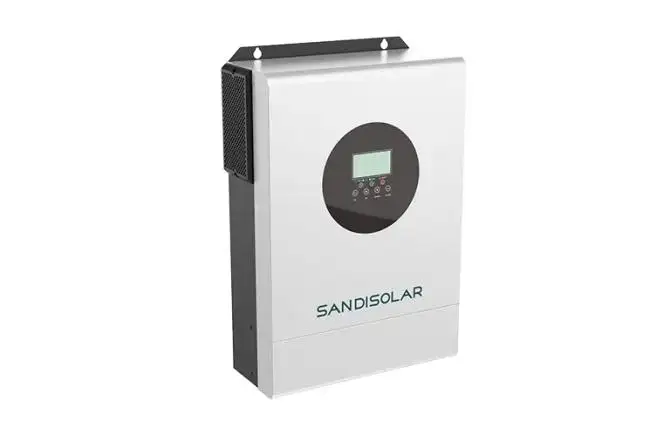
SANDISOLAR offers the SD 6.2kW 48V Pure Sine Wave Off-grid Parallel Support Solar Inverter. At 6.2kW continuous, it sits squarely in the 6kw class while providing a small 200W buffer above the nominal rating.
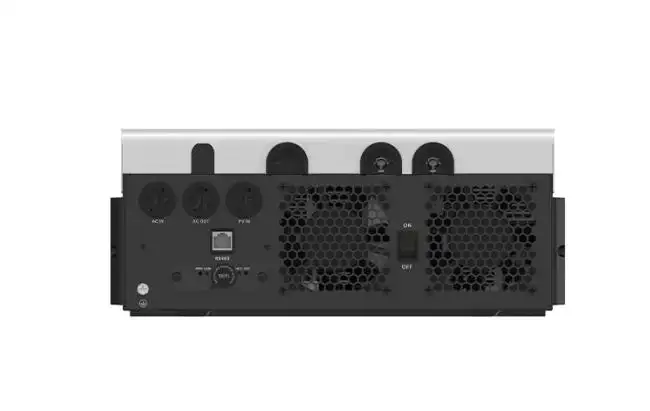
Key specifications of this 6kw Off Grid Inverter:
• Continuous output: 6.2KVA / 6.2KW (true pure sine wave)
• System voltage: 48V (standard for this power class)
• Solar charger: Built-in MPPT, 120A maximum
• PV input limit: 500Vdc maximum
• Parallel capability: Yes, up to 12 units
• Battery-less operation: Yes, runs daytime loads directly from solar
For a buyer comparing 6kw Off Grid Inverter options, the 120A MPPT is a notable advantage. Many competitors in this class offer only 60A-80A charging, which slows battery replenishment.
When 6kw Is the Right Choice (and When It Is Not)
A 6kw Off Grid Inverter fits specific use cases better than others. Being honest about these boundaries helps buyers make correct decisions.
A 6kw Off Grid Inverter is suitable for:
• Remote houses of 3-5 bedrooms with energy-efficient appliances, LED lights, no electric heat
• Small farms with tools and equipment, including water pumps, small coolers, and workshop tools
• Rural clinics for lights and vaccines in refrigerated storage, along with small medical and communication devices
• Grid-tied homes for well pump circuitry during outages, refrigerator, lights, internet, and outlets
A 6kw Off Grid Inverter is typically inadequate for:
• All electric homes with electric hot water heating and ovens
• Commercial kitchens with larger refrigeration units
• Workshops with multiple 3+HP motors that are working together
In these cases, the paralleled capability of SANDISOLAR's unit is of more importance. As an example, two 6kw units can be paralleled to form a 12kw system or three units for 18kw three-phase.
Why 2026 Buyers Stick with the 6kw Class
For the 2025-2026 time period, market research demonstrates the continued presence and demand of the 6kw Off Grid Inverter within the same class. The reasons that effects can be seen are practical, and the touch of technology is elusive.
Here is what we have seen from the buyers of 6kw:
• It works without an oversizing to 80% of the residential off-the-grid
• Affordable simultaneous battery pairing (it works to cycle daily) from 48V 5-10kWh
• Standard breaker sizes, cable sizes, and sizes of disconnects make component availability easy
• It is single-person liftable and fits through doorways, making it easy to install
• They have a fully detachable and customizable dust cover to mitigate damage from exposure, utilize a full communication LiFePO4 through RS485 with supported functionality, and integrated WiFi for remote control.
Here is a sample of the SANDISOLAR features to address these.
Conclusion
A 6kw Off Grid Inverter strikes a reasonable balance. It is capable of providing a full-service remote residence or small business. It does this without the cost and energy losses of larger systems. For loads above 6kw, SANDISOLAR's parallel networking offers a modular path forward without replacing the initial investment.
The SANDISOLAR SD 6.2kW 48V unit delivers genuine 6.2kw output, a 120A MPPT charger, and battery-less operation—features that directly address real user frustrations. For buyers evaluating the 6kw class, this model represents a functional, no-exaggeration choice.
6kw Off Grid Inverter FAQ
Q: Can this 6kw Off Grid Inverter power my whole home?
A: It gets subjective with differing home configurations. This 6kw Off Grid Inverter can provide for lighting, refrigeration, well pumping, washing, drying, heating, water heating, and IT and AV loads. However, this inverter cannot power beyond one such serving at a time. If a home's loads are entirely electric, consider use of parallel configurations using two or more units.
Q: What size battery bank is needed for a 6kw Off Grid Inverter?
A: In this scenario, a 200Ah (9.6kWh) bank is preferred for overnight backup, and a 100Ah (4.8kWh) bank serves as a practical minimum. The SANDISOLAR 6kw Inverter is fully functional with LiFeP04 batteries over RS485.
Q: Can I use this SANDISOLAR 6kw inverter with absolute battery less operation?
A: Yes. The inverter can provide full day working loads, even when there is no battery connected or when the battery is fully drained.
Q: How many solar panels can I link with this 6kw Off Grid Inverter?
A: It has a 500Vdc max PV input and a 120A MPPT and shall allow connection in series for a large number of panels. Thus, a common arrangement shall use 8-12 higher-voltage panels. Further guidance can be acquired from the full specification.
Q: Can I use parallel operation of different inverter brands?
A: No, parallel operation shall be done with units of the same brand and model, to be the case with SANDISOLAR SD-HYM-4862HWP series units.


Contact Us
In This Article
Related Posts
48V 6kW Off Grid Inverter: Why 48V Battery Systems Are Common for Higher-Power Solar Systems
August 31, 2026
Residential Solar System Installation: Technical Sizing, System Matching and Installation Guide
August 31, 2026
48 Volt Inverter for Solar Battery Storage: Key Specifications Buyers Should Compare
August 27, 2026