
2026 Mppt Off Grid Inverter: Solve Battery Strain, Boost Harvest in Heat
By hqt
2026.01.19Related Posts
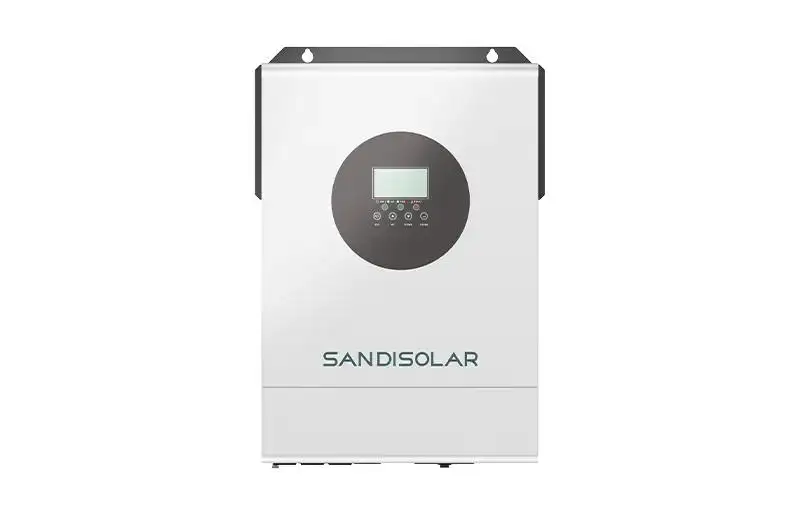
48V 6kW Off Grid Inverter: Why 48V Battery Systems Are Common for Higher-Power Solar Systems
August 31, 2026

Residential Solar System Installation: Technical Sizing, System Matching and Installation Guide
August 31, 2026

48 Volt Inverter for Solar Battery Storage: Key Specifications Buyers Should Compare
August 27, 2026
MPPT Off Grid Inverter systems underpin resilient, independent solar power. This guide will help you master the following: what an MPPT Off Grid Inverter is, what MPPT means, and how the two work together in real conditions, so you can reduce battery strain and increase harvest in heat.

What Is an MPPT Off Grid Inverter
An MPPT Off Grid Inverter converts DC from solar panels and batteries into stable AC, and it controls charging and load supply without relying on the utility grid. It is the central controller in an autonomous system. It manages energy flow between PV, battery, generator, and loads.
MPPT stands for Maximum Power Point Tracking. PV voltage drops as temperature rises, while current shifts with irradiance. The maximum power point moves throughout the day. MPPT is a closed-loop algorithm in the solar charge controller that continuously adjusts the operating voltage to extract the highest possible wattage from the array. In hot weather, when module voltage falls due to a temperature coefficient of roughly −0.35% to −0.45% per °C, a good MPPT will retune and hold the array at the true peak. Compared to simple PWM control, MPPT can increase energy harvest by double digits in variable conditions.
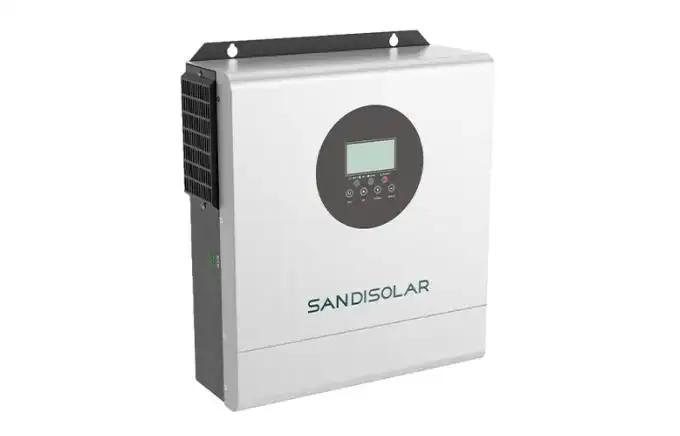
As a manufacturer, SANDISOLAR designs MPPT Off Grid Inverter platforms to align power electronics, firmware, and thermal management. The goal is simple: capture more energy into storage and deliver cleaner AC, while protecting batteries from heat-driven stress.
n Heat, Battery Strain, and Real-World Yield
High ambient temperatures are a leading cause of energy loss and battery aging. Solar modules run 20-30°C above air temperature under full sun. At 45°C cell temperature, a module with a −0.40%/°C voltage coefficient can be down ~8% versus standard test conditions. Without precise tracking, this becomes lost harvest. An MPPT Off Grid Inverter counters this by shifting the operating point as the module warms, and recovering power otherwise stranded by a fixed-voltage approach.
Batteries feel heat more acutely. Lead-acid life typically halves for every 10°C above 25°C due to accelerated corrosion and dry-out. LiFePO4 chemistry is more stable but still has safe charge windows. A common recommended charging range is 0–45°C. Above this, internal resistance and safety thresholds trigger BMS protections. Repeated deep cycling in heat increases stress, particularly when charge rates are not matched to the pack and cables introduce extra voltage drop. A well-integrated MPPT Off Grid Inverter addresses these weak links with correct setpoints, temperature-aware control, and robust communications to the battery management system.
The SANDISOLAR Solution: Capture More and Protect Storage
SANDISOLAR builds systems to boost hot-weather harvest and lower battery strain, using a balanced approach across power stages, firmware, and field usage.
- Smart Harvest With 100A MPPT and 500Vdc PV Input
Our integrated 100A MPPT solar charge controller efficiently captures up to 5000W of PV power. A 500Vdc maximum PV input allows longer strings at higher voltage. This reduces array current, and therefore I²R cable losses, which are more pronounced in heat. Longer strings also keep the inverter operating in a stable window as module voltage sags at high temperatures. For a 24V battery bank, 100A equates to around 2.4 kW of direct charge power into the battery. Surplus PV energy serves AC loads in real time. This architecture improves energy throughput during heatwaves, and protects storage from unnecessary cycling.
- Battery Confidence With RS485 and Activation
Battery communication matters when temperatures push limits. RS485 integration with LiFePO4 packs synchronizes charge voltages, current limits, and cutoff logic with the BMS. This prevents overcharge in heat and avoids charger-to-BMS conflicts. A PV or utility activation function can safely recover a pack that has entered deep protection after full depletion. For lead-acid systems, an equalization function restores cell balance under controlled conditions and reduces sulfation. Dual-input support (utility or generator) sustains continuity during extreme weather and drawn-out low-irradiance phases. Selectable output priorities—Solar Priority to maximize renewable yield, or Utility Priority to safeguard uptime—align power strategy with operational aims.
Design for Heat: Practical Setup and Settings
Attention to setup details delivers measurable gains in the heat. Apply these measures to keep performance stable and minimize battery stress.
• Use higher-voltage string configurations within the 500Vdc PV input limit to reduce cable current and voltage drop, expanding MPPT tracking room as modules heat.
• Size DC and AC cables for low resistance. Target total DC voltage drop under 2-3% from array to controller, and keep battery leads short and thick. Heat amplifies losses.
• Enable battery temperature sensing and set charge limits accordingly. For LiFePO4, reduce charge current near the upper temperature limit to protect the pack and adhere to BMS guidance.
• Configure output priority. Select Solar Priority during peak sun to cut generator run-time and limit battery cycling. Switch to Utility Priority if uptime is critical in a heat event.
• Set charge targets that match chemistry. Avoid holding lead-acid at high absorb voltages for long in hot weather. For LiFePO4, keep within manufacturer charge voltage and current limits; let RS485 coordination enforce safe values.
• Provide ventilation around the inverter and battery. Clear the detachable dust cover regularly to maintain airflow and heat dissipation in dusty sites.
• Schedule non-critical loads away from mid-afternoon heat. Use dual outputs to shed or delay tasks that would push the battery in the hottest hours.
Smarter Load Management and Cost Savings
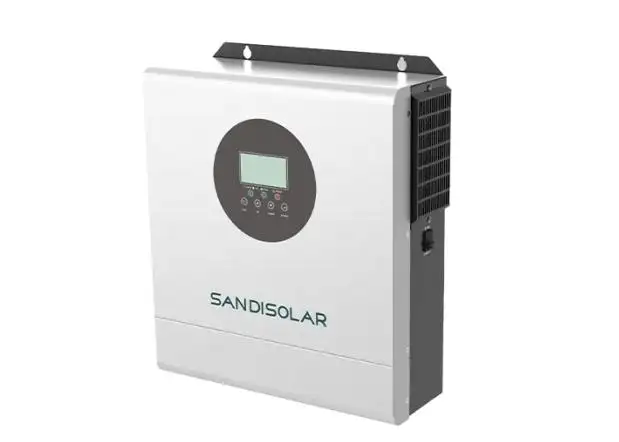
Energy savings come from matching loads to real-time supply. The dual output design separates critical and non-critical loads. Critical loads receive uninterrupted power, supported by solar, battery, and utility/generator inputs. Non-critical loads can be curtailed when the battery state of charge is low or when ambient heat would force aggressive charging.
Configurable output priority modes allow granular strategies. Solar Priority maximizes renewable use and reduces bills where a grid is present or a generator is on standby. Utility Priority protects uptime for sensitive equipment during peak heat. In practice, combining these modes with accurate MPPT tracking cuts generator hours, lowers fuel consumption, and reduces battery wear. With strong PV harvest, loads are supplied first, and batteries are charged at safe currents. When the sun fades, a soft switchover to backup power occurs, protecting battery health. This balance improves total life-cycle cost and stabilizes operations in remote or weak-grid sites.
- Visibility, Reliability, and Deployment
Built-in Wi-Fi extends control beyond the equipment room. Remote monitoring shows PV input, battery metrics, inverter status, and alarms. You can verify that the MPPT Off Grid Inverter is tracking correctly at high temperatures, and confirm that battery charge parameters remain within safe limits. Maintenance alerts let you act early, stopping small issues from snowballing into downtime.
A weather-hardened enclosure with a removable dust cover maintains steady uptime in harsh climates. Dust, saline particles, and rapid temperature swings wear on electronics. Clean filters and open airflow pathways preserve cooling performance at peak load and heat. SANDISOLAR systems are deployed across remote farms, island micro-sites, RVs and boats, and as emergency backup for homes or critical facilities. Utility/generator dual input guarantees continuity. RS485 battery communications and activation features add resilience when the unexpected happens.
Call to Action
If you operate in high-heat regions, or you need dependable independence where the grid is unavailable or unstable, contact SANDISOLAR today. Our engineering team will size your array and battery, configure MPPT and output priorities for your site, and help you cut battery strain while boosting harvest through the hottest months.
By integrating a strong MPPT charge stage, higher-voltage PV input, intelligent battery communications, and flexible load management, a SANDISOLAR MPPT Off Grid Inverter turns heat from a risk into a manageable variable. The result is more energy captured, less stress on storage, and reliable power when you need it most in 2026 and beyond.
Share on Social:


Contact Us
In This Article
Related Posts
48V 6kW Off Grid Inverter: Why 48V Battery Systems Are Common for Higher-Power Solar Systems
August 31, 2026
Residential Solar System Installation: Technical Sizing, System Matching and Installation Guide
August 31, 2026
48 Volt Inverter for Solar Battery Storage: Key Specifications Buyers Should Compare
August 27, 2026