
Fast-Charging Residential Battery Backup System: Solving The Short Solar Window Problem
By hqt
2026.05.18Related Posts
48V 6kW Off Grid Inverter: Why 48V Battery Systems Are Common for Higher-Power Solar Systems
August 31, 2026

Residential Solar System Installation: Technical Sizing, System Matching and Installation Guide
August 31, 2026

48 Volt Inverter for Solar Battery Storage: Key Specifications Buyers Should Compare
August 27, 2026
A Residential Battery Backup System must do more than just store energy—it must capture it quickly before the sun disappears. For homeowners in regions with limited peak sunlight or unpredictable weather, the difference between energy independence and grid reliance often comes down to charge speed.
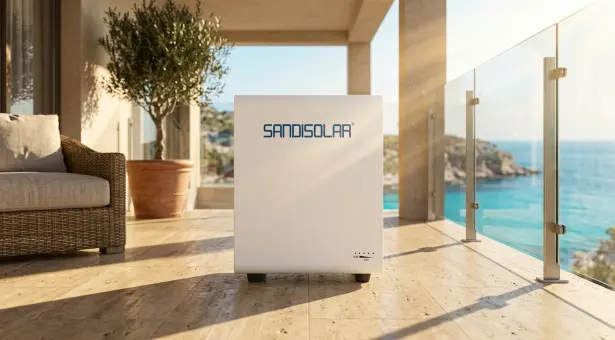
As a manufacturer, SANDISOLAR has observed a growing gap in the market: many batteries cannot fully recharge during the short solar windows of winter months or overcast days. This article explains why fast charging matters for residential backup and how SANDISOLAR’s engineering approach meets this real-world demand without overpromising.
The Short Solar Window: A Real Operational Limit
Solar panels produce peak power for only 4 to 6 hours per day in many climates. During winter or rainy seasons, that window may shrink to 2 or 3 hours. If a Residential Battery Backup System requires 8 hours to recharge, it simply cannot recover fully from the previous night’s discharge before the sun fades.
This results in three consumer issues:
• Rolling blackouts: The battery’s full charge capacity cannot be attained, causing premature drainage and shutdowns.
• Grid fallback: Consumers are then forced to buy costly peak electricity to cover the deficit.
• Generator dependency: The need for generators extends, resulting in increased fuel and emissions costs.
From the perspective of the supplier and installer, these problems create warranty claims, service requests, and a host of other concerns, not to mention unhappy customers.
Charging speed should optimally be a continuous feature, and far from a luxury, fast charging should be a continuous feature.
The Fast Charging of LiFePO4 Batteries: The Real Facts
Fast Charging is, understandably, discussed in an exaggerated manner. The reality is, a battery backup system with the fast Charge mandate can take higher input current without undue cycle degradation and without heat problems.
We design our LiFePO4 products with three measurable fast-charge standards that set us miles ahead of our competition.
• Charge acceptance: We are able to allow our cells to take up to a full charge of up to 1C with sustained current and thus a full charge achieved in 1 hour.
• Thermal stability: LiFePO4 products with Lithium chemistry can take a greater heat charge.
For both the panel-side current and the heat, there are BMS (Battery Management System) uprisings.
The major advantage of all these characteristics is the battery becomes a safer faster, and an even more effective short window of charging solution, hence the BMS uprisings.
Real-World Performance: Matching Solar Production Curves
Most residential solar systems output increase in current for approximately 3-4 hours, peak at an hour past solar noon, then rapidly decline in output by late afternoon. For slow-charging batteries, like most other batteries, they would only accept charge for 1 hour, wasting the input charge from the other 3-4 hours.
SANDISOLAR’s systems allow for greater energy capture by:
• Operating with a wider voltage window: Charging with our 51.2V and 25.6V platforms in the mornings with lower sunlight results in the capture of more energy than competing systems.
• Low internal resistance: Less internal resistance equates to lower energy loss to heat, resulting in the gain of more stored energy.
• Value add with fast changing input: Unlike other batteries, our battery can change the current it accepts in milliseconds as a response to the changing output of solar/direct sunlight in the occurrence of clouds.
Field data from off-grid installations show that a fast-charging Residential Battery Backup System can capture 25–35% more daily solar energy during winter months compared to standard lithium batteries, simply because it uses the entire available production window.
Avoiding the Trade-Off: Cycle Life Vs. Charge Speed
One common concern among procurement managers is that faster charging reduces total cycle life. This is true for poorly designed batteries. However, SANDISOLAR engineers have optimized cell construction and BMS algorithms specifically to balance speed and longevity.
Our standard 51.2V 200AH and 300AH models deliver:
• 6,000 charge cycles at 80% depth of discharge under standard charge/discharge rates
• No measurable degradation increase at 0.5C charge rates (2-hour full recharge)
• BMS temperature management that automatically reduces charge current if the cell pack exceeds safe thermal limits
This means installers can configure faster charging where the solar window demands it, without significantly reducing the battery’s 10-year designed lifespan.
Modular Fast-Charging Configurations
Different installations have different speed requirements. An off-grid cabin may need aggressive charging to survive three days of clouds, while a grid-tied backup system may prioritize slower, gentler charging for maximum longevity.
SANDISOLAR’s modular product line supports both scenarios:
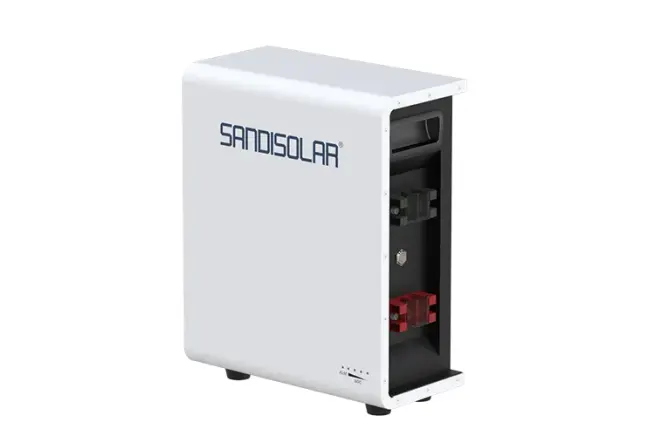
• SD-Rack-Mounted Hvs-R60 (5.12KWh): Scalable from one to eight modules, with distributed charging current across all units for safe high-power input.
• SD High-Voltage ESS (Stackable): Designed for larger homes and light commercial use, supporting higher voltage and faster bulk charging with ≥97% round-trip efficiency.
• SD-51.2V 320AH LiFePO4: Designed for off grid systems with a need of deep reserves with swift daytime charging.
Each configuration shares the same BMS platform and cell chemistry. It makes it easier for distributors to reduce inventory and offers modularity in installation.
What to Look for in a Supplier
When it comes to processing increased charging demand, efforts should be made to substantiate claims.
SANDISOLAR publishes its claims, so interested buyers have some of the following:
• Maximum continuous current expressed in amperes, not vague marketing percentages
• Cycle lives at different charge rates (0.2C, 0.5C, 1C, etc.)
• Preferred temperature for handling BMS protocol.
• Third parties certified our products to be in compliance such as CE standards, the RoHS standards, and UL/IEC/9001.
• Given these insights, engineers can analyze model performance of their systems before an order is placed.
Conclusion: Battery Technology and Solar Charging
Function and price are not the most important variables. For many homeowners, the most valuable system is the one that fully recharges before the afternoon clouds roll in. SANDISOLAR builds batteries that prioritize practical charge speed, stable LiFePO4 safety, and verified cycle life—without overselling extreme specifications.
For bulk pricing, technical datasheets, or certification packages, contact SANDISOLAR directly to discuss your 2026 procurement requirements.
FAQ
Q: Would fast charging shorten the lifespan of the Residential Battery Backup System?
A: Not with correct LiFePO4 system design. SANDISOLAR batteries experience no relevant degradation and achieve 6,000 cycles at standard fast charge rates (0.5C).
Q: What is the minimum solar window for a battery system to achieve a full recharge?
A: Fast charging systems with an input of 0.5C-1C can recharge fully with as little as 2-3 hours of peak sun, but it still depends on array and battery sizes.
Q: Can fast charging batteries be included in an already existing solar system?
A: Sure. SANDISOLAR's 12.8V, 25.6V, and 51.2V platforms are drop-in compatible with the vast majority of existing inverters and charge controllers.
Q: Are SANDISOLAR batteries allowed for international shipping?
A: Absolutely. All units are UN38.3 compliant for transportation and hold CE, RoHS, and ISO 9001 certifications with options of UL and IEC as well.
Q: How can I find out the appropriate charge rate for a given client location?
A: Please get in touch with us, along with your solar array specs and avg. local peak solar hours. We will give you configuration support for all your wholesale purchases.


Contact Us
In This Article
Related Posts
48V 6kW Off Grid Inverter: Why 48V Battery Systems Are Common for Higher-Power Solar Systems
August 31, 2026
Residential Solar System Installation: Technical Sizing, System Matching and Installation Guide
August 31, 2026
48 Volt Inverter for Solar Battery Storage: Key Specifications Buyers Should Compare
August 27, 2026