
Why Deep Cycle Lithium Battery Outlasts Lead-Acid? 2026 Lifecycle Guide
By hqt
2026.01.21Related Posts
48V 6kW Off Grid Inverter: Why 48V Battery Systems Are Common for Higher-Power Solar Systems
August 31, 2026

Residential Solar System Installation: Technical Sizing, System Matching and Installation Guide
August 31, 2026

48 Volt Inverter for Solar Battery Storage: Key Specifications Buyers Should Compare
August 27, 2026
Deep Cycle Lithium Battery technology is reshaping long-duration energy storage in 2026. This guide will help you master the following: what a Deep Cycle Lithium Battery is, the pain points of lead-acid in deep cycling, lifecycle economics, safety and BMS protection, real-world performance with modular expansion, and certifications with solar integration, plus a clear action plan. The aim is practical insight you can act on, with data that reflects field reality.
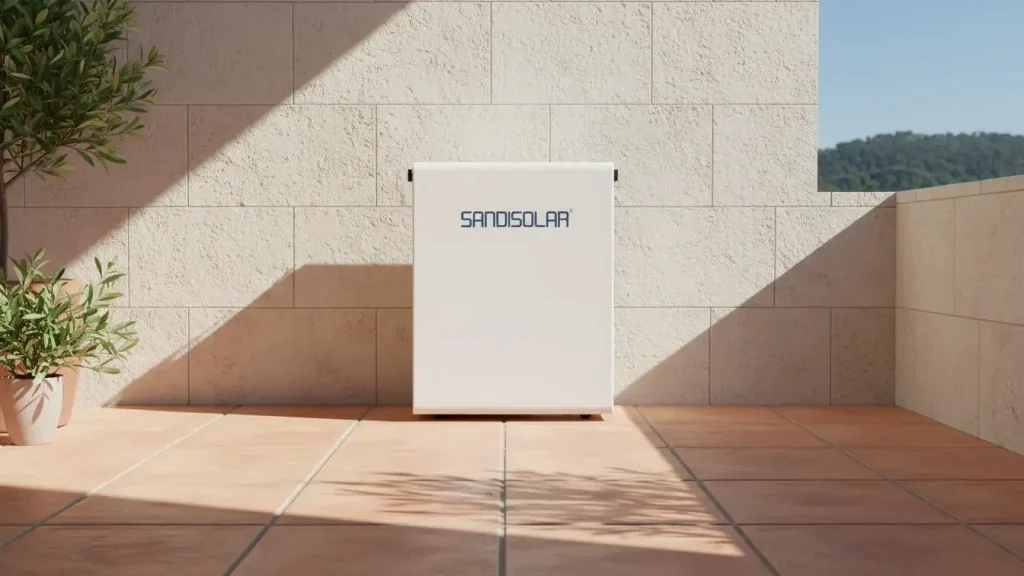
What Is a Deep Cycle Lithium Battery
A Deep Cycle Lithium Battery is built to charge and discharge often while holding a steady voltage and a stable output. It does not behave like a starter battery that pushes a short spike of current. It is designed to deliver energy for many hours, day after day, without rapid degradation. Lithium iron phosphate (LiFePO4) chemistry is the preferred foundation. The chemistry is thermally stable and offers a strong safety profile. It also sustains predictable voltage under varied loads. These traits matter in solar-plus-storage, backup power, telecom, and off-grid systems, where continuity is essential.
• LiFePO4 cycle life typically 3,000 - 6,000 cycles at 80% DoD; ≥80% capacity after ~4,000 cycles.
• Round-trip efficiency 95 - 98%; self-discharge <3%/month; energy density ~90 - 140 Wh/kg.
• Voltage stays within ±2% on 25.6 V modules from ~10 - 90% SOC, reducing inverter nuisance trips.
SANDISOLAR uses LiFePO4 to deliver stable energy storage with minimal maintenance. The design supports frequent cycles and long operational life. It fits sites where uptime and power quality are non-negotiable. For operators, that translates into consistent service, fewer service visits, and lower lifetime intervention. In practical terms, equipment runs without surprises. Systems hold voltage as loads fluctuate. Charge acceptance remains high when solar or a generator is available.
• Supports 1C charge and 0.5 - 1C continuous discharge; 2C peak for ~10 s.
• Typical warranty 10 years or up to ~6,000 cycles; fleet uptime >99.9%.
• Maintenance: no watering; BMS health checks 1 - 2×/year; BMS MTBF >500,000 h.
The Lead-Acid Pain Points You Can Finally Leave Behind
Lead-acid batteries face structural limits in deep cycle duty. They are sensitive to how deep you discharge them and how often you do so. Frequent deep cycling accelerates wear. Capacity drifts downward. Runtime shrinks. Maintenance becomes a recurring task. You must manage water, equalization, and venting. You must also plan downtime for inspections and replacements. Each step adds labor and risk.
Voltage stability is another concern. Lead-acid voltage sags as the battery discharges, which can trigger inverter alarms and nuisance trips. Power electronics and computing loads dislike this variance. Partial state-of-charge operation is also hard on lead-acid. It encourages sulfation and early failure. Temperature swings amplify these effects. Cold reduces output, and heat accelerates degradation. The result is higher replacement frequency and uncertain service life. Budgeting becomes harder. Uptime falls under pressure when weather or demand is not ideal.
• Flooded/AGM deep-cycle life ~300 - 800 cycles at 50% DoD; heavy deep cycling often <500 cycles.
• Round-trip efficiency 70 - 85%; self-discharge 3 - 10%/month; voltage sag >10% near ~50% SOC can trip inverters.
• Partial-SOC sulfation can cut capacity 20 - 40% within months; at ~35°C, service life often halves.
• Typical replacement intervals 2 - 3 years in deep-cycle duty; lifetime $/kWh ≈2 - 3× LiFePO4.
Lifecycle Economics in 2026: Why Lithium Outlasts Lead-Acid
A Deep Cycle Lithium Battery addresses those pain points with a chemistry and control stack engineered for durability. LiFePO4 resists capacity fade when operated within recommended limits. Under standard conditions, SANDISOLAR batteries are rated for over 6,000 charge cycles. This extends replacement intervals and stabilizes lifecycle costs. The usable energy remains consistent across years of operation. You spend less time adjusting schedules for maintenance or swapping units in the field.
The economics improve further with charging behavior. Lithium accepts charge rapidly and efficiently. When solar irradiance spikes for a short window, the battery can take that energy without delay. When a generator runs in a tight maintenance slot, the battery fills quickly and returns to service. Over time, these patterns reduce fuel use, cut runtime overhead, and optimize asset utilization. Predictability is the hidden value. When capacity, voltage, and charge acceptance stay stable, you can size the system accurately and plan around it with confidence. That reduces overruns and avoids overbuilding.
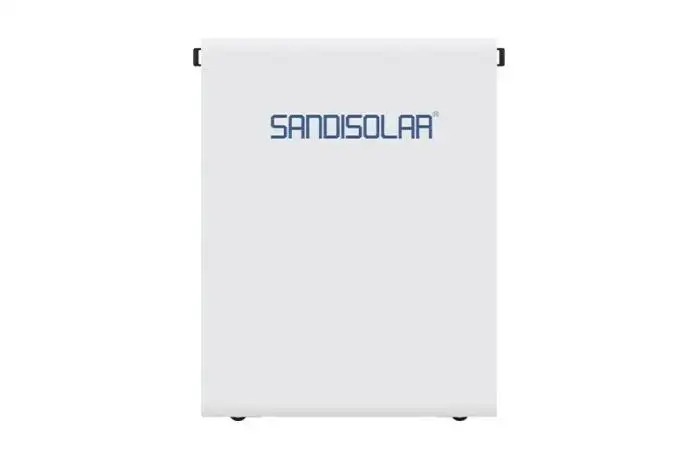
Safety, BMS Protection, and Operational Stability
Safety is not a feature you add later. It begins with chemistry and extends through electronic protection. LiFePO4 lowers fire and thermal risk compared with many other lithium chemistries. This is vital in buildings, vehicles, telecom shelters, and remote sites where thermal events are unacceptable. SANDISOLAR integrates a built-in battery management system (BMS) to turn chemistry advantages into predictable behavior. The BMS supervises cells, equalizes charge, and enforces safe bounds to sustain resilience.
• LiFePO4 reduces fire and thermal risk under repeated cycling
• Built-in BMS prevents overcharge and short-circuit incidents
• Continuous monitoring promotes stability, extends lifespan, and safeguards infrastructure
True resilience includes predictable behavior in the edge cases that arise on real sites. Brownouts, sudden load steps, and intermittent charge input are common. A protected Deep Cycle Lithium Battery handles these events with clear rules and fast correction. That reduces fault cascades. It also simplifies compliance. When safety and lifecycle are integrated from the cell to the system level, bankability improves and insurance requirements are easier to meet.
Real-World Performance and Modular Growth
In daily operation, the timing of charge and discharge matters as much as total capacity. Solar energy arrives in bursts. Loads ramp and fall. Inverters expect a steady input. A Deep Cycle Lithium Battery must respond fast to both charge input and load variation. SANDISOLAR batteries are engineered for quick response. This helps capture short solar windows and supports tight generator schedules. The voltage profile stays flat through most of the discharge curve. Sensitive electronics operate within their design envelope. Downstream protection devices avoid nuisance trips. The outcome is smooth runtime with fewer service calls.
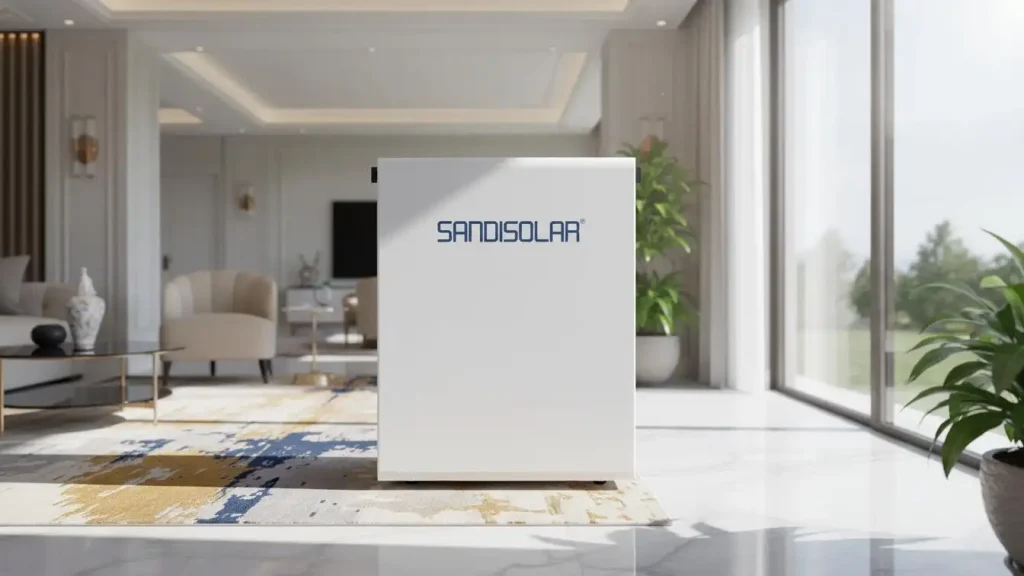
Growth paths matter too. Energy demand evolves with your business or household. A stackable, modular structure lets you start small and expand without a major redesign. SANDISOLAR supports modular capacity expansion. You can add blocks as demand grows or as budgets allow. This reduces upfront cost and limits stranded capacity. It also eases installation in enclosed spaces. The mechanical format and electrical interfaces are designed for repeatable assembly. Expansion is a planned step, not a disruptive project.
Certifications, Solar Integration, and Grid Readiness
Integration is often where projects gain or lose time. Certified components shorten that path. SANDISOLAR batteries carry industry certifications that cover safety and performance. This accelerates permitting and reduces engineering uncertainty. It also aligns the battery with leading inverters and solar controllers. The pairing is clean, and commissioning moves faster. Over the life of the system, this compatibility shows up as stable firmware behavior, fewer edge-case errors, and simpler service routines.
Solar integration is central to long-duration value. A Deep Cycle Lithium Battery that pairs seamlessly with solar and energy storage systems unlocks more use cases. Peak shaving reduces demand charges. Backup continuity protects operations during grid outages. In hybrid systems, the battery supports grid services while keeping internal loads secure. The system becomes a flexible asset, not a static backup. This is how energy independence grows in a practical, staged way.
Deep Cycle Lithium Battery FAQ
• What is it used for?
Great for RVs, boats, off-grid cabins, home backup, and solar energy storage where regular charging and discharging are common.
• Is it safe?
Yes. Modern lithium designs include built-in protections against overcharge, over-discharge, and short circuits, and use chemistries with lower fire risk than older types.
• How long does it last?
Typically many years of regular use, delivering thousands of charge cycles when used and stored correctly.
• Can I replace my old battery with one?
Often yes. Match the system voltage and make sure your charger supports a lithium setting. Check physical size and connections.
• Do I need maintenance?
Very little. No watering or equalization. Keep terminals clean and tight, and avoid deep storage neglect.
• How should I store it?
Store partially charged in a cool, dry place and check it every few months to top up if needed.
• Does it work with solar?
Yes. Most modern charge controllers have a lithium profile and integrate easily.
Call to Action
Set your 2026 plan with SANDISOLAR. Get a quantified assessment, calculate maintenance and replacement savings, and design a modular path to dependable, independent energy. Secure reliable power continuity with LiFePO4-based Deep Cycle Lithium Battery solutions designed for thousands of cycles and minimal intervention.
Share on Social:


Contact Us
In This Article
Related Posts
48V 6kW Off Grid Inverter: Why 48V Battery Systems Are Common for Higher-Power Solar Systems
August 31, 2026
Residential Solar System Installation: Technical Sizing, System Matching and Installation Guide
August 31, 2026
48 Volt Inverter for Solar Battery Storage: Key Specifications Buyers Should Compare
August 27, 2026