
What 6000 Cycles Means for a High Voltage Battery for Commercial Use?
By hqt
2026.01.22Related Posts
48V 6kW Off Grid Inverter: Why 48V Battery Systems Are Common for Higher-Power Solar Systems
August 31, 2026

Residential Solar System Installation: Technical Sizing, System Matching and Installation Guide
August 31, 2026

48 Volt Inverter for Solar Battery Storage: Key Specifications Buyers Should Compare
August 27, 2026
High Voltage Battery for Commercial Use is more than a specification; it is a performance promise that shapes risk, uptime, and return on capital. This guide will help you master the following: how 6000 cycles translate into total cost of ownership, what engineering choices extend service life, how integration and scalability reduce project complexity, how efficiency drives ROI, and what steps to take to deploy with confidence.
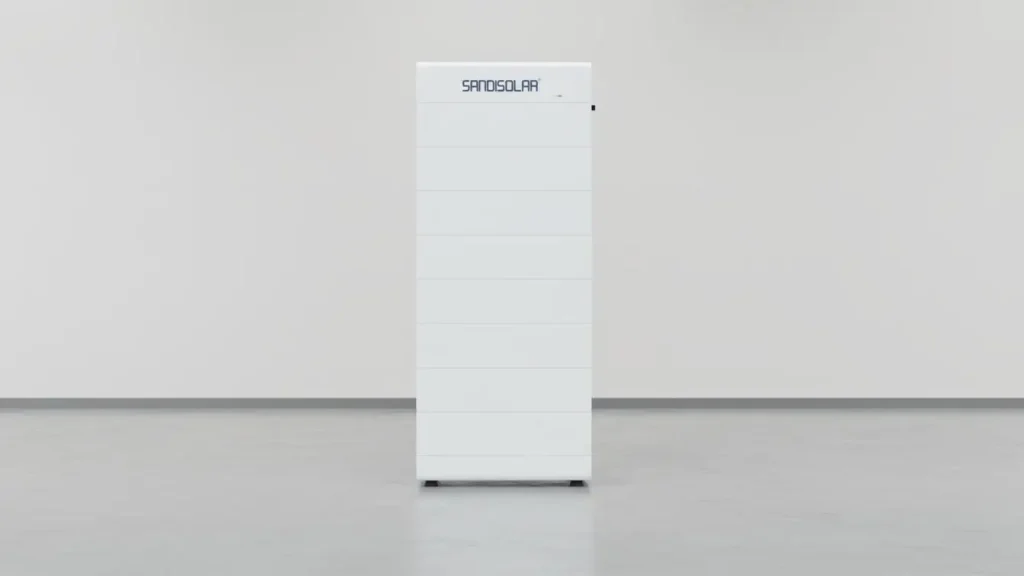
What is Battery Cycle?
A battery cycle is one complete charge-and-discharge event, commonly expressed as an equivalent full cycle (EFC). If a system discharges 40% and later 60%, those partial events sum to one EFC. Cycle life is the number of EFCs a battery can deliver before reaching its end-of-life criterion, typically 80% of initial usable capacity, under defined test conditions (e.g., 25°C, 0.5C rates, and ~80% depth of discharge). Cycle count depends on operating temperature, C-rate, DoD, and rest periods; calendar aging also plays a role. In commercial high-voltage ESS, cycle life translates into lifetime energy throughput and financial planning.
The Market Position of a 6000-Cycle HV Commercial Battery
Cycle life is defined by test conditions (temperature, depth of discharge, charge/discharge rate) and an end-of-life (EoL) criterion, most commonly 80% remaining capacity. Under typical commercial ESS conditions (around 25°C, 0.5C charge/discharge, 80% DoD, EoL at 80% capacity retention), published benchmarks are as follows:
•LFP (Lithium Iron Phosphate) high-voltage ESS: 5000 - 8000 cycles typical; 6000 cycles is above the median and competitive for long-term commercial use.
•NMC (Nickel Manganese Cobalt) high-voltage ESS: 3000 - 5000 cycles typical; higher energy density but shorter cycle life than LFP.
•Lead-acid/VRLA in stationary use: ~1200 - 2000 cycles at 50% DoD; not generally used for modern high-voltage commercial applications due to limited cycle life.
•Vanadium flow batteries: 10,000+ cycles and deep-cycle tolerance; round-trip efficiency often lower (≈70 - 85%) and different cost structure and operating profile.
Industry averages for mainstream commercial LFP high-voltage batteries cluster around 5000 - 7000 cycles at the above test conditions, making a 6000-cycle specification solidly in the "high performance, long-life” bracket for lithium-ion systems deployed in commercial and industrial (C&I) applications.
Comparative Performance: What 6000 Cycles Delivers
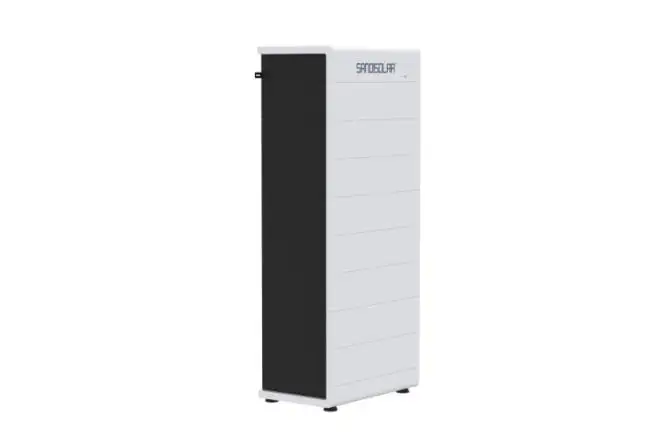
A cycle rating translates directly into lifetime energy throughput and, ultimately, into revenue and savings. Using SANDISOLAR's high-voltage platform and 97% system efficiency as an example, the difference is clear when you compute net delivered energy over life.
- Assumptions:
•Single unit capacity: 40.96 kWh
•Dispatch depth of discharge: 80%
•Round-trip efficiency: 97%
•EoL criterion: 80% capacity retention
- Per-unit Lifetime Energy Throughput:
•6000 cycles: 40.96 kWh × 0.8 × 6000 = 196,608 kWh gross; net delivered ≈ 190,710 kWh (after 97% efficiency)
•5000 cycles: 163,840 kWh gross; net ≈ 158,925 kWh
•4000 cycles: 131,072 kWh gross; net ≈ 127,140 kWh
The incremental value of 6000 cycles versus 5000 cycles is roughly 31,785 kWh net per unit. Versus 4000 cycles, it is about 63,570 kWh net. In High Voltage Battery for Commercial Use scenarios, this extra throughput directly supports more peak shaving hours, deeper time-of-use (TOU) arbitrage, and longer contract horizons before the system reaches EoL.
- Why This Matters for TCO and Reliability
•More cycles extend the period during which the asset can operate at target performance, reducing the risk of early derating and protecting revenue streams.
•Higher net throughput (combined with ≥97% efficiency) improves realized value per kWh moved, strengthening arbitrage margins and demand-charge mitigation outcomes.
•A robust cycle life underpins financial modeling inputs over 10 years or more, aligning with typical commercial asset lifetimes and service contracts.
A Specific Case: Energy and Cost Savings at Site Level
Scenario: A logistics warehouse installs a SANDISOLAR High-voltage ESS sized to 1.024 MWh (25 units × 40.96 kWh) with a 500 kW inverter. The system operates one full cycle per day for TOU arbitrage and caps monthly peak demand. Communication through CAN/RS485/WiFi integrates with the site EMS and with a compatible inverter (e.g., Growatt, Solis, DEYE).
- Assumptions:
•TOU spread (peak minus off-peak): $0.12/kWh
•Demand charge tariff: $10/kW/mo
•Peak reduction realized: 300 kW
•Round-trip efficiency: 97%
•Cycles: ~365 per year (daily), well beneath a 6000-cycle warranted life
- Arbitrage Savings:
•Net daily discharge energy ≈ 1.024 MWh × 0.97 = 0.993 MWh
•Daily arbitrage benefit ≈ 0.993 MWh × $0.12/kWh ≈ $119/day
•Annual arbitrage benefit ≈ $119 × 365 ≈ $43,500
- Demand-Charge Savings:
•Monthly savings ≈ 300 kW × $10/kW = $3,000/month
•Annual demand-charge savings ≈ $36,000
- Total Annual Savings:
•≈ $43,500 (arbitrage) + $36,000 (demand charges) = ≈ $79,500 per year
- Energy Shifted (Measured as Peak-to-off-Peak Transfer):
•≈ 0.993 MWh/day × 365 ≈ 362.6 MWh/year
•Over 10 years ≈ 3,626 MWh shifted, with savings driven by TOU arbitrage and demand-charge relief.
- Why 6000 Cycles Strengthens This Case
•Built for endurance: 6,000 cycles outlast the 10-year daily plan and let you run harder when it counts.
•Confidence in every dispatch: extra cycle headroom smooths out real-world variability - heat, cold, deeper runs - so performance stays consistent.
•Efficient by design: 97%+ round-trip efficiency keeps your gains, cycle after cycle.
- Context and Caveats
•Cycle life is sensitive to operating conditions. Running at higher C-rates, higher temperatures, or deeper-than-80% DoD will reduce cycles. Conversely, operating within nominal conditions can extend practical life.
•Some technologies (e.g., flow batteries) can exceed 10,000 cycles, but their round-trip efficiency and cost structures differ, which can change the value proposition depending on tariff and duty cycle.
•For most commercial LFP high-voltage deployments today, 6000 cycles is a high-level specification, above the industry average of around 5000 - 7000, and well aligned with 10-year project horizons.
From Numbers to Action: Plan Your Project with SANDISOLAR
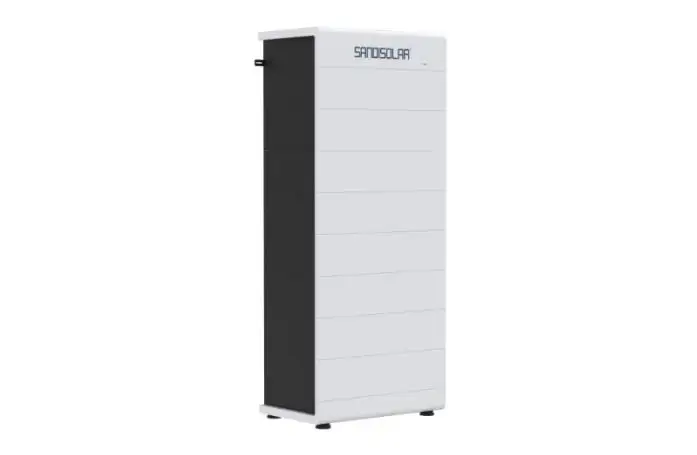
Our role as a manufacturer is to turn specifications into outcomes. A High Voltage Battery for Commercial Use with up to 6000 cycles, a wide 153.6 - 409.6 V platform, modular capacity from 15.36 to 40.96 kWh per unit, and communications via CAN/RS485/Wi-Fi gives you the toolkit to build and scale. Environmental resilience from -20°C to 55°C, supported by optional auxiliary heating and a C3+ anti-corrosion design, protects your asset through its design life. With efficiency at or above 97%, more of each cycle directly supports your business.
Let's execute together:
•Co-develop a bespoke ROI model aligning 6,000 cycles with your tariff, load, and PV profile
•Conduct a joint site assessment to validate room constraints, cable routing, and thermal strategy
•Partner on inverter pairing and data interfaces with our integration team
•Convene a design review to optimize capacity and blueprint a phased expansion
•Collaborate on O&M and performance reporting to protect lifecycle throughput
SANDISOLAR builds systems for real-world commercial duty. If your objectives include demand charge reduction, energy arbitrage, PV self-consumption, or resilient backup, we can align a solution to your operational profile. Contact our team to begin your assessment, secure a performance-based ROI analysis, and plan a smooth integration timeline. With the right architecture and the right cycle life, your storage project will deliver predictable results, year after year.


Contact Us
In This Article
Related Posts
48V 6kW Off Grid Inverter: Why 48V Battery Systems Are Common for Higher-Power Solar Systems
August 31, 2026
Residential Solar System Installation: Technical Sizing, System Matching and Installation Guide
August 31, 2026
48 Volt Inverter for Solar Battery Storage: Key Specifications Buyers Should Compare
August 27, 2026