
Lithium Ion Energy Storage System: Stackable Design From 5kWh To MWh Scales
By hqt
2026.05.14Related Posts
48V 6kW Off Grid Inverter: Why 48V Battery Systems Are Common for Higher-Power Solar Systems
August 31, 2026

Residential Solar System Installation: Technical Sizing, System Matching and Installation Guide
August 31, 2026

48 Volt Inverter for Solar Battery Storage: Key Specifications Buyers Should Compare
August 27, 2026
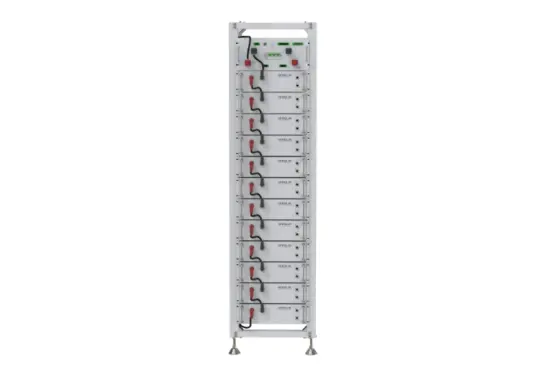
Scaling energy storage presents a challenge for many project managers and procurement specialists. A Lithium Ion Energy Storage System that works for a small off-grid cabin doesn't necessarily work for a commercial microgrid. Front-loaded capacity purchases use too much of managers' or owners' working capital, and investing too little capital risks system gaps. SANDISOLAR resolves this challenge with a stackable and modular architecture that scales, using the same core building block, from 5.12kWh rack units to megawatt-hour power stations.
Reasons to Incorporate Stackable Designs into 2026 Projects
The market for energy storage in 2026 requires adaptable designs. Systems with fixed capacity designs force customers to either over-spec or under perform. The modular Lithium Ion Energy Storage Systems allow customers to begin with small purchases and then expand the systems to meet the increased load demand. Some of the benefits include:
•Lower initial costs of investment: Customers purchase what they only need today and not what they predict they will need in 5 years.
•Reduced stranded capacity: Modular systems eliminate stranded capacity in the systems.
•Cost of logistics and maintenance: Customers only need to purchase only one module to meet the needs of multiple systems.
•Improved maintenance: Customers can perform maintenance and exchange modular systems without removing the entire system.
From 5.12kWh Rack Units to Full Megawatt-Hour Stations
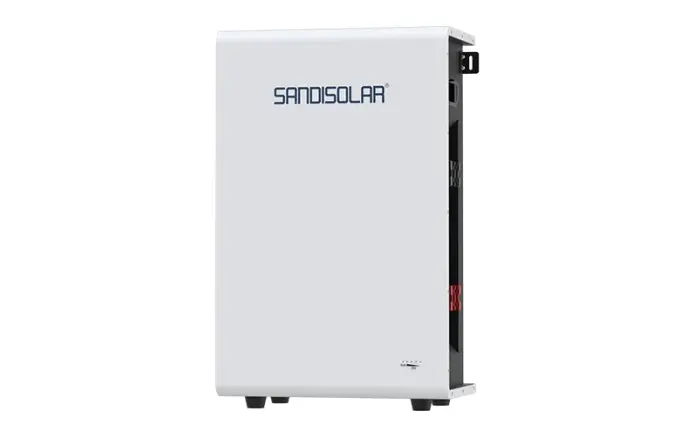
The first of many in the SANDISOLAR product line is the SD-Rack-Mounted Hvs-R60 series. Each of these provides 5.12kWh at a nominal voltage of 51.2 volts and 100 Ah of nominal current. These rack-mounted energy storage system modules fit standard 19-inch server racks, making them suitable for telecom shelters, data centers, and small commercial sites.
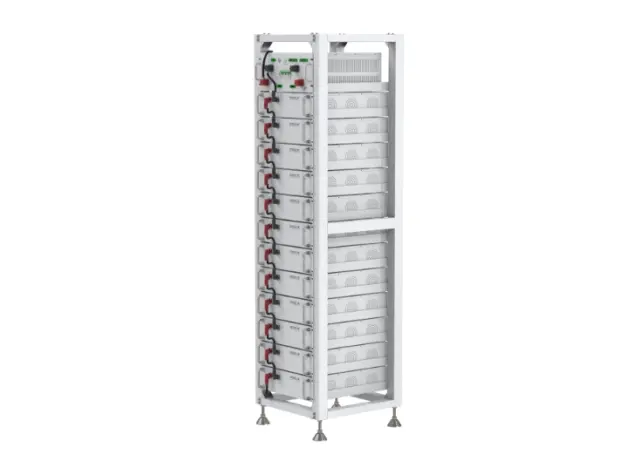
When you need more capacity, the architecture allows parallel connection of multiple racks. For larger installations, the SD High-Voltage ESS stacks battery modules vertically, reaching voltage levels suitable for commercial and industrial applications.
•Low Voltage systems (51.2V): Ideal for off-grid homes, small businesses, and solar self-consumption
•High Voltage systems (up to 800V+): Designed for megawatt-hour power stations and industrial peak shaving
•Mixed deployment: Use low-voltage racks for local storage and high-voltage stacks for grid-tied applications
LiFePO4 Chemistry: The Foundation for Modular Scaling
A modular system is only as reliable as its core cell. SANDISOLAR builds every battery around Lithium Iron Phosphate (LiFePO4) chemistry. This choice supports stackable design for practical reasons.
•Thermal stability: LiFePO4 cells are capable of having dense stacking of battery modules between racks without needing active cooling, since less heat is generated during charge and discharged cycles.
•Long cycle life: Batteries are guaranteed to last more than 6,000 cycles and retain functionality, meaning Module 1 can be installed and Module 10 can be installed and be fully functional.
•Flat discharge curve: The BMS logic is simplified, since the voltage remains fairly consistent. This is throughout most of the discharge cycle, allowing for the use of parallel strings.
•No thermal runaway risk: Other lithium batteries require fire suppression, meaning dense battery room setups require additional safety measures. This is not the case for LiFePO4 cells.
Built-In BMS for Parallel and Series Operation
Managing multiple battery racks in parallel or series requires intelligent monitoring. Because integrators are not so inclined to handle the rest of the complexities, SANDISOLAR's Built-In BMS is more than capable of taking charge.
•Active balancing: As part of the Built-In BMS, the Self-Balancing Batteries distributed across the storage system are guaranteed to remain equalized, and voltage is controlled across cells.
•Overcurrent protection: Like each parallel bank, each parallel bank is guaranteed not to discharge more than its parallel share.
•Temperature monitoring: Individual battery racks send thermal data to the master controller for real-time load adjustments.
Real Applications for Stackable Energy Storage
Thanks to its inherent flexibility, stackable Lithium Ion Energy Storage Systems are capable of fulfilling many use cases.
•Telecommunications: Many remote tower sites start with one battery rack for backup power. When the base stations are upgraded to 5G technology, they typically require a second and sometimes a third battery rack, without the need to replace any existing equipment.
•Small commercial: A shop begins with a 10kWh solar self-consumption installation. After half a year, they scale to 20kWh with a delivery van EV charger installed using the same rack.
•Industrial microgrids: A factory begins with 50kWh for demand charge management. After 2 years, they increase the capacity to 500kWh for islanded operation to support outage conditions, while the same racks are kept in place.
•Off-grid communities: Remote communities can start with a high voltage stack for ten homes. As the population grows, they can connect additional stacks in parallel to the same DC bus.
Installation and Maintenance Considerations
Modular design reduces the skill level required for installation and service.
•Pre-assembled racks: Each 5.12kWh unit arrives fully assembled with BMS and internal wiring
•Daisy-chain connections: Power cables and communication lines use standardized connectors, no custom cabling between racks
•Hot-swappable modules: Failed racks can be replaced while the rest of the system continues operating
•Remote monitoring: The BMS reports individual rack status, so maintenance teams know exactly which module needs attention before arriving on site
Compatibility With Existing Solar Infrastructure
A new storage system should work with what you already have installed. SANDISOLAR designs for compatibility.
•Inverter partners: Compatible with Victron, Growatt, Deye, SMA, and other major brands
•Voltage matching: 51.2V nominal matches standard 48V inverter inputs common in off-grid and hybrid systems
•Charge profiles: Pre-configured LiFePO4 charge parameters match most solar charge controllers and hybrid inverters
Technical Specifications Across The Lineup
SANDISOLAR offers multiple capacities within the same modular ecosystem.
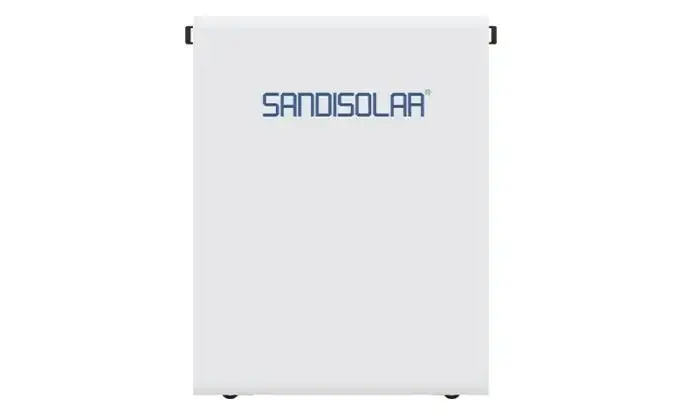
| Model | Nominal Voltage | Capacity | Cycle Life | Typical Application |
| SD-12.8V 100Ah | 12.8V | 1.28kWh | 6,000+ | Small off-grid |
| SD-51.2V 100Ah (Rack) | 51.2V | 5.12kWh | 6,000+ | Telecom, commercial |
| SD-51.2V 300Ah | 51.2V | 15.36kWh | 6,000+ | Residential solar |
| SD High-Voltage ESS | Configurable | Up to MWh | 6,000+ | Industrial, utility |
All models carry CE, RoHS, ISO 9001 certifications, with selected models UL listed and IEC 62109 compliant.
Making the Transition to Scalable Storage
Project demand rarely follows a straight line. A Lithium Ion Energy Storage System that scales with your load profile prevents both upfront over-investment and mid-project capacity shortages. SANDISOLAR's stackable design—starting with a single 5.12kWh rack and growing to megawatt-hour installations—uses the same battery management, same racking hardware, and same installation methods at every stage.
Get the specifications and pricing for your required capacity. Request your tailored solution today—complete product brochure and pricing details in one click.
Frequently Asked Questions
Q: How many rack units can I install in parallel?
A: Each of SANDISOLAR's BMS supports up to 15 rack units in parallel, which allows the customer to expand a low-voltage bank to over 75kWh from 5.12kWh.
Q: Can I mix different capacity racks in a system?
A: Yes, as long as they are of the same nominal voltage 51.2V, the system's BMS will evenly distribute the charge and the discharge across the units of different capacities.
Q: Can I use the stackable design with my inverter?
A: Without a doubt. Our 51.2V rack units fit seamlessly with 48V inverters from major brands like Victron and Growatt as well as from Deye and SMA and can be connected via CAN-Bus or via RS485.
Q: How long does a 50kWh system take to install?
A: If your qualified electrician is fast, they could do it in half a day. When the racks arrive, they will be fully pre-assembled and pre-wired internally, and only the external DC and communication wiring will be required.
Q: What certifications/international standards do SANDISOLAR batteries meet?
A: CE, RoHS, ISO 9001; additionally some models are IEC 62109 and UL listed as well. For specific models, you may reach out to us and ask for cert documents.
Q: Are you able to purchase new racks that are added years later?
A: Yes, the BMS is able to identify racks that are purchased and then added to the system years afterwards.


Contact Us
In This Article
Related Posts
48V 6kW Off Grid Inverter: Why 48V Battery Systems Are Common for Higher-Power Solar Systems
August 31, 2026
Residential Solar System Installation: Technical Sizing, System Matching and Installation Guide
August 31, 2026
48 Volt Inverter for Solar Battery Storage: Key Specifications Buyers Should Compare
August 27, 2026