
High-Voltage Vs. Low-Voltage: Which Energy Storage System for Home Cuts Lifetime Costs?
By hqt
2026.05.13Related Posts
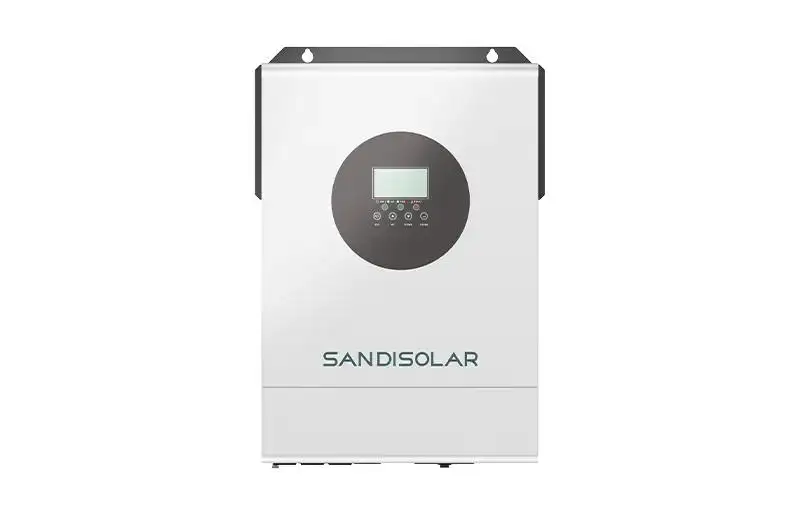
48V 6kW Off Grid Inverter: Why 48V Battery Systems Are Common for Higher-Power Solar Systems
August 31, 2026

Residential Solar System Installation: Technical Sizing, System Matching and Installation Guide
August 31, 2026

48 Volt Inverter for Solar Battery Storage: Key Specifications Buyers Should Compare
August 27, 2026
When sourcing an Energy Storage System for Home, procurement professionals face one recurring technical decision: 48V low-voltage or 400V high-voltage architecture.
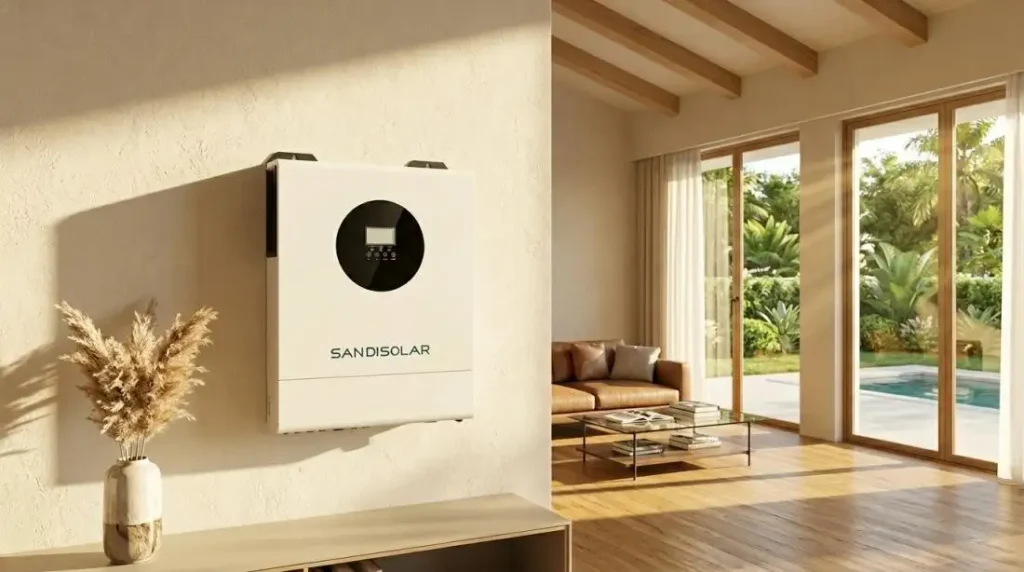
The wrong choice increases copper costs, reduces inverter efficiency, and limits future battery expansion. The right choice—paired with a flexible off-grid inverter like SANDISOLAR's SD-HYM series—lowers both upfront installation expenses and 10-year operating costs.
This comparison is based on real electrical principles, not marketing claims. You can see exactly where each voltage system delivers value, and why SANDISOLAR designs its inverters to work seamlessly with both low- and high-voltage lithium battery systems.
The Core Difference: Current, Heat, and Cable Thickness
Electrical physics is non-negotiable. For the same power output (e.g., 5,000 watts):
• Low-voltage (48V): Higher current (≈104 amps) → thicker copper cables → more heat loss
• High-voltage (400V): Lower current (≈12.5 amps) → thinner cables → less heat loss
What this means for a Energy Storage System for Home:
• 48V systems require 4/0 AWG or 70mm² copper cable for 5kW+. Cost per foot is 3–4x higher than 10 AWG used in 400V systems.
• High-voltage systems suffer almost no voltage drop over 50-foot runs. Low-voltage systems lose 3–5% of energy to heat in long distances.
*Buyer insight: If your client's solar array and battery bank are more than 30 feet from the inverter, high-voltage saves money within 2 years on copper alone.*
Component Cost: Batteries, Inverters, and Breakers
Let's compare line by line.
1.Low-Voltage (48V) Systems:
• Batteries: Cheaper per kilowatt-hour. Mass-produced 48V LiFePO4 racks (e.g., 5kWh server rack batteries) cost $200–300/kWh.
• Inverters: More affordable upfront. Simple boost converter design.
• Breakers & fuses: Expensive. Requires 100A–250A DC breakers (often $50–120 each).
• Cables: Costly. Copper remains pricey in 2026.
2.High Voltage (400V) systems:
• Batteries: More expensive up front. HV battery packs ($350–450/kWh) due to additional BMS safety layers.
• Inverters: More expensive. Requires isolated DC-DC converters and higher-grade IGBTs.
• Breakers & fuses: Cheaper. 20A–40A DC components are standard and affordable.
• Cables: Low cost. Thin 10–12 AWG wire throughout.
3.Verdict for a Energy Storage System for Home:
• Below 7kW system power → 48V often wins on total upfront cost.
• Above 7kW or with long cable runs → 400V wins on 5-year TCO (total cost of ownership).
Why SANDISOLAR Inverters Eliminate the Gamble
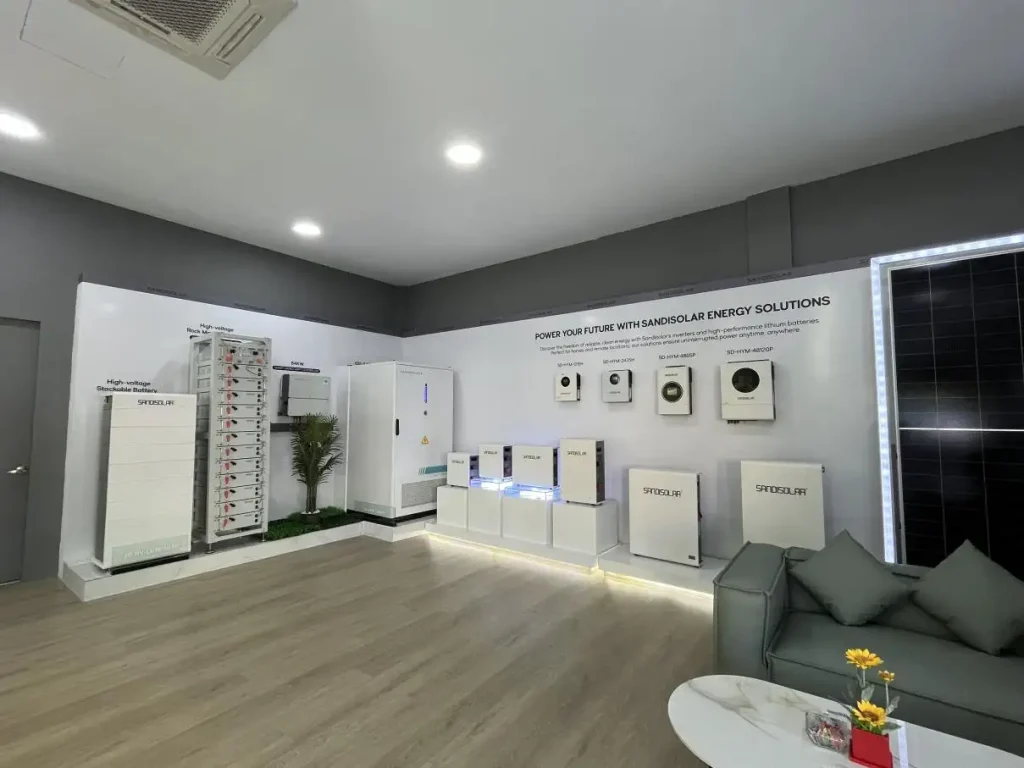
Most manufacturers force you to choose one voltage standard at purchase. SANDISOLAR off-grid inverters (SD 4.2kW to SD 11kW models) accept both low and high voltage lithium battery systems without hardware modifications.
Three specific design choices make this possible:
• Built-in MPPT up to 500Vdc PV input: Handles high-voltage solar strings that pair naturally with 400V batteries, but also steps down cleanly for 48V banks.
• Adjustable charge/discharge parameters: The installer sets voltage limits (40–60V for 48V systems; 300–450V for HV systems) in the LCD menu. No jumper switches or daughterboards.
• Seamless lithium battery activation: The inverter auto-detects battery communication protocol (CAN/RS485) for major HV and LV battery brands—Pylontech, BYD, Huawei, and SANDI's own range.
*Practical result: You can stock one inverter SKU (e.g., SD-HYM-48110HW) for both low and high voltage projects. Inventory complexity drops immediately.*
Efficiency and Safety: What the Spec Sheet Doesn't Say
Round-trip efficiency (battery to load and back):
• 48V systems: 90–93% typical. Higher current means more IGBT switching losses.
• 400V systems: 94–96% typical. Lower current reduces losses significantly.
• Real-world impact: For a home using 15kWh daily from battery, a 400V system wastes 0.6–0.9kWh less per day than a 48V system. Over one year: 220–330kWh saved. At 0.15/kWh:33–50 annual savings. Small per home, significant across 1,000 units.
2026 Best Practices Safety Considerations:
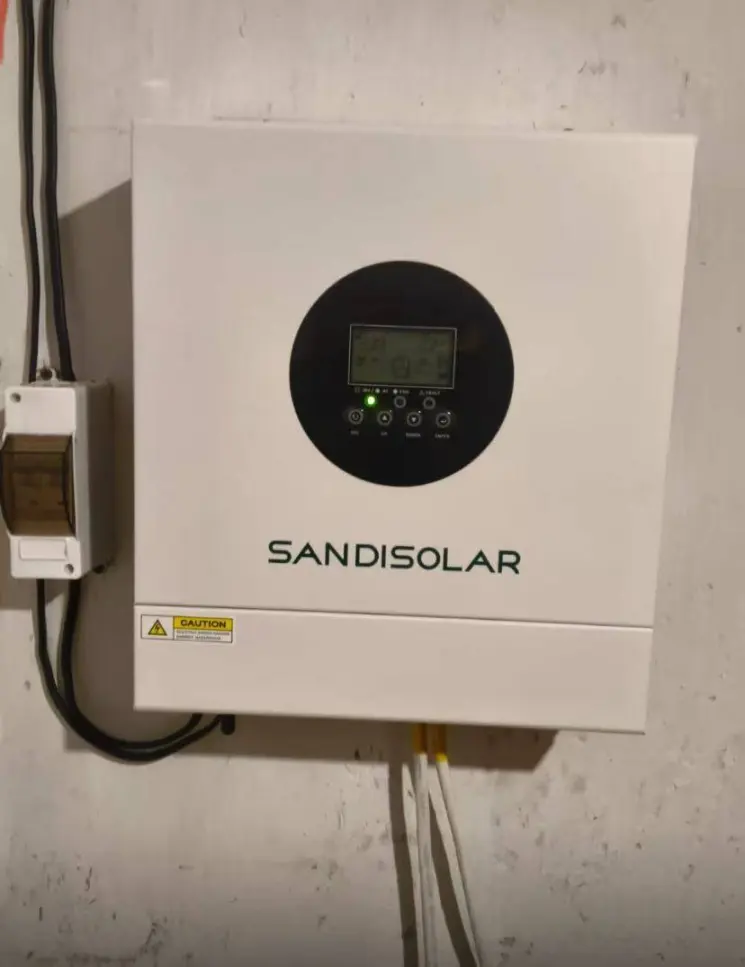
• 48V systems: are touch-safe and free of arc flash risks. These systems are great for DIY and remote installations where electricians are less experienced.
• 400V systems: require a certified HV electrician to install. Arc flash protection must be implemented when commissioning.
• Procurement suggestion: For safety and ease of service for residential rentals or developing markets, 48V systems are preferable. For large homes or commercial villas → 400V delivers better efficiency.
The 2026 Trend: Gradual Migration to High-Voltage
Two market forces are pushing new Energy Storage System for Home designs toward high-voltage:
• EV battery second life: Used EV packs (200V–400V nominal) are becoming affordable. These cannot be used in 48V systems without expensive DC converters.
• Higher home consumption: Heat pumps and EV chargers push average home peak power from 5kW to 12kW. 48V systems need 250A+ of battery current at 12kW—impractical and dangerous.
SANDISOLAR's parallel-ready inverters (SD-HYM-4862HWP and 48110HWP) support up to 66kW total output. At that scale, high-voltage is not optional—it is mandatory.
Final Recommendation for Buyers
- Choose 48V low-voltage when:
• System power ≤ 7kW continuous
• Cable run from battery to inverter ≤ 20 feet
• Local electricians lack HV certification
• Budget is the #1 constraint today
- Choose 400V high-voltage when:
• System power ≥ 8kW continuous
• Solar array or battery bank is remote (over 40 feet)
• You plan to add second-life EV batteries
• Efficiency and 5-year operating cost matter more than day-one price
Choose SANDISOLAR when you want one inverter that does both. Our SD-HYM series works with low or high voltage lithium battery systems, includes built-in MPPT up to 500Vdc, and maintains pure sine wave output for sensitive electronics regardless of battery voltage.
Frequently Asked Questions (FAQ)
Q: Are SANDISOLAR inverters adjustable to alternate between low-voltage and high-voltage batteries post installation?
A: Certainly. The inverter is not capable of running two types concurrently, but we provide adjustable charge/discharge parameters to allow reconfiguring in the field.
Q: Which voltage system offers better backup time during power outages?
A: There is no relation between backup time and voltage. An example of a 10 kWh 48V battery will backup a power outage for the exact same time as a 10 kWh 400V battery (both have the same size and storage capacity). The only difference between these two systems will be the cost of the conductor and loss of efficiency in the system.
Q: Are specific solar panels required for high-voltage solar systems?
A: Our SANDISOLAR inverters will accept solar panels with built-in MPPT up to 500Vdc. High-voltage battery systems will allow longer solar panel strings.
Q: Is high-voltage solar safe to install for a residential installation?
A: 400V of DC is definitely not touch-safe. It is highly recommended to only use certified electricians for such work. Once the battery cabinets and inverters are installed in their certified isolation, the risk to the residential environment is low. In fact, many countries are stating that high-voltage installations must be in a locked utility room.
Q: Can I install a 48V battery and upgrade to 400V later?
A: Not with the same inverter unless it is designed for both. SANDISOLAR's SD-HYM series supports both, but you need to change settings and the battery bank. Save yourself the repurchase of components by selecting your final voltage initially.


Contact Us
In This Article
Related Posts
48V 6kW Off Grid Inverter: Why 48V Battery Systems Are Common for Higher-Power Solar Systems
August 31, 2026
Residential Solar System Installation: Technical Sizing, System Matching and Installation Guide
August 31, 2026
48 Volt Inverter for Solar Battery Storage: Key Specifications Buyers Should Compare
August 27, 2026