
12V-48V LiFePO4 Batteries: How to Choose the Right Voltage for Your Solar System
By hqt
2026.06.19Related Posts

SANDISOLAR Partners with Jinko Solar to Deliver a 10.7MW Off-Grid Solar & Storage Project
September 23, 2026
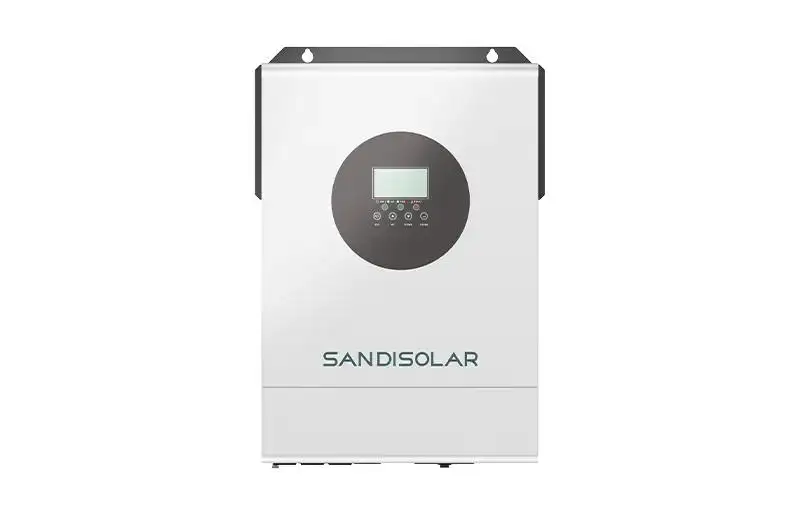
48V 6kW Off Grid Inverter: Why 48V Battery Systems Are Common for Higher-Power Solar Systems
August 31, 2026

Residential Solar System Installation: Technical Sizing, System Matching and Installation Guide
August 31, 2026
When building a backup or off-grid system, one of the most important decisions to make is selecting the voltage level for a solar battery bank. For small scale commercial and residential uses, upgraded safety, cycle longevity, and energy density improvements for 12V-48V LiFePO4 batteries, have made them very popular. However, many options are available to you. Which is the best for your system? Considering the system's power requirements and flexibility, this guide will help suggest the most appropriate voltage level for the system.
LiFePO4 Chemistry and Voltage
Lithium Iron Phosphate (LiFePO4) batteries are very safe, stable, and long lived in comparison to other battery chemistries. Even when subjected to high temperatures or high charge conditions, they do not pose a risk to safety. Additionally, at a good depth of discharge, they can last over 6,000 charge cycles.
A quality Lithium Iron Phosphate battery will have a good battery management system (BMS) built to prevent overcharge, short circuits, and extremes of temperature. For example, SANDISOLAR offers a complete line of 12.8V and 51.2V lithium battery modules. With the same safety and design built into every module, users can select the voltage they wish without worrying about safety design gaps.
12V vs 24V vs 48V: Important Distinctions
A LiFePO4 battery's nominal voltage of 12.8V, 25.6V, or 51.2V alters the current draw, wire sizing, inverter interoperability, and the overall efficiency of the system. The effects of varying nominal voltages can be compared quickly as follows:
| Voltage | Typical Capacity Range | Best For | Current at 1000W Load |
| 12.8V | 50–300Ah | Small cabins, RVs, portable setups | ~83A |
| 25.6V | 100–300Ah | Medium homes, workshops, telecom | ~42A |
| 51.2V | 100–320Ah | Whole-house backup, large off-grid | ~21A |
As voltages increase, the current draw is lower for the same power. This also lessens the impact of resistive losses (I²R heating) or the effects of heating in the wire and allows for the use of thinner and less expensive copper wiring. The benefits of using high voltage vs low voltage wiring becomes more pronounced as the distance between the solar panels, battery system, and inverter exceeds 10 meters.
Best Voltage for Your Solar System
Matching a 12V-48V LiFePO4 battery to your application does not have one best answer. The following guide does help narrow the best choice based on your 12V-48V battery needs:
1. Total power demand (what is your continuous load?)
• 12V: For systems up to 1500W covering lighting, small fridges, phone charging, and water pumps.
• 24V: Up to 3000W usage systems. More than one appliance, with periodic use of a microwave/power tool.
• 48V: Systems with continuous loads over 3000W. Central AC, well pumps, EV charging and whole-home backup systems.
2. Evaluate the one-way distance from battery to inverter
• Less than 5 meters (16 ft): Cost is about the same for 12V, 24V, and 48V, so any can be used.
• 5-15 meters (16-50 ft): to reduce voltage drop, use 24V, and for even better drop, 48V may be used.
• More than 15 meters (50 ft): for the drop, coupled with cable size and loss in power, use 48V.
3. Select certain inverter input voltage
Most inverters handle input of 12V, 24V, or 48V. However, larger inverters (3000W+) usually handle 48V. A 12V battery used on a 4000W inverter pulls more than 330A and would require a 4/0 AWG cable and connectors.

4. Incorporate expanding (modularity) designs
SANDISOLAR provides 12V and 48V stackable modules. Adding more modules in parallel increases the overall capacity without changing the stack voltage. For example, two 12.8V 200 Ah batteries in parallel still have 12.8V but now have 400 Ah.
Series vs. parallel:
Changing voltage requires a series connection (12.8V with 200Ah and 2 sets = 25.6V). Series will require balanced BMS. To eliminate user error, SANDISOLAR provides 25.6V and 51.2V BMS units that are user-configured.
5. Examine your charging and discharging frequency
Heavy, frequent deep cycles: equalization of voltage is better for less stress on individual cells.
Fast recharge: 48V systems better handle the same charging watts as lower amps, because the total charging amp is divided across the strings. SANDISOLAR batteries respond quickly to the charging input and better handle the variable weather.
SANDISOLAR 12V-48V LiFePO4 Batteries
SANDISOLAR offers a wide range of sizes with the core advantages of LiFePO4:
• Safety: SANDISOLAR batteries are UL, CE, RoHS, and ISO 9001 certified and are reliable for use in residential applications.
• BMS protection: each battery contains a management system to stop overcharge, short circuit, and thermal runaway.
• 6,000 cycles: Service life designed for ≥10 years with standard usage, lowering the total cost of ownership.
• Capacity can be expanded modularly: 5 kWh to 100 kWh+ with SD-Rack-Mounted series (51.2V 100Ah) and SD High-voltage ESS.
• Capture more solar energy: Weather permitting, solar charging can occur rapidly.
A single 12.8V 300Ah SANDISOLAR battery with a 1500W inverter powers a small off-grid cabin. A grid-tied house with backup autonomy requires three (3) 51.2V 320Ah modules, paralleled (48V, 960Ah total) to power the average house for 12-24 hours.
Basic Guidelines for Sizing and Configuring Battery Storage
You must first determine the usable capacity: this is the daily watt-hour consumption multiplied by desired backup days of autonomy. Divide this value by 0.8 to accommodate a depth of discharge of 80%. For example, a daily load of 5,000 Wh requires a 12,500 Wh battery bank for 2 days of autonomy.
Charts are useful for converting watt-hours into amp-hours. Select your charging battery bank voltage. For example: at 48V, divide total watt-hours by 51.2. For 12V, divide by 12.8. SANDISOLAR's 51.2V 200Ah battery provides 10,240 Wh—almost perfect for the above example.
Always use identical batteries in parallel: Mixing old with new or different capacities leads to imbalance and reduces total lifespan. SANDISOLAR's modular stackable design makes it easy to add identical units later.
Conclusion: Let Your System's Needs Decide the Voltage
There is no universal "best" among 12V-48V LiFePO4 batteries—only the best fit for your power demand, cable distance, budget, and expansion plans. Start by calculating your peak and continuous loads, then work backward to the lowest voltage that keeps amperage under 100A (for practical wiring). For the majority of whole-home solar setups, 48V technology strikes the ideal balance of efficient design and future offsetting. For mobile setups like small cabins or other weekend retreats, 12V technology is simple and affordable.
SANDISOLAR makes sure to cover the entire range with UL-certified safety and 6,000 cycle durability. Request their product brochure to fit the model (12.8V, 25.6V, or 51.2V) to your solar project. Having the correct voltage will save you from having to rewire in the future.
FAQs
Q1: How many cycles do SANDISOLAR 48V LiFePO4 batteries last?
Over 6,000 cycles at standard discharge. More than 10 years of daily usage.
Q2: What size wire do I need for a 48V LiFePO4 battery bank?
A lot smaller than 12V. 48V with a 3000W battery bank (about ~62.5A) will need about 8 AWG copper for a short run. Always check local codes.
Q3: Can a 12V LiFePO4 battery run a refrigerator overnight?
Absolutely. A 12.8V 200Ah battery is about 2.5kWh and the most energy efficient fridges run normally in the range of about 0.8–1.5kWh of daily consumption.
Q4: Does a 48V LiFePO4 battery require a special solar charge controller?
Yes. A 48V battery would require a solar charge controller using MPPT or PWM with a 48V battery input. Most newer controllers are capable of 12V/24V/48V auto sensing.
Q5: Are 48V LiFePO4 batteries safe for indoor home use?
Yes. SANDISOLAR batteries use LiFePO4 chemistry and reduce the fire and thermal runaway concerns. SANDISOLAR batteries are certified UL and CE for indoor home use.


Contact Us
In This Article
Related Posts
SANDISOLAR Partners with Jinko Solar to Deliver a 10.7MW Off-Grid Solar & Storage Project
September 23, 2026
48V 6kW Off Grid Inverter: Why 48V Battery Systems Are Common for Higher-Power Solar Systems
August 31, 2026
Residential Solar System Installation: Technical Sizing, System Matching and Installation Guide
August 31, 2026