What Can a 1kWh Portable Power Station Actually Run?
By hqt
2026.09.30


A portable power station is small, lightweight, and powerful enough to power your equipment, but not as big as a home battery system. It can power the communication equipment, lighting, electronics and certain household appliances without the need of fixed storage.
This feature can be particularly handy during brief power failures, when you're camping or working on the go on the weekend. However, “1kWh” refers to the energy stored and not the maximum capacity of the appliances that can be powered.
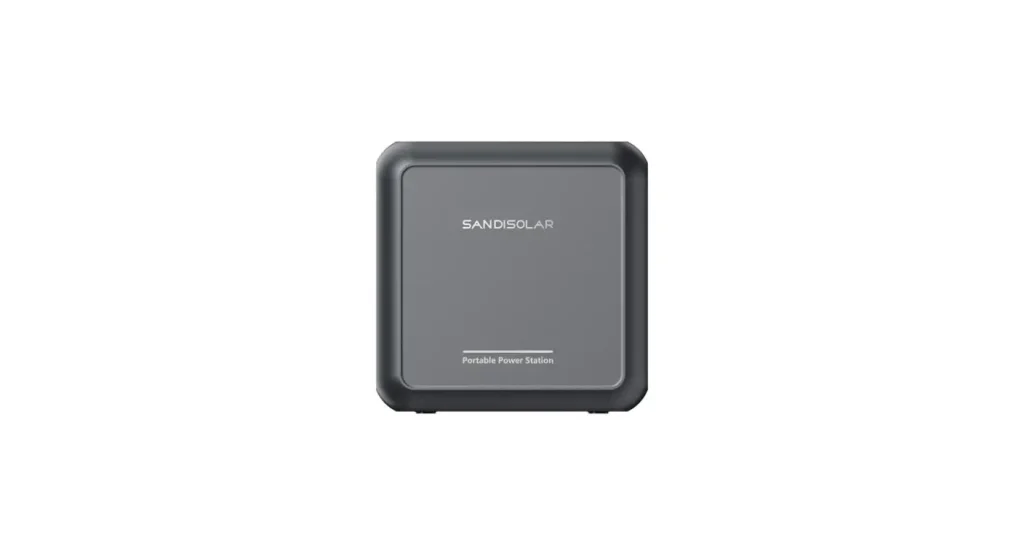
Knowing kWh and kW is fundamental in comparing products.
A 1kWh power station will store around 1000Wh of normal energy. How many appliances can be used at the same time depends on its inverter output in watts or kilowatts.
While it may not need to have a 1.2kWh battery to power a 1200W appliance, the power station must be capable of delivering a minimum 1200W continuous output. Some appliances with a motor or compressor might need extra surge protection when first starting up.
Compute RUE (Real Usable Energy)
The user should not expect to receive 1,000Wh to their connected appliances. A fraction of the stored energy is lost due to the use of the inverter, internal electronics, temperature and battery protection limits.
An estimate of an 80-90% usable energy by the AC can be used for many products for planning purposes, but actual results need to be verified based on manufacturer's test data. Estimates for runtime can be made using:
The formula for calculating Runtime is: Usable Battery Energy/Appliance Power
A device that consumes 100W can therefore run for about 8 - 9 hours with stable conditions.
| Device | Typical Power | Estimated Runtime with 850Wh Usable Energy* |
| Wi-Fi router | 12W | 70 hours |
| LED light | 20W | 42 hours |
| Laptop | 60W | 14 hours |
| Television | 100W | 8.5 hours |
| Portable refrigerator | 150W average | 5.7 hours |
| Electric cooker | 800W | 1 hour |
Please use Essential Devices first in an Outage.
When energy is consciously assigned, a 1kWh unit is the best. Typically Internet equipment, illumination, phones, medical communication devices and refrigeration are prioritized.
Energy is quickly used up by high-heat appliances, like kettles, electric cookers, hair dryers and space heaters. Although they may start them if the inverter has the ability to do so, they may be decreasing the total runtime to less than one hour.
If larger time for household backup is desired, users should compare portable equipment to larger SANDISOLAR energy storage systems.
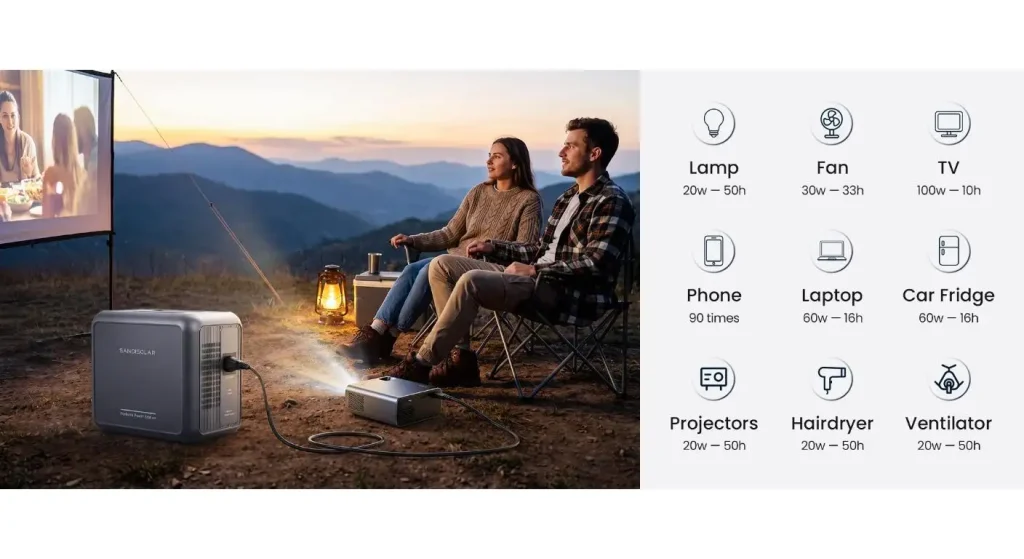
Select Continuous and Surge Output
Continuous output is the power output while operating under normal conditions. Surge Output is for short periods of start-up loads for refrigerators, pumps and power tools.
Compute the sum of the watts of devices that will be used at the same time. Next, see the start-up amperage of the largest appliance that is powered by a motor. A good power station must take both into account without relying on overprominent power peaks.
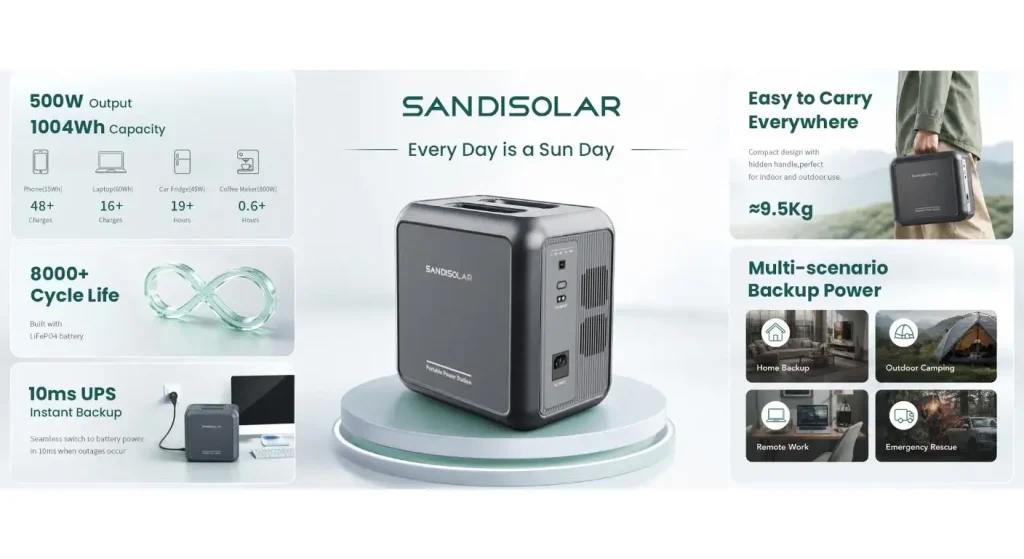
Use LiFePO4 for Frequent Use
With their excellent thermal stability and long cycle life, LiFePO4 batteries are ideal for portable storage solutions. They are a viable alternative to the standard user who would like to use them for normal charging, and not just for emergencies.
Performance is not a given with the battery chemistry. Safety and service life is also dependent upon the quality of the BMS, cells, cooling system and enclosure. You can compare the sizes of storage at SANDISOLAR LiFePO4 battery range.
Gather information about various charging methods.
A good portable power station should be capable of both charging by AC power and solar panel. Other products can also be charged in a vehicle, but this can be slower.
Solar charging will be dependent on the output of the solar panel, amount of available sunlight, orientation of the solar panel and the maximum input of the power station. However, a 400W panel is not capable of producing 400W all day long; there are weather losses and conversion losses which need to be accounted for in charging plans.
| Charging Method | Main Advantage | Key Limitation |
| AC wall outlet | Fast and predictable | Requires grid access |
| Solar panels | Useful for off-grid operation | Weather-dependent |
| Vehicle outlet | Available while travelling | Usually slower |
| AC plus solar | Shorter charging time | Product must support dual input |
Review Ports & Output Quality
Determine the number of AC outlets, USB-A ports, USB-C ports and regulated DC outputs that are needed for the intended application. For new laptops, USB-C Power Delivery can be beneficial and eliminate the need for a conversion from AC power.
Pure sine wave AC output is good for sensitive electronics. The battery level, input power, output power and estimated remaining time should be clearly displayed.
Unit Match to Intended Location:
There's more to portability than just adding a handle. Consider total weight, enclosure size, carrying balance and storage needs prior to buying.
If used for camping or field work, check dust/moisture resistance. Indoor rated equipment should not be exposed to rain and condensation. SANDISOLAR's nearest integrated system is indoor type, which shows that different type of products (fixed and portable ESS) cannot be considered interchangeable.
To consider the location of solar panels within the system.
The more the solar input is similar to practical panel arrangements, the more useful is the portable power station. Look for maximum PV voltage, current, connector type & input power prior to connecting a PV module.
Do not use a voltage greater than the specified open circuit voltage. Those who want to expand their solar system can view the interdependencies of panels, storage and loads in a PV household.
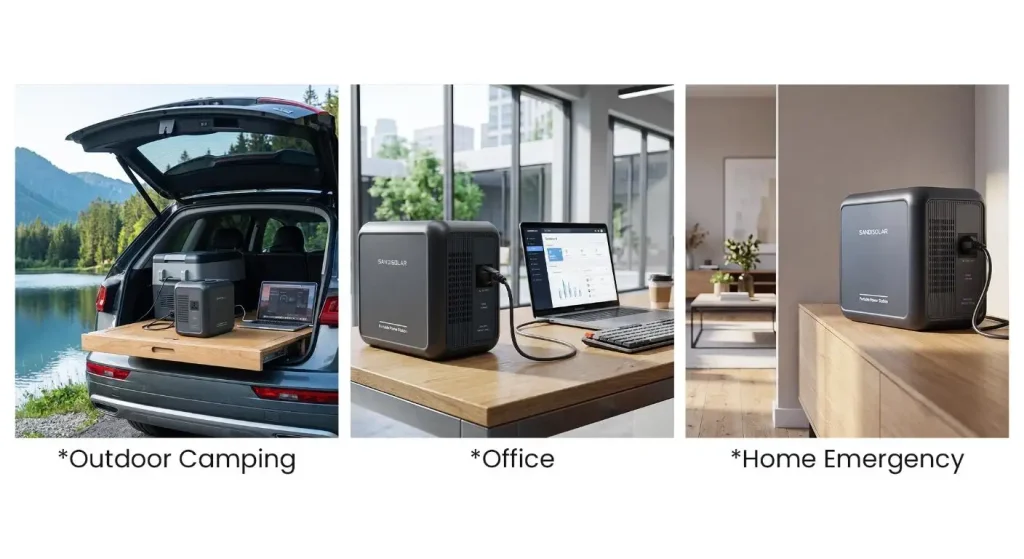
Don't take the Capacity Label for granted.
Look for warranty coverage, cycle-life conditions, replacement options, operating-temperature limits and service/technical support. Limits and conditions for charging and storage, fault codes, etc. should be clearly described in the product documentation.
Always check the manual and safety guidelines of energy-storage products before buying one. Technical documents are available in the download center of SANDISOLAR.
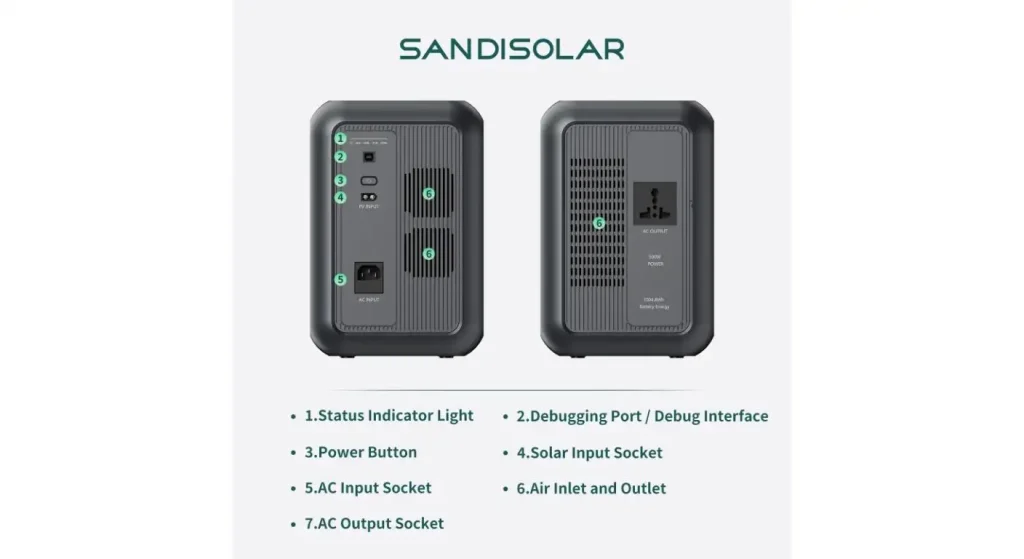
So, is 1kWh Portable Power Station Sufficient?
A 1kWh unit can power some select appliances, mobile work, and lighting/electronic use. Has less application to backup and long outages or whole home electric heating.
The right decision is achieved by listing the necessary devices, determining the energy needs of the devices and checking the power of continuous consumption and start-up. Capacity should come with the use case, rather than the use case having to fit into capacity.
Conclusion
For many people, a 1kWh portable power station will provide a good amount of power and mobility. The usable energy, inverter output, charge speed, battery chemistry and port selection are what factors determine its actual value.
Make your energy budget prior to purchasing. This straightforward measure is a more dependable response than a comparison of the capacity labels.
FAQ
Q1. What's the number of hours that a 1kWh power station will last?
The runtime is dependent on the load that is attached. Typical conversion losses will allow a stable 100W load to run for about 8-9 hours.
Q2. Is it possible to use it for a fridge?
This is often the case if the continuous and surge power are sufficient for the refrigerator. With compressor cycling, it is not easy to predict the actual runtime.
Q3. Will a 1kWh power station power a kettle?
It may do if the output of the inverter is adequate, but if you are using it to heat, it will use up energy rapidly. A kettle can drain a lot of battery in a couple minutes.
Q4. How long does it take to charge the solar?
The charging times vary with the power of the solar panels and the amount of sunlight and input. The actual power output from the panel is typically less than the panel's "nameplate" rating.
Q5. Will a portable power station work as a whole home backup power source?
No. A 1kWh unit is designed for specific equipment, and to provide brief back-up power, not for the full house.
Share on Social:


-
PREV:
Become a SANDISOLAR Distributor: Partnership and Application Guide
- NEXT: Not NEXT