Lithium Battery for Residential Energy Storage: A System Integration Guide
By hqt
2026.09.29


Residential batteries need to be integrated into a holistic energy system. Solar panels produce electricity, the inverter controls the conversion of that electricity, the battery stores power in case the panels don't generate enough and the back-up panel determines which circuits in the house will be active when the power fails.
If any component doesn't work well, the coordination may be compromised, leading to fewer usable storage space, or less ability to charge or communication problems. So it is better to start the battery selection as a complete system architecture and not just the battery specification.
Identify Battery's Operating Purpose
The three functions of residential batteries are: to improve the self-consumption of the solar energy; to change the timing of electricity consumption away from periods when electricity prices are high; and to provide electricity for backup power during outages.
The control strategy needed varies for each of the objectives. Solar self-consumption is a principle which favours charging during the day and discharging in the evening. Time-of-use operation is when the price of electricity dictates operation, and backup focused systems maintain a minimum state of charge for back-up purposes.
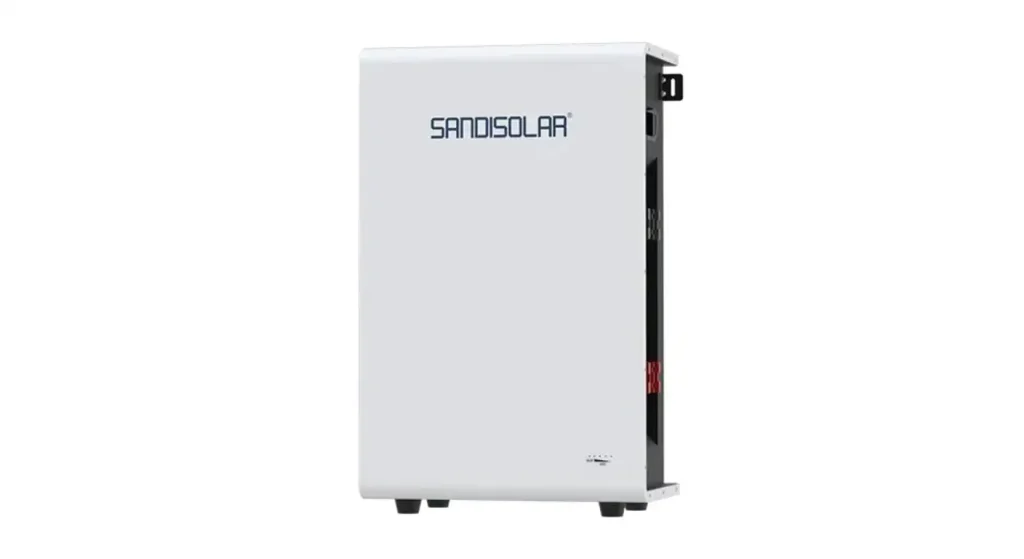
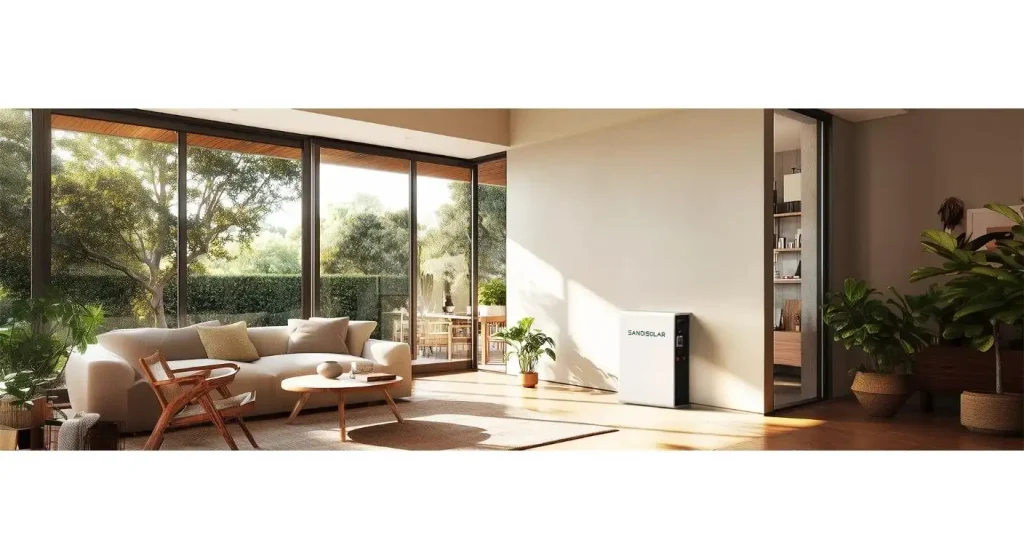
The SANDISOLAR residential energy storage solution is a showcase of the interaction between generation, storage and energy use in the home during the day.
Know how to calculate the energy stored in a battery from its specifications.
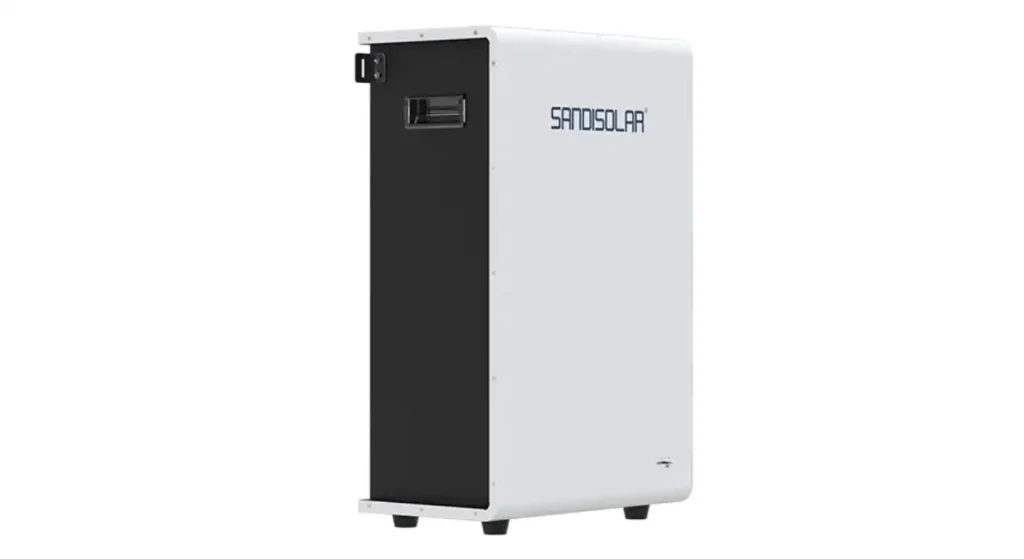
This LiFePO4 battery with 300Ah of capacity and SD-51.2V has a nominal energy of 15.36kWh. With an 80% depth of discharge, about 12.29kWh is available for planned discharge prior to conversion/wiring losses.
The energy consumption of selected loads can be compared with this value. For instance, if the critical-load demand is 1.2kW, then it will consume 12.29kWh in approximately 10.2 hours. This actual runtime will vary depending on the cycling of appliances and the operating conditions.
| Critical Load | Rated Power | Estimated Daily Use | Daily Energy |
| Refrigerator | 150W | 8 hours equivalent | 1.20kWh |
| Lighting | 200W | 5 hours | 1.00kWh |
| Router and security | 60W | 24 hours | 1.44kWh |
| Television and laptop | 250W | 4 hours | 1.00kWh |
| Water pump | 750W | 1 hour | 0.75kWh |
| Estimated Total | — | — | 5.39kWh |
Ensure Battery is compatible with the Inverter.
The nominal voltage of the battery is 51.2V and the voltage range is 44.8-57.6V. The inverter(s) chosen must have the capacity to handle this whole range of voltage and the charging/discharging current.
Installer should also check the inverter power against the anticipated simultaneous loads. Although a 15.36kWh battery pack can offer a long runtime, it is not sufficient to get a small inverter to start a number of high power appliances simultaneously. The SANDISOLAR off-grid inverter range can be browsed for suitable equipment options.
The Reliable BMS Communication is used to establish communication.
Battery Management System checks the voltage, temperature, current and the state of the battery cells. It could make the inverter slow down/stop charging when it gets close to its limits.
The SD-51.2V 300Ah is CAN, RS232 and RS485 communication capable. But having the same interface name does not mean that it's compatible. Prior to commissioning, installers need to check communication protocol, cable pinout and inverter firmware and battery model selection.
| Integration Item | Required Check |
| Battery voltage | Inverter supports 44.8–57.6V |
| Communication | Confirm CAN, RS485 or approved configuration |
| Protocol | Battery model appears in inverter settings |
| Data cable | Verify connector type and pinout |
| Charge limit | Follow the battery’s approved settings |
| Backup reserve | Set minimum state of charge for outages |
Sync power from the sun to power in the batteries.
The PV system (PV array) should produce excess power for recharging the battery once the power demand of the house is met during the day. A large battery with a small array can rarely achieve the desired state of charge and a large array can produce more charge than the inverter can handle.
The charging time will vary with the amount of sunlight, the inverter and the battery SoC and household energy use. When designing a system, it's important to estimate the performance of the system based on actual local solar conditions and not the nameplate rating of the PV array.
Correctly use Active Balancing and Protection
The charging/discharging of a battery pack has to stop when the first cell is at its limit, and over time the usable capacity of the battery pack slowly decreases due to cell imbalance. Active balancing enables to control cell differences and provides stable long-term operation.
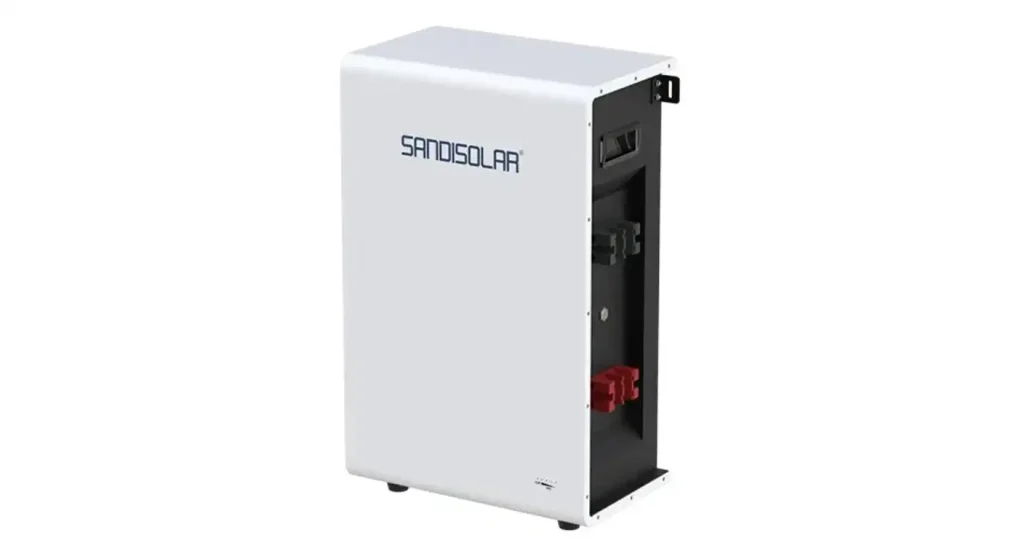
The battery being showcased also comes with a built-in circuit protection and an intelligent Battery Management System (BMS). While these are a good help to ensure safe operation, they are not a substitute for appropriate size cables, breakers, fuses, isolation devices or professional installation.
Determine and plan essential and nonessential loads.
All circuits should not be automatically backed up by a residential storage system. Priority is typically given to the refrigeration, lighting, Internet equipment, security devices and outlets. Large pieces of equipment such as electric water heaters, large HVAC equipment, and ovens can quickly draw out energy stored.
Critical load separation allows the system to have more predictable run time and may decrease the rating of the inverter required. Only choose whole-home backup after considering the continuous consumption and starting surge of appliances.
Choose an Appropriate Installation Location.
Place battery on a firm level surface, in a dry, accessible and ventilated area. Keep it away from water, direct sunlight, combustible items, physical injury and temperatures outside of the manufacturers recommendations.
Cable routes should be kept to a minimum and be protected as feasible. Adequate service clearance also must be provided for inspection, isolation and future service.
Set up Monitoring and Operating limits
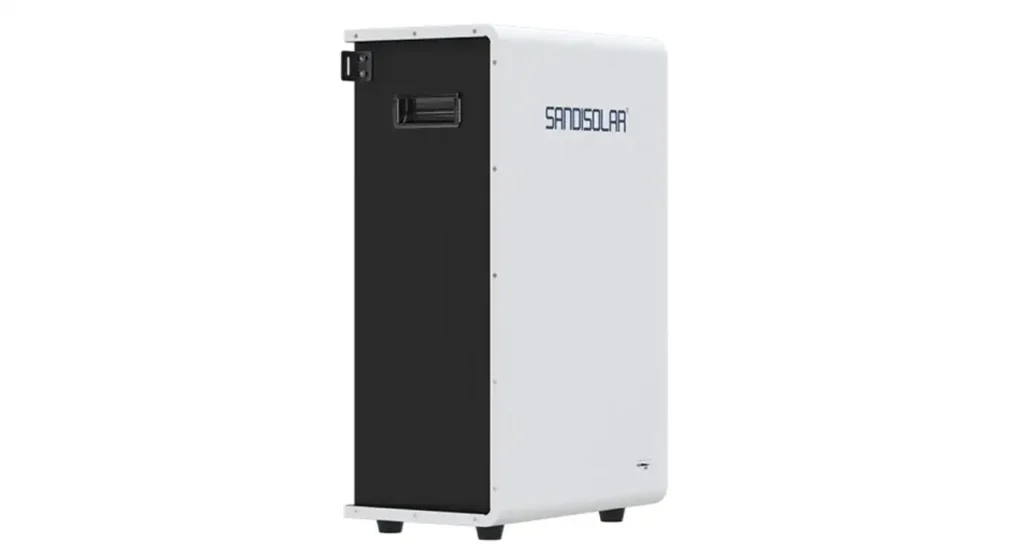
The battery can be remotely monitored and set up with Wi-Fi to check battery status from the owner or servicing team. State of charge, trends of charging/discharging, alarm and operating temperature are useful information.
Check charge and discharge limits, reserve S.O.C. and communications during commissioning. Note the final set-up for possible future service by technicians. Other technical information can be found in the download center of SANDISOLAR.
The Complete Storage System has been commissioned.
Commissioning should be done in a sequenced manner. Before energising the battery check the polarity and cable torque as well as the voltage reading and communication with the BMS before applying larger loads.
Test the solar charging and grid charging (if applicable) and battery discharging individually. Lastly, test a grid outage and ensure only the backup circuits which are intended to operate during such an outage are active.
Conclusion
For residential energy storage batteries, the capacity, inverter power, PV charging and household loads are optimally designed together as a lithium battery. However, kilowatt-hours may be the only thing considered and fail to address the needs for communication, protection and operating-control.
The SD-51.2V 300Ah battery has a nominal energy of 15.36kWh, utilises LiFePO4 chemistry, active balancing and multiple communication interfaces, offering a solid platform for a professionally integrated residential storage system.
FAQ
Q1. What is the amount of energy available in the battery for work in a 15.36kWh battery?
The planned usable amount of energy, at 80% depth of discharge, is ~12.29kWh before losses. Delivered energy is dependent on the temperature, the efficiency of the inverter and load conditions.
Q2. Will all 48V inverters work on a 51.2V battery?
No. The inverter should have a voltage range for the battery, battery current requirements and communication protocol.
Q3. Is this battery capable of providing whole home backup?
Can provide significant stored power, but requires inverter power output and home peak loads to be whole-home capable. Where the circuit is required for high demand, it may need to be load managed.
Q4. What is ACTIVE CELL BALANCING?
Active balancing is the transfer of energy between cells, which will minimise the difference in the state of charge of each cell. This ensures that usable capacity and pack operation is maintained.
Q5. Who is responsible for installing a Residential Lithium Battery?
Must be installed by a qualified solar/electrical professional. There are potential hazards when a high DC current flows, when there is incorrect polarity and when there is inadequate protection.