
51.2v300ah Lifepo4 Battery Charging Time: What Determines the Actual Speed?
By hqt
2026.07.22Related Posts
48V 6kW Off Grid Inverter: Why 48V Battery Systems Are Common for Higher-Power Solar Systems
August 31, 2026

Residential Solar System Installation: Technical Sizing, System Matching and Installation Guide
August 31, 2026

48 Volt Inverter for Solar Battery Storage: Key Specifications Buyers Should Compare
August 27, 2026
Other than rated capacity, the charging time of a 51.2V300Ah LiFePO4 Battery depends on various other factors. The actual charging time depends on the charge output, the state of charge (SoC) prior to charging, battery management settings, temperature, solar generation, active loads, and wiring losses.
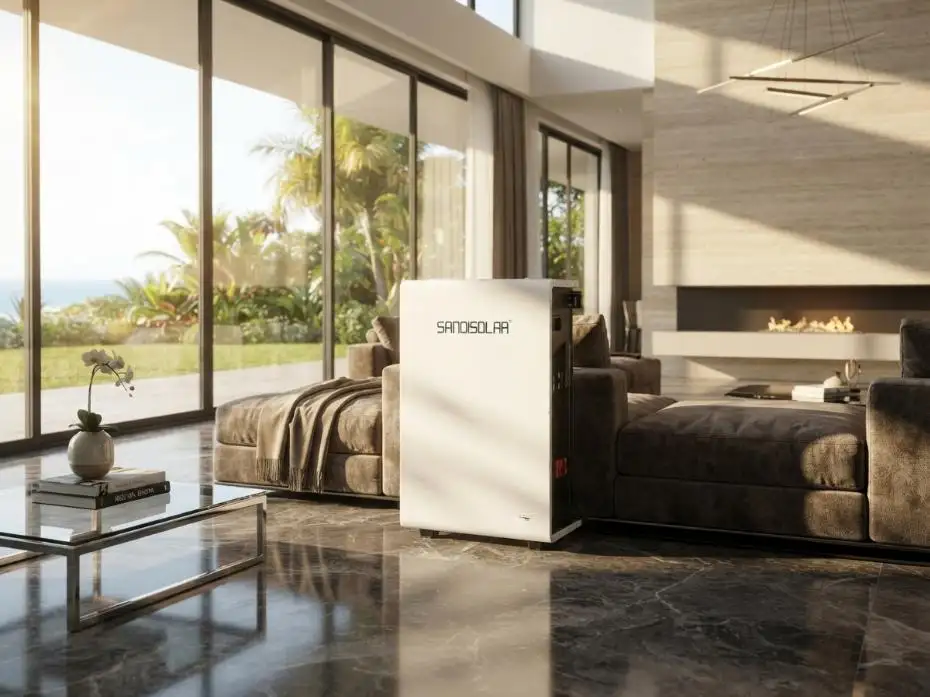
From the SANDISOLAR's system-integration point of view, charging time should be considered for the entire energy storage system rather than estimating from the capacity of the battery.
Understanding the Battery Capacity
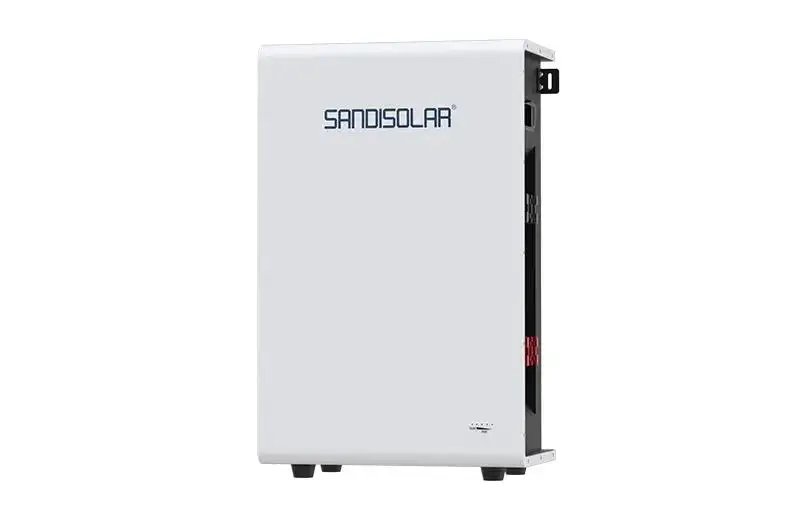
Here are the main specifications of SANDISOLAR's SD-51.2V300Ah LiFePO4 battery:
•Battery Chemistry: LiFePO4
•Nominal Voltage: 51.2V
•Rated Capacity: 300Ah
•Rated Energy: 15.36kWh
•Working Voltage: 44.8–57.6V
•Communication: CAN, RS232, RS485
•Recommended Depth of Discharge: Up to 80%
•Cycle Life: Up to 6,000 cycles under specified conditions
The rated energy is:
51.2V x 300Ah = 15,360Wh = 15.36kWh
The 51.2V300Ah LiFePO4 battery does not need to recover the full 15.36kWh for every charge cycle. The energy needed to charge a battery depends on its state of charge (SoC).
To calculate the energy needed to charge a battery from a given state:
•From 20% to 100% SoC = ~ 12.29 kWh
•From 50% to 100% SoC = ~ 7.68 kWh
•From 80% to 100% SoC = ~ 3.07 kWh
Charging Time Calculation
Charging time can be roughly estimated using the following:
Charging time = Battery capacity / Charging current
Charging current influences ideal charging time as follows:
| Charging Current | Ideal Charging Time | Typical Use Consideration |
| 30A | 10 hours | Typically reduces overall charging power and demand on electrical system |
| 50A | 6 hours | Typically a good current rating for home charging |
| 75A | 4 hours | Will require a good inverter and cable |
| 100A | 3 hours | Good charging power with a considerable thermal demand |
| 150A | 2 hours | Will be limited to the battery and BMS current ratings |
These values are theoretical. The actual charging time of a 51.2v300ah Lifepo4 Battery may be longer because current normally decreases near full charge, while conversion losses and system protection also influence performance.
Charger Power and Current Limits
Charging power can be estimated by multiplying charging voltage by charging current. At approximately 57.6V:
•50A charging current: Charging power is approximately 2.88kW.
•100A charging current: Charging power is approximately 5.76kW.
•150A charging current: Charging power is approximately 8.64kW.
A higher-rated charger does not always produce faster charging. The battery management system may limit current according to cell voltage, temperature, battery condition, or configured protection thresholds.
Why Charging Slows Near Full Capacity
A 51.2v300ah Lifepo4 Battery is generally charged through constant-current and constant-voltage stages.
•Constant-Current Stage: Charger maintains relatively constant current as the voltage of the battery increases.
•Constant-Voltage Stage: Charger maintains constant upper limiting voltage while the charging current reduces to zero.
•Cell-Balancing Stage: BMS works to equalize the voltage of the individual cells.
This is the main reason why charging from 20% to 80% is faster than charging from 80% to 100%. The final stage of the charging process does require higher precision of voltage control and may take longer than simply calculating the time needed based on battery capacity.
Key Factors Affecting Actual Charging Speed
Battery Management System
The BMS manages the battery and the charging process.
•Overvoltage protection: Charging may be stopped when the battery or any individual cell reaches the battery's voltage limit.
•Overcurrent protection: The charging current may be limited if it exceeds the value that has been set.
•Temperature protection: Charging may be made to stop of slow if the battery is in an unfavorable condition from the thermal point of view.
•Cell balancing: Current may reduce to zero when the individual cell voltages are equalized and the cells are nearly fully charged.
The SANDISOLAR model provides three types of communication CAN, RS232, RS485 through which compatible inverters are able to exchange data regarding charging current, charging voltage, charging temperature, alarms, and state of charge.
Solar Power Availability
When charging a 51.2v300ah Lifepo4 Battery with solar panels the speed of charging depends on available solar power.
•PV Array Size: Charging speeds can be faster with larger solar panel arrays.
•Peak Sun Hours: Hours of sunlight vary based on your location, weather, and the season.
•Demands of household appliances: The energy from the solar panels is also used to run household appliances, leaving less energy available to charge the battery.
•MPPT (Maximum Power Point Tracking) Limitations: The constraints of the solar array may be determined by the inverter or controller's cap on the maximum charging current and the maximum solar input.
•Shading and temperature depend on solar panels: Partial shading of the solar panels decreases output. High temperatures of the panels also decreases output.
It is impossible for a 5kW solar array to output 5kW every hour of every day.
Charging from the Grid and Generator
Generator charging relies on stable voltage and frequency and available capacity from the generators. Grid charging is relatively easy to predict.
•Input Current Settings: To prevent overloading the supply, the inverter can be set to the current settings for grid or generator charging.
•Load Bias: Some systems may be designed in such a manner that household loads are supplied first and, only after that, the surplus is diverted to the batteries.
•Generator Reserve: Additional capacity is needed to accommodate motor starting and other variable loads.
•Hybrid Charging: Systems may be designed in such a way to allow charging from the grid and solar depending on the user's choice.
Effects of Temperature and Quality of Connections on Charging
Aspects of a charge connection can also influence the charge.
•Low Temperature: BMS (Battery Management System) inhibits charging to avoid damage to battery cells as the temperature drops.
•High Temperature: Battery cells can be damaged by overheating, therefore, a restriction is placed on charging.
•Undersized Wires: Charging will be limited to prevent excessive heating.
•Loose Connections: Charging will be limited to prevent excessive heating.
•Long runs of wiring: Resistance will require the use of larger gauge wiring.
SANDISOLAR's System-Matching Methodology
SANDISOLAR's methodology is to match the 51.2v 300ah Lifepo4 Battery to a system that includes the inverter, PV, charging sources, protection devices, and the anticipated load profile.
The following criteria will be assessed separately:
•Inverter: Inverters will need to support equivalent charging current and charging voltage as well as the same charging protocol.
•Daily Energy Demand: The charging power must support the daily energy demand up to the next charging cycle.
•Solar: PV must be sized to cover the local load during daytime and account for local solar availability.
•Protection: BMS, breakers, fuses, and the inverter must have complementary settings to each other.
•Future expansion: the system must be designed to allow the parallel connection of additional batteries and the required communication.
Conclusion
The charging time of a 51.2v300ah Lifepo4 Battery may range from a few hours to most of a day, depending on charging current and operating conditions. Practical estimates should include the starting state of charge, BMS limits, charger capacity, solar availability, temperature, active loads, and electrical losses.
Matching these factors correctly can provide more predictable charging, improve energy availability, and support stable operation in residential solar storage, backup power, and selected commercial energy systems.
FAQs
Q1. What is the approximate charge time for a 51.2v300ah Lifepo4 Battery?
This is highly variable based on the charge current, the battery's initial state of charge, ambient temperature, and the losses in your system.
Q2. What is the storage capacity for a 51.2v300ah Lifepo4 Battery?
This battery is rated for approximately 15.36kWh of storage.
Q3. Does a 51.2v300ah Lifepo4 Battery support solar charging?
Yes, but only when a compatible solar inverter or MPPT charge controller is used.
Q4. Why is the charging current taper towards the end of the charge?
Current is reduced to control the voltage of the cells and for balancing among the cells.
Q5. Is it appropriate to use a 100A charger to charge this battery?
As long as the battery and all its protection devices support 100A charging, it is appropriate.


Contact Us
In This Article
Related Posts
48V 6kW Off Grid Inverter: Why 48V Battery Systems Are Common for Higher-Power Solar Systems
August 31, 2026
Residential Solar System Installation: Technical Sizing, System Matching and Installation Guide
August 31, 2026
48 Volt Inverter for Solar Battery Storage: Key Specifications Buyers Should Compare
August 27, 2026