
Residential Energy Storage System Installation: A Practical Home Energy Guide
By hqt
2026.07.23Related Posts
48V 6kW Off Grid Inverter: Why 48V Battery Systems Are Common for Higher-Power Solar Systems
August 31, 2026

Residential Solar System Installation: Technical Sizing, System Matching and Installation Guide
August 31, 2026

48 Volt Inverter for Solar Battery Storage: Key Specifications Buyers Should Compare
August 27, 2026
A Residential Energy Storage System Installation connects batteries, inverters, solar panels, household loads, and sometimes the utility grid within one coordinated energy system. This technology stores energy so that solar or, alternatively, off-peak grid energy, can be used when demand increases, when solar energy generation decreases, or even in the occurrence of a power outage.
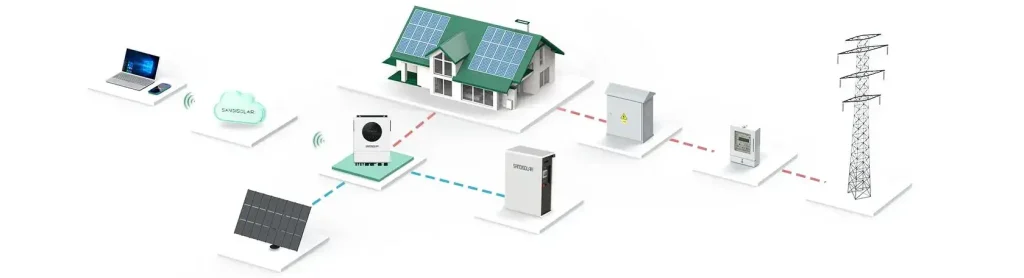
When it comes to the installation of a Residential Energy Storage System, simply selecting the size of your battery is not enough. A myriad of factors such as load demand, inverter output, battery chemistry, electrical protection, preferred installation location, communication protocols, and operational settings should be considered in unison.
SANDISOLAR believes that the first step in the installation process is to analyze the household energy usage and the storage system's intended purpose.
What is included in a Residential Energy Storage System?
A storage system is typically comprised of a few basic components.
•Battery modules, which are used to store DC electricity for future use, self-consumption, or to manage the time of use energy cost.
•A battery management system monitors cell voltage, current, temperature, operating limits and the state of charge.
•Hybrid inverters manage the flow of solar energy as well as the energy contained in the battery, the load and the grid, after changing DC energy to AC.
•A solar array produces energy which can be used by the household or used to charge the batteries.
•An energy management system controls the charge and discharge of the system, limits the energy exports, and determines the priority of loads.
•Protection devices include circuit breakers, fuses, disconnect switches, surge protections devices, and grounding equipment.
•A monitoring platform indicates the state of the battery, solar energy production and household consumption, and informs the user of an operating alarm.
Depending on the purpose, the installation of the Residential Energy Storage System may allow for grid connected, backup, zero-export, off-grid, or even completely off-grid operation.
Step 1: Determine Actual Demand for Electricity
The design should be based on consumption data rather than the size of the house. The daily consumption can be estimated via utility bills where the kilowatt hours used can be indicated.
•Generally prioritized backup loads: Refrigerators, lighting, routers, pumps, and some outlets.
•Peak power demand: The output of the inverter will be determined by the concurrent operation of the various appliances.
•Starting surge: Air conditioners and pumps and other similar devices will have a power surge when they are turned on.
•Required backup time: The expectation of how long the backup will be used will determine the size of the usable battery capacity.
A home that has a total energy consumption of 20 kWh per day will typically have a daily essential energy requirement of 5-8 kWh. To help avoid oversizing of the system, it is important to differentiate between total energy consumption and critical energy demand.
Step 2: Aligning Battery, Inverter, and Solar Capacity
The installation of a Residential Energy Storage System depends on the electrical and communication compatibility of the system's major components.
| Design Factor | Main Question | Practical Consideration |
| Battery Capacity | What is the required storage of energy? | Determine the necessary loads and the desired duration of operation |
| Inverter Output | What is the required power consumption? | Consider the usual power demand and the starting current of motors |
| Battery Voltage | What is the preferred system design? | Identify whether the system is designed for low-voltage or high-voltage |
| PV Input | What is the required solar power to charge the system? | Stay within the limits of inverter MPPT voltage and current |
| Backup Output | What is the required power to the selected circuits? | Depend on the load distribution requirements of the system |
| Expansion | What is the required capacity for additional energy storage? | Identify the required compatibility of module, firmware, and BMS |
Battery capacity is measured in kilowatt-hours, while inverter output is measured in kilowatts. These values perform different functions and should not be selected as though they are interchangeable.
Step 3: Choose an Appropriate Installation Site
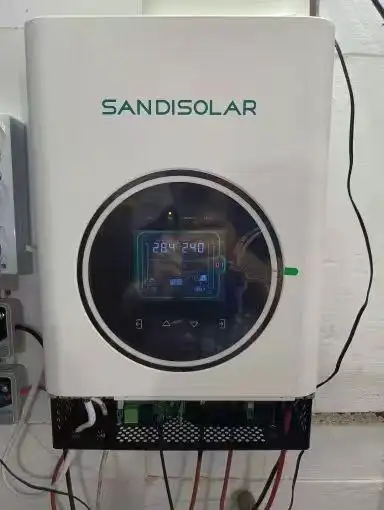
Site selection for installation impacts temperature control for the equipment, influences the expected service life of equipment, and affects how maintainable the equipment will be.
•Temperature Control: Equipment must be kept within the temperature limits specified by the manufacturer to avoid damaging the equipment.
•Airflow: It is necessary to provide sufficient airflow to the inverter since it will generate heat under normal operating conditions.
•Water: Equipments such as batteries and other electrical components need to be protected from contact with water including flooding, condensation, and direct contact.
•Support: Site walls and flooring needs to be engineered for the weight of the entire battery system and for the method of how the battery system will be attached to the wall and flooring.
•Access: Technicians must be able to access all cables, terminals, ports, and devices in the system.
•Impact: All equipment must be located outside the reach of children and away from where it may be inadvertently impacted by vehicles.
As long as they meet the product specification and comply with local electrical regulations, garages, utility rooms, equipment rooms, and rated outdoor enclosures are potentially suitable installation sites.
Step 4: Make Electrical and Communication Connections
The following are typical of a professionally completed Residential Energy Storage System installation:
•Battery cabling: DC cables must be sized to the current, the voltage to be carried, the length of the cable, and the ratings of the protective device.
•PV connection: Solar strings must be within the MPPT range of the inverter.
•AC connection: The inverter may be connected to the main distribution board, a backup-load panel, or a dedicated circuit.
•CT or Meter Installation: Current sensors measure bidirectional current flow to and from the grid and also the consumption current of the household.
•BMS Communication: The data pertaining to the battery can be transmitted to the inverter via CAN and RS485 communication protocols.
•Grounding and Protection: Surge and overcurrent protections and earthing may limit the hazards associated with the installation.
Loose terminals, incorrect polarity, CT sensors placed in the reverse order, and mismatched communication settings, may result in unstable operation and alarms.
Step 5: Set the Desired Operating Mode
The selections defined in this section should help achieve the homeowner's energy objectives.
•Self-consumption mode: The loads are supplied with solar first and then battery charging occurs.
•Time-of-use mode: Battery activity is scheduled in accordance with the defined time of use tariffs.
•Backup mode: Battery reserve is kept available for the defined time of use.
•Zero-export mode: The inverter output is limited to prevent any export to the grid.
•Off-grid mode: Loads are supplied by solar and battery and optionally a generator without continuous support from the grid.
The right operating modes enable the homeowner to manage the energy storage without the need to change the settings on a constant basis.
Commissioning and Maintenance
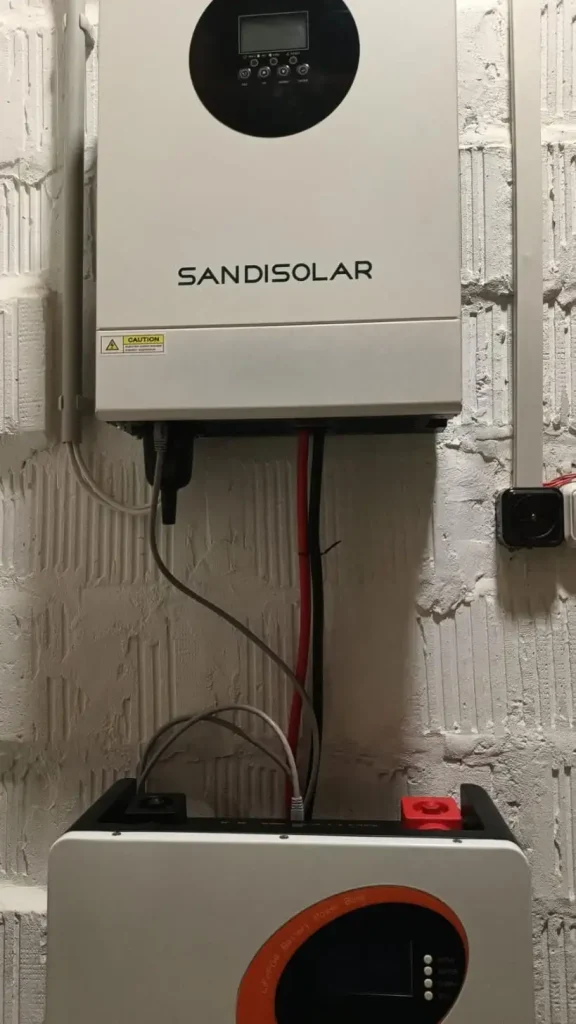
The following should be completed by the installer prior to the handover: testing of all charge and discharge routines, battery backup transfer, all interfaces and portals, earthing, all protection devices and BMS communication.
Routine maintenance may include:
•Visual Inspection: check all internal and external components for signs of damage or warning indicators.
•Review of performance: Check charging patterns and state of charge. Look for unusual output.
•Backup testing: ensure all critical loads are being supplied during a defined test period.
•Firmware management: Use approved updates when they improve compatibility or system control.
SANDISOLAR's Installation Support
Established in 2008, SANDISOLAR develops PV modules, inverters, batteries, energy storage systems, EV charging products, and related new-energy solutions.
Our knowledge from working on projects in Myanmar, Thailand, and other regions, drives us to employ a cohesive method to Residential Energy Storage System Installation. We do not treat individual components in isolation – these include solar generation and/or battery and/or inverter and/or demand load and/or monitoring elements. Rather, we consider them as part of a whole and interconnected system.
SANDISOLAR assists in the design and implementation of an energy management integration by providing system configuration support, coordination of equipment, OEM/ODM, and technical documentation.
Increased backup preparedness, enhanced solar self-consumption, and improved energy flexibility of the household can be achieved with a thoughtfully designed Residential Energy Storage System Installation. The system that is designed to meet the specific loads, conditions, and practical objectives is the most appropriate solution.
FAQs
Q1: Can service and storage capacity be expanded in the future?
The expansion capabilities of a system depends on the compatibility of battery modules, BMS, inverter, and firmware.
Q2: What is the estimated time for installation?
The size of the system, how it needs to be wired, and the condition of the electrical infrastructure all affect the time needed for installation.
Q3: Can a home battery operate without solar panels?
Yes. Home batteries can charge from the grid and release stored energy during off-peak and outage periods.
Q4: What factors are used to determine battery capacity?
Capacity is determined by the household's consumption, essential load consumption, and the duration of backup support required.
Q5: Can a power outage be supported for the entire home?
This is determined by the inverter output and battery capacity, as well as the total consumption of all connected loads.


Contact Us
In This Article
Related Posts
48V 6kW Off Grid Inverter: Why 48V Battery Systems Are Common for Higher-Power Solar Systems
August 31, 2026
Residential Solar System Installation: Technical Sizing, System Matching and Installation Guide
August 31, 2026
48 Volt Inverter for Solar Battery Storage: Key Specifications Buyers Should Compare
August 27, 2026