
What Makes an Off-Grid Inverter "High Efficiency"in 2026?
By hqt
2026.02.22Related Posts
48V 6kW Off Grid Inverter: Why 48V Battery Systems Are Common for Higher-Power Solar Systems
August 31, 2026

Residential Solar System Installation: Technical Sizing, System Matching and Installation Guide
August 31, 2026

48 Volt Inverter for Solar Battery Storage: Key Specifications Buyers Should Compare
August 27, 2026
A High Efficiency Off-Grid Inverter means your solar power is captured faster, converted cleaner, and delivered more steadily—so you use more of what you generate.
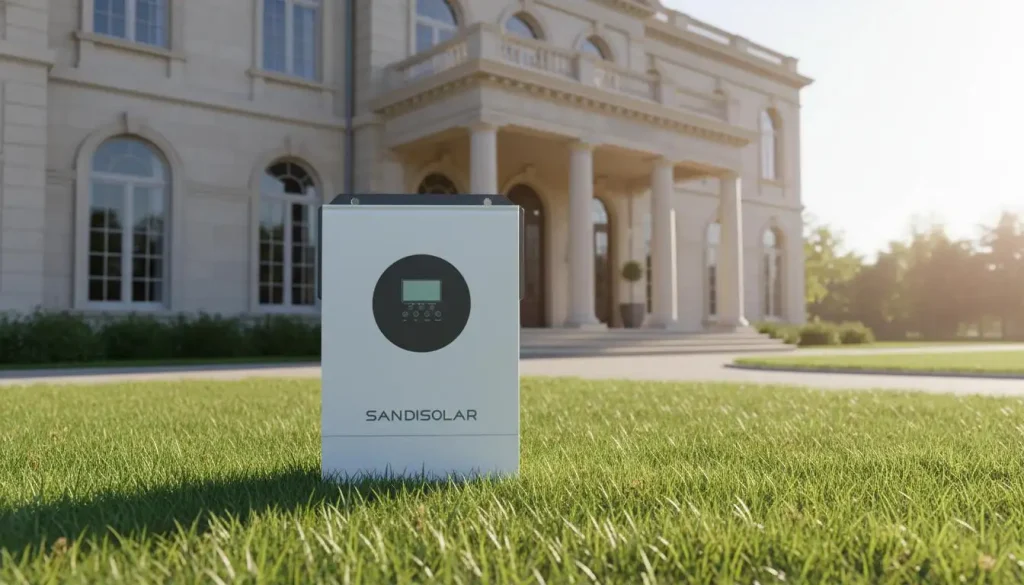
From SANDISOLAR's view as a manufacturer, "high efficiency" should help you in three very practical ways: longer runtime at night, smaller heat stress on components, and better performance when loads are not "perfect." Below is a beginner-friendly path to understand what really matters, which numbers are meaningful, and what to ask for before you buy.
1) High Efficiency Starts With a Clear Definition
Inverter efficiency is simply the ratio of AC output power to input power (and any other power the inverter draws while converting). Sandia National Laboratories explains that efficiency varies with operating conditions and is typically tested across load levels, not at one single point.
For a High Efficiency Off-Grid Inverter, the goal is not just "a high peak." The goal is high conversion efficiency across the hours you actually use power: mornings, evenings, partial loads, and standby periods.
A quick real-world example shows why this matters:
If you need 3,000 W AC for 5 hours:
• At 90% efficiency, losses are about 333 W (because 3000/0.90 = 3333 W input), wasting ~1.67 kWh over 5 hours.
• At 96% efficiency, losses are about 125 W (3000/0.96 = 3125 W input), wasting ~0.63 kWh over 5 hours.
That difference (~1.04 kWh) can be the difference between "lights stay on" and "battery hits low-voltage cutoff."
2) Do Not Judge By Peak Efficiency Alone
Peak efficiency is the best-case number, usually near rated load. It is useful, but it can hide weak performance at partial loads. A better question is: How efficient is the inverter at 10%, 20%, 50%, and 75% load? That curve is where daily life happens.
In the solar industry, two common "weighted" efficiency concepts are often referenced:
• CEC efficiency is a weighted average based on typical operating ranges for high-irradiance climates like California.
• California Energy Commission efficiency is commonly described as "weighted" across load points.
• European efficiency is another weighted method reflecting a typical annual power distribution in parts of Europe.
As a buyer, you do not need to memorize formulas. You just need to insist on transparency.
✅ What SANDISOLAR recommends you request from any vendor:
• A full efficiency curve (not just one peak number)
• A weighted efficiency figure (CEC or European) and the test conditions
• No-load/idle power consumption in watts (important for 24/7 systems)
3) Efficiency Is Also About MPPT and PV Utilization
In off-grid systems, inverter efficiency is only part of the story. If your solar energy is not harvested effectively, you will still feel "inefficiency" as missing runtime.
This is why MPPT (Maximum Power Point Tracking) matters. An MPPT stage continuously adjusts the electrical operating point to capture more available PV power as sunlight and temperature change. Many MPPT discussions describe very high tracking performance (often quoted in the high-90% range), but you should read those claims carefully and focus on system-level results, not slogans.
For a High Efficiency Off-Grid Inverter, good PV utilization typically shows up as:
• Faster daily battery recovery (shorter time stuck in "low SOC")
• Better harvest in weak sun (morning/evening, haze, winter angles)
• Stable charging behavior that protects battery life
A practical tip: if a vendor cannot explain MPPT behavior in plain language, they often cannot optimize it in firmware either.
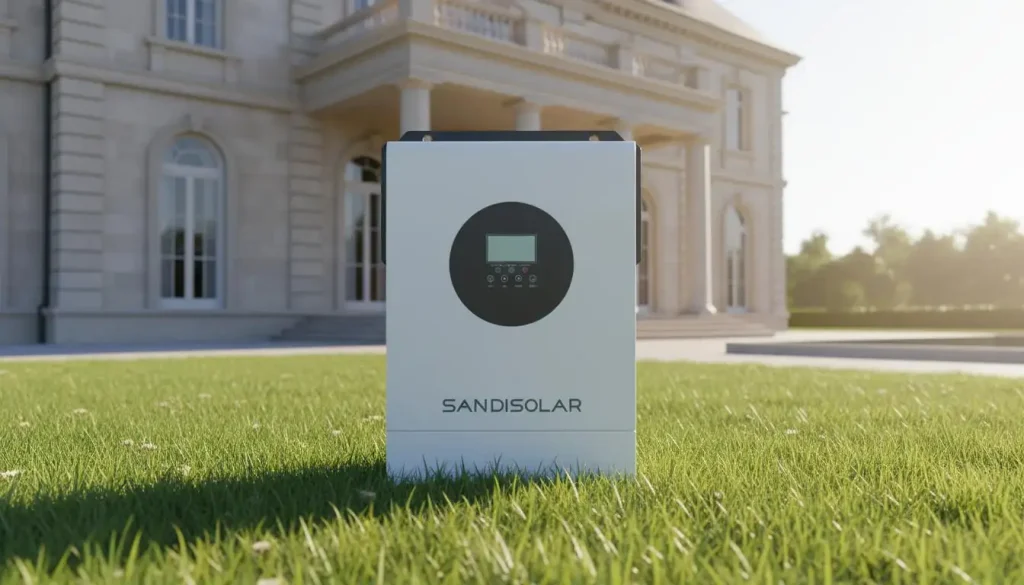
4) Battery-Side Losses and Charging Logic Matter More Than People Think
Many users judge efficiency only when the inverter is powering AC loads. But off-grid systems spend huge time charging, floating, and waiting. That means charging logic, conversion stages, and idle consumption can dominate total losses.
Idle draw is especially important when loads are small (routers, security systems, control panels). Some sources describe idle draw ranges (often in the tens of watts, depending on size and design), which can become a surprising daily energy cost.
Here is how SANDISOLAR frames it for customers:
If your inverter wastes even 20 W continuously, that is 0.48 kWh/day—and ~175 kWh/year—before you power a single appliance. In small solar systems, that is not "background." It is a real load.
✅ Practical checks for beginners:
• Ask for no-load consumption (and "power save" behavior if available)
• Confirm charging efficiency and whether settings can match your battery chemistry
• Look for clear protection logic (over/under voltage, over-temperature, short circuit) that avoids "nuisance trips" but still protects equipment
5) Less Heat Is a Hidden Advantage of High Efficiency
Higher efficiency means fewer conversion losses, and those losses mostly become heat. Less heat is not only about comfort. It is about reliability.
A SolarEdge technical note summarizes the idea plainly: higher efficiency means lower losses and less heat to dissipate, which supports reliability. SolarEdge
For an off-grid inverter, heat management affects:
• Lifespan of power electronics (MOSFETs/IGBTs, capacitors)
• Fan duty cycle (noise and dust intake)
• Output stability during hot afternoons or enclosed installations
So when SANDISOLAR evaluates "High Efficiency Off-Grid Inverter" design, we also look at thermal behavior: stable output under heat, controlled fan curves, and protective derating that is predictable (not sudden shutdowns).
6) Pure Sine Wave Output: Efficiency That Protects Your Devices
A common misunderstanding is that efficiency is only about energy numbers. In reality, "clean power" also improves efficiency because devices run the way they are designed to run. A High Efficiency Off-Grid Inverter should provide pure sine wave output, which is essential for sensitive electronics and modern appliances.
Just as important, off-grid output must maintain frequency and voltage within safe limits. When voltage is unstable, motors pull abnormal current, power supplies run hot, and devices may reset. That becomes hidden waste—energy turning into heat and premature wear. Stable output also protects equipment from surges or drops during load changes, especially when compressors, or workshop tools start.
✅ Practical benefits for users:
• Laptops, routers, and control systems operate reliably
• Refrigeration starts smoother with less stress
• Less risk of damaged equipment from power fluctuation
• Fast Switching And Adjustable Settings Make Efficiency Usable
A High Efficiency Off-Grid Inverter must react quickly when loads change. Real systems are dynamic. A fridge cycles. A welder spikes power. If the inverter response is slow, the system may dip or trip, and that "lost stability" becomes lost energy and poor user experience.
That is why fast switch time and adjustable parameters matter in 2026. With fast switch time for load start and stop, power feels more "grid-like." With adjustable charge/discharge parameters, the inverter can be matched to the battery and the lifestyle of the user. This is where efficiency becomes personal: the same hardware can behave very differently depending on correct settings.
At SANDISOLAR, we design for low or high voltage lithium battery systems, because many users upgrade storage over time. Smart parameter control helps prevent common mistakes such as over-aggressive charging, which can reduce battery life, or overly conservative charging, which leaves solar energy unused.
7) Real Data to Explain "High Efficiency" in System Sizing
Efficiency also depends on choosing the right inverter size. If the inverter is too small, it may overload or struggle with surge loads. If it is far too large, users may pay more than needed and experience unnecessary idle consumption. The right approach is to match continuous demand, then confirm surge ability and expansion options.
Here is how real product data helps beginners understand the concept:
The SANDISOLAR SD 11kW 48V line offers 11KVA/11KW capacity for larger homes, small businesses, and hybrid off-grid sites. One model lists 230VAC input and a surge power output of 22000VA. That surge figure matters because many systems fail not during normal running, but at motor start. A high surge rating supports short bursts needed by air conditioners or compressors.
For mid-size systems, the SD 6.2kW 48V option supports 6.2KVA/6.2KW and lists surge power output of 12400VA in one model. This is a practical range for farms, remote offices, and backup loads that include motor-driven equipment.
✅ Simple sizing rule for readers:
• Choose inverter capacity close to your real continuous load
• Then check surge power for the largest motor-driven device
• Plan expansion with parallel support if growth is likely
This is one of the clearest ways to define "high efficiency" with real data: the system runs stable, avoids tripping, and does not waste energy through repeated restarts or generator overuse.
CTA (Call to Action):
If you are selecting a High Efficiency Off-Grid Inverter for a home, RV, remote site, or backup system, message SANDISOLAR with your daily load estimate (kWh/day) and your largest starting load. We will help you map your real load profile to the right efficiency curve—so you buy runtime, not just a headline number.


Contact Us
In This Article
Related Posts
48V 6kW Off Grid Inverter: Why 48V Battery Systems Are Common for Higher-Power Solar Systems
August 31, 2026
Residential Solar System Installation: Technical Sizing, System Matching and Installation Guide
August 31, 2026
48 Volt Inverter for Solar Battery Storage: Key Specifications Buyers Should Compare
August 27, 2026