
Best LiFePO4 Battery for Solar: 2026 Buyer's Guide to Peak Off-Grid Life
By hqt
2026.01.23Related Posts
48V 6kW Off Grid Inverter: Why 48V Battery Systems Are Common for Higher-Power Solar Systems
August 31, 2026

Residential Solar System Installation: Technical Sizing, System Matching and Installation Guide
August 31, 2026

48 Volt Inverter for Solar Battery Storage: Key Specifications Buyers Should Compare
August 27, 2026
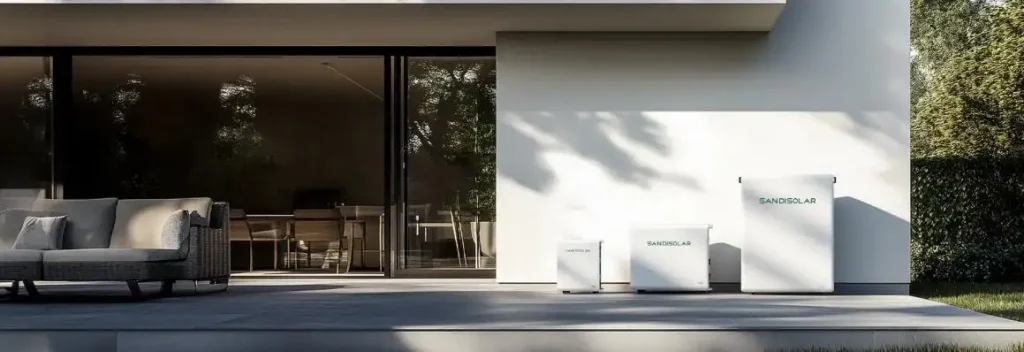
If 2026 is the year you expect your solar setup to run like a business - reliable, safe, and predictable - the storage you choose will decide whether that happens. The Best LiFePO4 Battery for Solar is not just chemistry; it's a complete, engineered system that thrives under real-world variability. As a manufacturer, SANDISOLAR builds battery modules and stacks that are designed for long service life, high efficiency, and clean integration with modern inverter ecosystems. This guide cuts through brochure talk and focuses on what actually matters in the field: how LiFePO4 behaves with solar, the numbers behind performance, how to select the right voltage and capacity, and which SANDISOLAR configurations fit homes, commercial sites, and remote deployments.
What a LiFePO4 Battery for Solar Really Does
A LiFePO4 battery (lithium iron phosphate) turns daytime sunshine into nighttime certainty. Panels produce DC, the pack stores it, and an inverter serves it to your AC loads or direct DC devices. The iron phosphate cathode is inherently stable, which means the cells tolerate frequent charge and discharge without the heat spikes and aging patterns you see in some other chemistries. That stability matters for solar because irradiance isn't polite - clouds roll in, loads spike, and your system has to react quickly.
Under the hood, a battery management system (BMS) watches cell voltages, current, temperature, and state of charge. It prevents overcharge, over-discharge, and short circuits, and it balances cells so no single cell drifts out of spec. Pair the BMS with a compatible inverter-charger, and you get fast charge acceptance during brief sun breaks and smooth delivery during load surges. In short, LiFePO4 creates a tight, efficient loop: panel to storage to loads with minimal waste and minimal drama.
How LiFePO4 Compares to Traditional Batteries
There's a reason many off-grid veterans have moved away from lead-acid (flooded, AGM, gel) for daily cycling. Lead-acid can work, but the trade-offs stack up:
•Cycle life: SANDISOLAR LiFePO4 packs are rated for over 6,000 cycles under standard conditions. A typical lead-acid bank ranges from a few hundred cycles to roughly 1,200 depending on depth of discharge and maintenance. More cycles translate to fewer replacements and steadier operational budgets.
•Round-trip efficiency: SANDISOLAR high-voltage, stackable systems achieve about 97% efficiency, while many lead-acid systems live in the 80-90% band. Over thousands of cycles, that gap becomes lost energy you paid for but never used.
•Usable capacity: LiFePO4 comfortably supports deeper cycling without the rapid wear seen in lead-acid. Lead-acid banks often need to be oversized and kept to shallow discharges to protect lifespan, which increases up-front cost and space.
•Thermal and safety profile: LiFePO4's chemistry is notably resistant to thermal runaway. For homes, schools, clinics, and telecom shelters, this is a meaningful risk reduction and often simplifies permitting.
•Maintenance and charge behavior: Lead-acid can demand strict charge regimes and occasional maintenance. LiFePO4 responds quickly to solar variability and largely removes routine maintenance from your calendar.
Viewed through total lifetime energy delivered per dollar, the Best LiFePO4 Battery for Solar typically wins once you account for efficiency, usable capacity, and cycle life.
The Metrics That Matter in 2026
Specs shouldn't sit in a datasheet; they should translate into practical advantages. Here's how the headline figures show up in daily use:
•6,000+ cycles: For a daily-cycled off-grid home, that's roughly 16 years of service potential depending on depth of discharge and operating temperature. Fewer swap-outs means less downtime and fewer trips to reconfigure cabling.
•Around 97% round-trip efficiency: Every kilowatt-hour matters. Higher efficiency reduces curtailment during peak sun and delivers more usable energy to appliances, tools, pumps, and networking gear.
•Designed lifespan of 10 years or more: SANDISOLAR selects cells and designs packs for durable, predictable operation. That helps with multi-year budgeting and bankable project plans.
•Built-in BMS protection: Guardrails against overcharge, over-discharge, and short circuits protect the battery and the rest of your balance-of-system equipment. Smart charge acceptance means intermittent clouds don't waste your array's best moments.
•Rapid response: Clean motor starts and compressor kicks require surge handling. LiFePO4's fast load following and charge acceptance make that feel seamless in real use.
•Modular, stackable architecture: Start with what you need today and expand as loads grow. Modularity keeps wiring tidy and service simple.
SANDISOLAR Configurations for Homes, Businesses, and Field Systems
One size never fits all. SANDISOLAR offers a focused lineup so you can choose voltage, capacity, and form factor that align with your site.
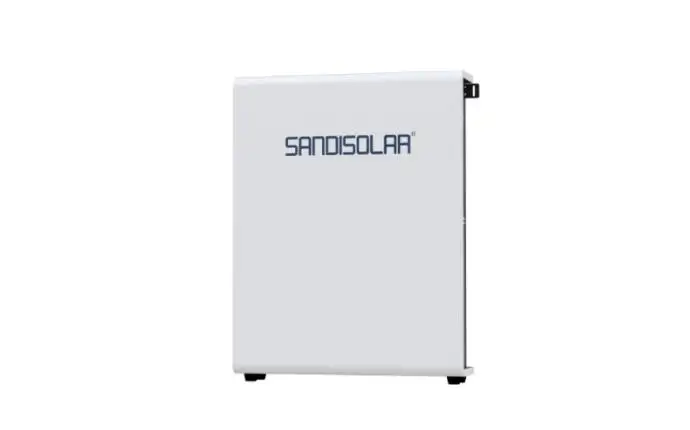
•51.2V rack-mounted modules (5.12 kWh, 100Ah): Compact and serviceable for energy walls in homes and small businesses. Stack modules vertically to expand capacity without reworking the whole room. Ideal for hybrid inverters common in residential installations.
•High-voltage, stackable ESS: For microgrids and commercial loads, our stackable high-voltage platform delivers about 97% efficiency with a cycle life rated at 6,000+ cycles and a designed lifespan of 10+ years. Wiring simplifies, power density increases, and integration with high-power inverters is straightforward.
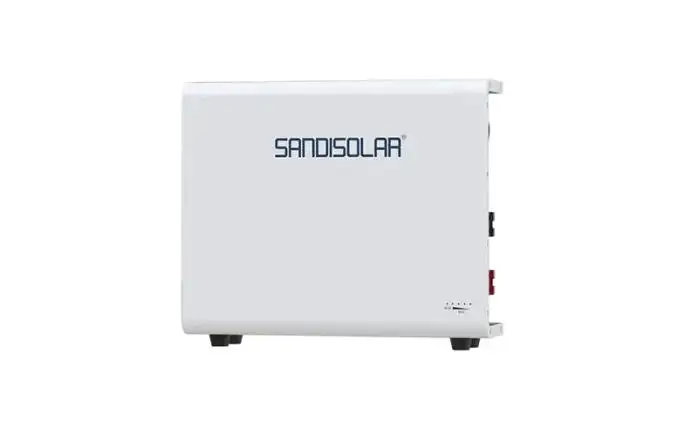
•51.2V banks (200Ah–320Ah): Higher capacity per module reduces parallel strings and cleans up cabling. Off-grid residences, telecom towers, and agricultural pumping benefit from longer autonomy and confident surge handling.
•25.6V options (200Ah–300Ah): A practical middle ground for systems stepping up from 12V where cost control and accessible components matter.
•12.8V options (100Ah–300Ah): Versatile units for RVs, boats, cabins, and instrumentation. Combine in series or parallel as needed, with LiFePO4 safety and an integrated BMS.
Across the range, these modules are built for frequent cycling, quick charge and discharge response, and predictable expansion as your energy needs evolve. If your goal is maximum uptime, the Best LiFePO4 Battery for Solar is the one that delivers the same reliable output on day 1,000 as it did on day 10.
A Practical Selection and Integration Checklist
Getting storage right is mainly about matching reality - your loads, your climate, your inverter - to the battery's strengths.
•Define your daily energy and autonomy: Add up daily kWh and include seasonal peaks and motor starts. Start with desired autonomy and size capacity by usable kWh at your chosen DoD.
•Pick voltage that scales: 12.8V for small loads, 25.6V to reduce current and cable size as you grow, 51.2V for hybrid inverters and larger arrays, and high-voltage stacks to simplify wiring when expanding commercially.
•Set charging per SANDISOLAR and enable communication for precise SoC and charge optimization; confirm BMS limits against inverter surge.
•Favor stackable modules; keep parallel strings identical in length and similar in age; leave room and ventilation for future additions.
•Engineer for environment and safety from day one: temperature limits, suitable enclosures, correct fusing/disconnects per string and main bank, clear labels.
•Keep compliance ready: use SANDISOLAR certifications - UL Listed, CE, RoHS, ISO 9001, IEC 62109 - and stick with compatible components to ease permits and insurance. A clean paper trail accelerates approvals.
Follow this checklist and you'll align your system with LiFePO4's core advantages: high efficiency, long cycle life, and fast dynamic response. That is how the Best LiFePO4 Battery for Solar turns a good array into a dependable energy system.
Compliance, Reliability, and Your Next Step
Quality is measurable. SANDISOLAR batteries are certified to international safety and performance standards, including UL, CE, RoHS, ISO 9001, and IEC 62109. For developers and facility managers, that streamlines permitting, simplifies insurance review, and supports bankable proposals. For homeowners and off-grid users, it's peace of mind - whether the battery sits in a hot mechanical room or a cold equipment shed.
Start small and scale: a 51.2V, 5.12 kWh building block can become a tidy energy wall over time. Or deploy a high-voltage stack for commercial loads and microgrids. In every case, the aim is the same - maximum uptime, predictable lifetime energy, and smooth integration with modern inverter ecosystems. That's what makes the Best LiFePO4 Battery for Solar a smart choice in 2026.
Call to Action
Ready to build a storage platform that keeps pace with your ambitions? Contact SANDISOLAR for a quick quote, right-sized configuration, and integration guidance tailored to your array and loads. Our engineering team will help you select the Best LiFePO4 Battery for Solar for your site, align settings with your inverter, and plan for future expansion - so every kilowatt-hour you harvest turns into real, reliable value.


Contact Us
In This Article
Related Posts
48V 6kW Off Grid Inverter: Why 48V Battery Systems Are Common for Higher-Power Solar Systems
August 31, 2026
Residential Solar System Installation: Technical Sizing, System Matching and Installation Guide
August 31, 2026
48 Volt Inverter for Solar Battery Storage: Key Specifications Buyers Should Compare
August 27, 2026