Selecting the Right Pure Sine Wave Inverter for Reliable Off-Grid Power
By hqt
2026.09.24Related Posts

C&I PV System Design: How to Plan Commercial Rooftop and Ground-Mounted Solar
October 30, 2026

What Is C&I Solar? A Guide to Commercial and Industrial Solar Systems and Examples
October 29, 2026

How to Become a SANDISOLAR Solar Distributor in Poland and Develop Your Storage Business
October 28, 2026
Wattage is not the only criterion to choose a pure sine wave inverter. While it is important to have rated output, there are other factors such as motor starting demand, battery voltage, solar input range, charging capacity and communication with the battery management system that affect system performance.
It is particularly relevant for off-grid residences, farms, remote offices and backup power systems where the inverter will need to handle a number of energy sources and a stable AC output. The right selection starts with the real loads, the real operating pattern and not with the highest power rating on offer.
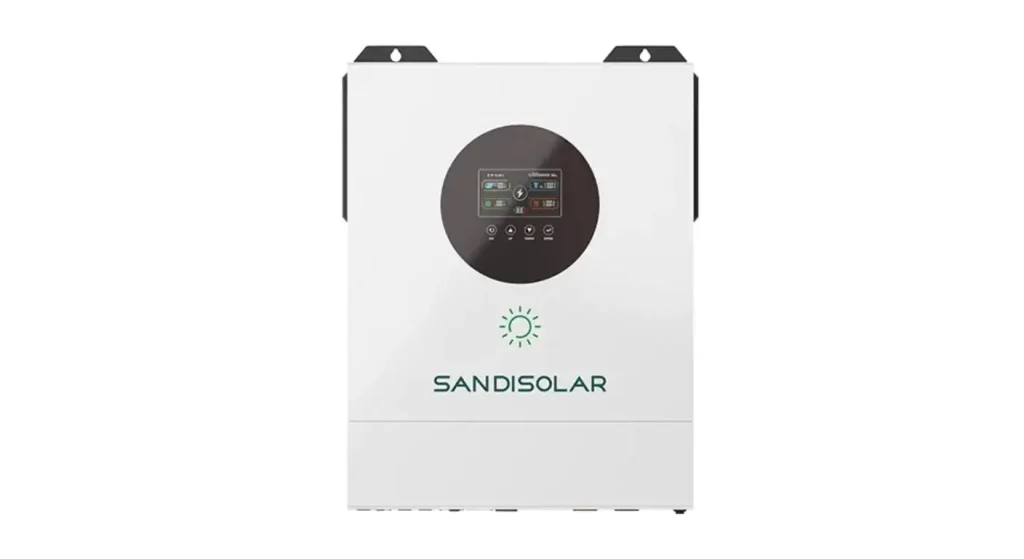
What is Pure Sine Wave Inverter?
A pure sine wave inverter is the type of inverter that converts direct current from batteries or solar energy systems to alternating current (AC) in a smooth wave that resembles the AC supplied by the power company. Instead of voltage jumps or steps, there is a gradual variation of voltage per cycle.
It can be used for typical household appliances and equipment with motors, compressors, transformers or sensitive electronic controls. Stable voltage and frequency can support all the above items, such as refrigerator, water pump, air conditioner, computer and communication devices as well as variable-speed appliances.
A Pure Sine Wave Inverter does not produce energy. Converts and controls energy provided by a battery, PV array, utility source or generator. Therefore, it should be considered as part of a power system and assessed accordingly.
Why is the Output Waveform Important?
In a modified sine wave inverter the AC wave is simulated as a series of voltage steps. Some motors, chargers and electronic controls can run less efficiently, may make noise or will produce extra heat; they may operate simple resistive loads, but.
For loads requiring precise voltage transitions, pure sine wave output will help to ensure smooth operation. Not all appliances need to be equipped with an advanced inverter, but it minimizes the risk of compatibility when one inverter is used to power a combination of appliances.
The off-grid inverter family of Sandisolar offers a pure sine wave output along with programmable charging parameters, AC input and system communication features.
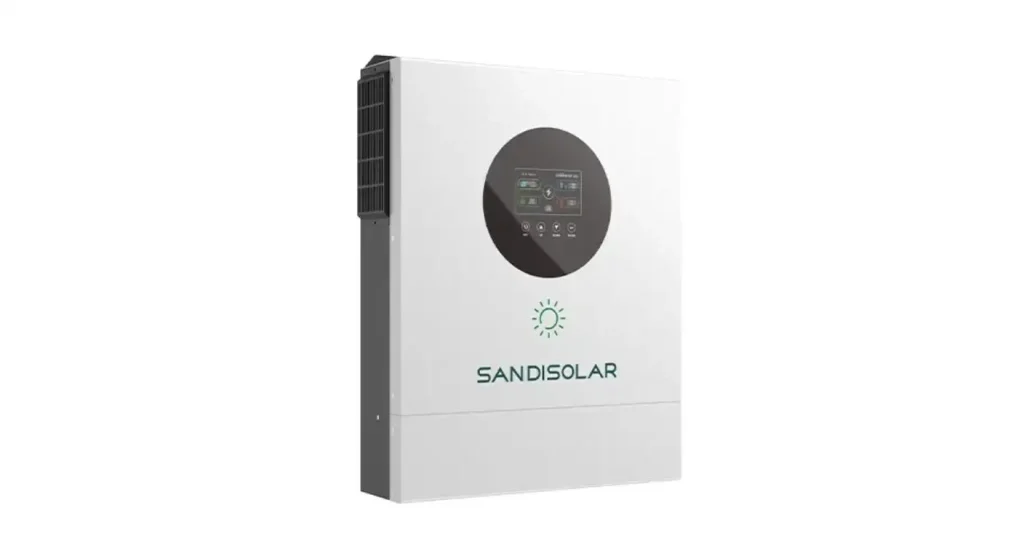
Start with a Complete Load Audit
Make a complete list of all the appliances that can be powered via the inverter. Write down the rating power, the anticipated duration of use and if it has a motor, compressor or heating element.
Then loads should be subdivided into Basic and Optional categories. Refrigeration, lighting, communication and water supply may require permanent standby assistance, and electric cooking or high power tools may be arranged separately to avoid the oversizing of the inverter.
The calculation should consider simultaneous demand only and not the total of all appliances in the building. But, the chosen inverter must also have some "headroom" to accommodate real-world variations in the use of the power supply in a home or project.
| Load Category | Typical Operating Pattern | Main Selection Concern |
| Lighting and routers | Long continuous operation | Daily energy consumption |
| Refrigerator | Frequent compressor cycling | Starting surge |
| Water pump | Short high-power operation | Motor-start capability |
| Air conditioner | Long operation with compressor starts | Continuous and surge output |
| Computers and controls | Sensitive electronic load | Stable waveform and voltage |
| Electric heater or cooker | High resistive demand | Simultaneous load capacity |
Check Continuous Power/Starting Surge
Continuous output is the amount of power an inverter will provide while in operation. Surge output is the power that is available for a short period of time during starting of demanding equipment.
The refrigerator may use a small amount of power after start-up, but the compressor could use several times more power than usual for a short period of time. Similar peaks can be generated by pumps, air conditioner and power tools. When the total load on the inverter is seemingly fine, it could cause overload protection if the inverter is unable to handle them.
Buyers should verify the surge power and the length of time that the surge is allowed and whether the motor-load can be used in addition to the rated kilowatt value. For bigger projects, the 11kW pure sine wave parallel inverter can be parallel operated for further expansion in the future.
Choose the Inverter that matches the Battery voltage.
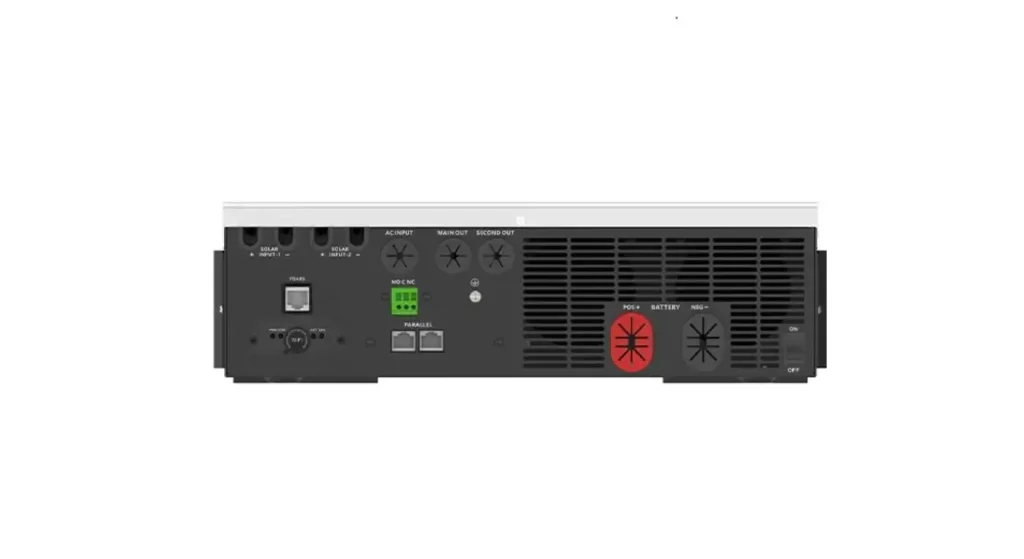
The input voltage (DC) of the inverter should be the same as the battery bank. Typical off-grid configurations are 24V and 48V systems, the appropriate one being determined by system power and cable length.
For a given output power, the higher the battery voltage, the lower the required DC current. This can result in smaller cable size, less heat loss and less voltage drop. Thus, 48V battery banks are often employed in higher power residential systems and 24V may be used in lower-power systems.
Battery capacity should be also tested separately. A better inverter will not make up for a battery which cannot deliver the energy to the inverter or has little useable energy. The battery chosen should have enough capacity to provide continuous current for the inverter and be able to handle the short bursts of current during the starting.
If you need a small application, you can check the 3kW 24V pure sine wave inverter. A 48V system is suitable for higher load systems.
Verify PV Input & MPPT Charging Capacity
If the inverter has a solar charge controller, the PV input rating should be matched with the solar panel array. Check PV maximum power, MPPT operation voltage range, maximum open circuit voltage and charging current.
In colder temperature, solar modules are able to deliver a higher open circuit voltage. String voltage calculated should not exceed the inverter PV input maximum under the lowest expected site temperature.
If the arrays are oriented in multiple directions or shading conditions, then multiple channels of MPPT may be beneficial. Dual MPPT charging by the 11kW pure sine wave solar inverter for more flexible array planning.
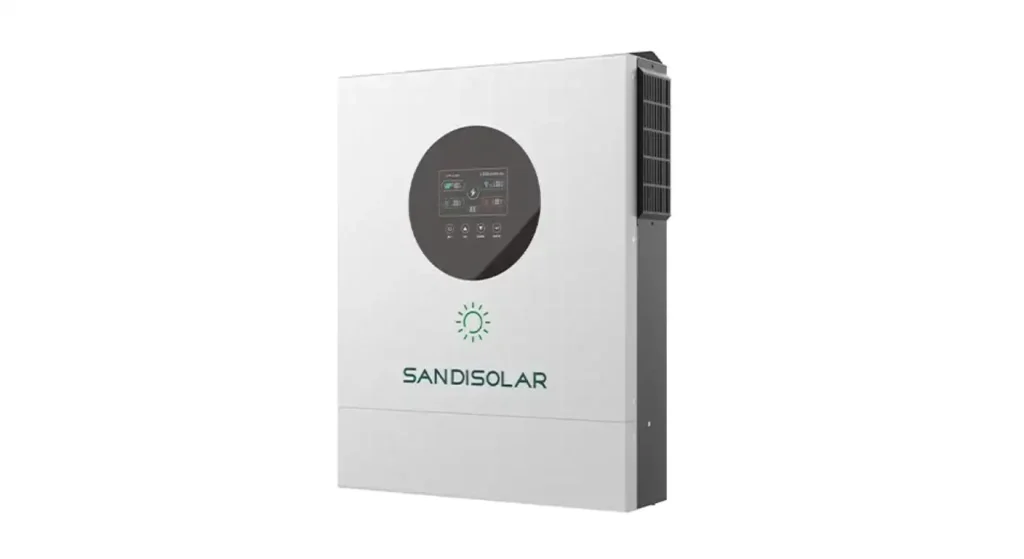
To read Battery Communication and Operating Priorities.
Lithium batteries are not just a DC power source. The information that can be exchanged between the inverter and battery management system includes state of charge, voltage limits, temperature and the allowable current for charging and discharging.
Order equipment for the correct protocol, communication port, battery type etc. Even if the two products are physically connected, it doesn't imply that they will exchange data in a proper manner.
The output priorities also impact daily system behaviour. How the available energy is distributed is dependent on the modes (solar-first, battery-first or utility-supported operation). It should be the same as the project objectives, such as energy independence, battery protection and/or backup availability.
Take into account Monitoring, Parallel Expansion and Environment
Remote monitoring can be used to view solar generation, battery status, load demand and fault records remotely by an installer or user, without opening the inverter enclosure. It is especially suitable for distributed installations, farms and remote homes.
If capacity expansion is foreseen, determine if the inverter can be paralleled and how many can be paralleled. There is the need for compatible models, communication cables and a proper designed distribution system for expansion also.
This must also be taken into account when installing. Life of inverter could be affected by dust, humidity, ambient temperature, ventilation and clearance. In agricultural or workshop or tropical applications the protection covers and good thermal management are more important.
Place an order for the Complete System.
Commissioning should involve testing the inverter and the solar array, battery bank and actual appliances. Start with small loads and then increase loads and motor-starting devices and observe voltage, frequency, current and temperature.
Protection functions also should be checked, such as overload, short circuit and low battery and overtemperature response. Communication alarm information and remote monitoring information must reflect the actual system status.
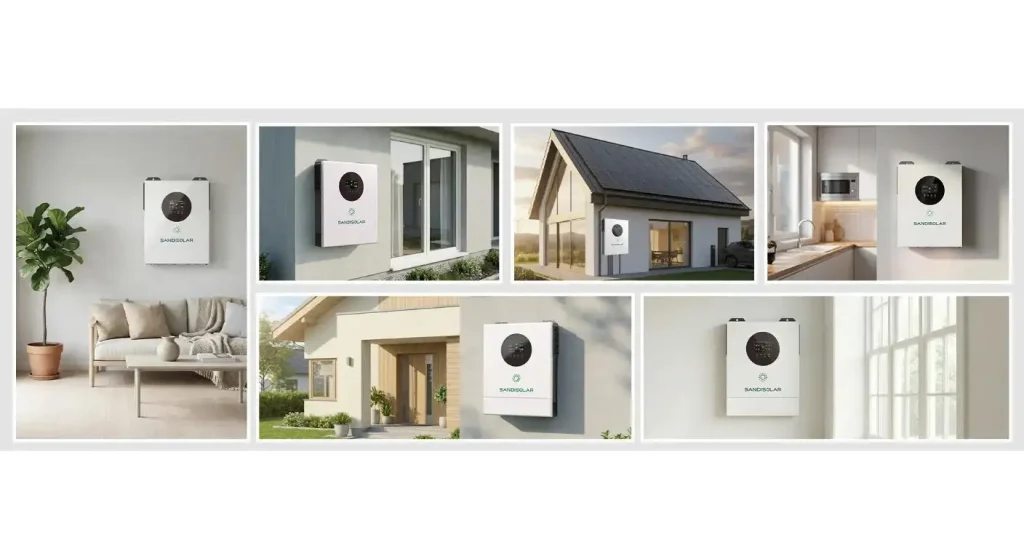
This residential energy storage solution demonstrates the seamless integration of inverters, batteries and photovoltaic modules to function as a single, coherent system, rather than as individual products.
| Inspection Area | Acceptance Focus | Verification Method |
| AC output | Stable voltage and frequency | Meter or monitoring interface |
| Motor starting | No overload shutdown | Start pump or compressor |
| Battery communication | Correct SOC and limit data | Inverter and BMS display |
| PV input | Voltage within permitted range | String voltage measurement |
| Protection | Alarms and shutdown operate correctly | Controlled functional test |
| Remote monitoring | Accurate live data and records | WiFi or monitoring platform |
Conclusion
The complete energy system should be looked at when selecting an inverter that is a pure sine wave inverter. Factors such as load type, starting surge, battery voltage, PV input and charging capacity and communication compatibility determine the reliability of the system.
It is better to select an extra wattage with a definite purpose, than to make the selection out of a clear load audit and coordinated electrical design. The inverter, battery and solar array are properly matched, allowing the system to deliver stable power with space for safe future expansion.
FAQs
Q1. Does the pure sine wave inverter need to be used with all appliances?
Not all simple resistive load use one. But a pure sine wave output is a better choice for systems that power motors, compressors and electronic controls, as well as mixed household loads.
Q2. What should the rating of the inverter be that is larger compared to the calculated load?
The inverter should be a fair size over what you are using, but not too large or it will cost more and will idle more. The final margin should be based on starting surge and simultaneous demand.
Q3. Will a 24 volt battery operate a 48 volt inverter?
No. Inverter rated DC input should be equal to the nominal battery-bank voltage unless a specially-designed DC conversion system is employed.
Q4. Is it possible to use a pure sine wave inverter without a battery?
Depending on the PV conditions, some models of solar inverter can operate without batteries. This is not always available on every inverter, and must be verified in the product specifications.
Q5. What is the significance of Lithium communication battery?
Communication enables the inverter to track battery charge and discharge limits and protection. It can help coordination and minimise the potential for incompatible manual settings.


Contact Us
In This Article
Related Posts
C&I PV System Design: How to Plan Commercial Rooftop and Ground-Mounted Solar
October 30, 2026
What Is C&I Solar? A Guide to Commercial and Industrial Solar Systems and Examples
October 29, 2026
How to Become a SANDISOLAR Solar Distributor in Poland and Develop Your Storage Business
October 28, 2026