
Pure Sine Wave Solar Inverter: Stop Wasting Solar Energy to Dirty Power
By hqt
2026.05.11Related Posts
48V 6kW Off Grid Inverter: Why 48V Battery Systems Are Common for Higher-Power Solar Systems
August 31, 2026

Residential Solar System Installation: Technical Sizing, System Matching and Installation Guide
August 31, 2026

48 Volt Inverter for Solar Battery Storage: Key Specifications Buyers Should Compare
August 27, 2026
You have invested in solar panels, batteries, and installation. But if your Pure Sine Wave Solar Inverter is not actually delivering clean, stable electricity, you are throwing energy away every single day. Many off-grid systems still rely on modified sine wave inverters or outdated units that struggle with modern loads. The result is overheating motors, buzzing lights, and electronics that fail months before they should. Worse, energy efficiency drops because the inverter cannot handle voltage swings or mixed loads properly.

A proper Pure Sine Wave Solar Inverter solves all of that. It ensures every watt from your solar array reaches your appliances in a usable form. No waste. No damage. No second-guessing. This article explains why dirty power costs you money, how a quality Pure Sine Wave Solar Inverter prevents that loss, and what specifications actually matter when you buy in 2026.
What "Dirty Power" Really Means for Your System
Dirty power refers to electricity with unstable voltage, inconsistent frequency, or a stepped waveform. Modified sine wave inverters produce this type of output. They are cheaper upfront, but they create real problems:
•Motors run hotter: Refrigerators, pumps, and fans draw more current than needed, wasting energy.
•Electronics malfunction: Chargers, medical devices, and variable speed tools may not start at all.
•Capacitors wear out faster: Appliances see excess ripple current, shortening their lifespan.
Every time your inverter struggles to clean up its own output, you lose efficiency. Some modified units operate at 75–80% efficiency with inductive loads. A quality Pure Sine Wave Solar Inverter maintains 90–94% across nearly any load type.
That difference matters. On a 5kW system, a 10% efficiency gap means 500 watts lost as heat. Over a year, that is hundreds of kilowatt-hours gone.

How a Pure Sine Wave Solar Inverter Prevents Energy Waste
A true Pure Sine Wave Solar Inverter recreates the exact waveform of grid power. It is smooth, continuous, and matches utility voltage standards. Here’s why this is significant:
• Decreased power consumption by motors:
Inductive loads such as pumps and compressors are quieter and cooler. They achieve operation faster and use less current after users report an average energy use reduction of 10%–15% on refrigeration circuits after switching.
• Eliminates harmonic distortion:
Harmonics are electrical noise that wastes energy as heat. Cheap inverters produce 10–20% total harmonic distortion (THD). A quality Pure Sine Wave Solar Inverter keeps THD below 3%—even with mixed loads.
• Supports power factor correction:
Modern appliances have active power supplies. They work best with clean sine waves. When the waveform is clean, power factor stays high, and your solar array delivers more usable wattage to the load.
In real-world off-grid sites, replacing a modified inverter with a Pure Sine Wave Solar Inverter often recovers 8–12% of lost capacity without adding a single solar panel.
Features That Define a High-Efficiency Pure Sine Wave Solar Inverter
Not all pure sine wave units perform the same. When evaluating a Pure Sine Wave Solar Inverter, focus on these specific features:
• Low no-load consumption: Look for units drawing under 15 watts at idle. Higher draw wastes battery capacity overnight.
• Versatile MPPT voltage: A quality inverter with integrated MPPT is capable of handling a variety of PV inputs from 120-500Vdc. This will optimize the morning harvest and minimize the cable losses.
• Adjustable charge parameters: You need voltage and current limits that match your lithium or lead-acid battery bank. One-size-fits-all charging wastes energy.
• Fast load switching: Sub-15ms transfer time prevents appliance resets during grid or generator failover. No lost work, no reboots.
• Generator compatibility: The best units accept AC input from diesel or gas gensets and blend it with solar. This cuts fuel use by 40–60%.
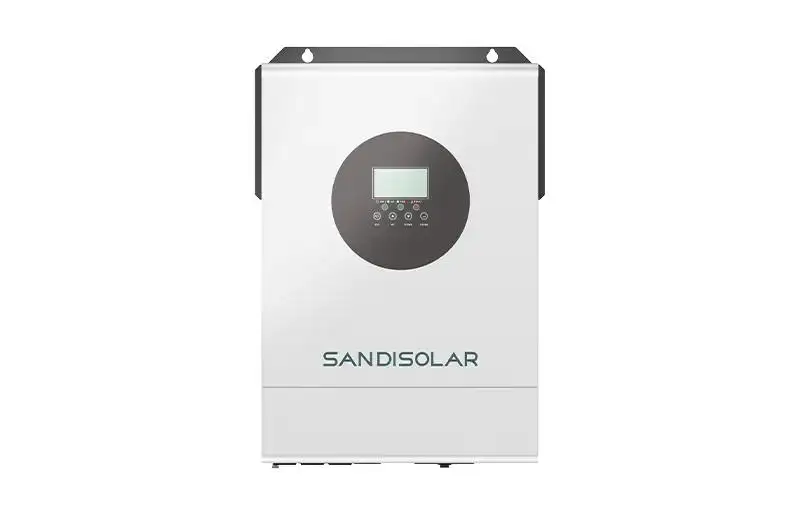
SANDISOLAR designs every Pure Sine Wave Solar Inverter with these specifications in mind. Our units run at 90–94% peak efficiency, support 500Vdc PV input, and operate comfortably without a battery if needed.
Real Applications Where Pure Sine Wave Saves Energy
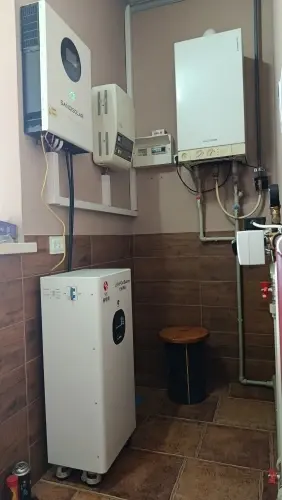
The efficiency gains of a Pure Sine Wave Solar Inverter show up clearly in specific use cases:
• Remote clinics: Medical refrigerators and diagnostic gear require stable power. Dirty power causes temperature swings and calibration drift. Clean sine wave eliminates both.
• Telecom towers: Radio equipment is sensitive to voltage ripple. A high-quality Pure Sine Wave Solar Inverter minimizes radio interference.
• Small manufacturing: Motors typically start faster and use less current. Users regularly reduce the tier of their inverter requirement by one full tier after switching to Pure Sine Wave.
• Farms and irrigation: Well pumps run fewer hours each day as they achieve the necessary pressure sooner. Savings in energy costs of 10 - 15% are the norm.
In each case, the fastest payback occurs not by using less expensive components, but by increasing the capture and usage of the solar energy that is already being produced.
Why Pure Sine Wave is What the 2026 Buyers Want
The expectations have changed. 5 years ago, Pure Sine Wave was the top tier option. Today, this is the minimum expectation for serious off-grid living and business continuity.
Some shifts in this way include:
• Lithium battery gain: Lithium Banks have faster charge times and more exact control of voltages. A good Pure Sine Wave Solar Inverter protects that investment.
• More sensitive electronics: Modern homes have inverters, touchscreens, and LED drivers. All need clean power.
• Higher energy costs: Wasting 10% of your solar harvest is no longer acceptable. Buyers calculate payback periods in months, not years.
SANDISOLAR builds Pure Sine Wave Solar Inverters that meet 2026 demands. Our SD-HYM series runs from 3kW to 11kW, supports parallel networking up to six units, and includes built-in WiFi for remote monitoring.
Summary: Stop Letting Dirty Power Steal Your Solar Harvest
You installed solar to save money and gain independence. Every watt your inverter wastes works against that goal. A Pure Sine Wave Solar Inverter is not a luxury. It is the most cost-effective efficiency upgrade you can make.
Look for low idle consumption, wide MPPT range, fast transfer time, and clean output under 3% THD. That is what separates real performance from marketing claims.
SANDISOLAR delivers that performance. Our Pure Sine Wave Solar Inverters are used in remote homes, telecom sites, farms, and small businesses across EU and US markets. They are certified, reliable, and designed to stop energy waste.
FAQs
Q: Can a Pure Sine Wave Solar Inverter function without batteries?
A: Definitely, SD-HYM units from SANDISOLAR have this capability. They utilize the solar panels directly, and when the sunlight becomes insufficient, the units change over to the grid or generator.
Q: What is the amount of efficiency loss from Modified Sine Wave Inverters?
A: A modified Sine Wave Inverter loses about 10 to almost 15% efficiency loss. This is when the loads are induction based, say for example pumps or refrigerators. This loss will be manifested in the unit being worked for longer and almost wasting the energy as lost heat.
Q: What THD percentage is still reasonable?
A: For many sensitive electronics that may be disturbed by a THD effect, maintaining the THD is better when you keep it in the sub 5% range. A good Sine Wave Pure Solar Inverter will have the THD at a 3% limit, which is much better than not only a grid power supply, but almost all other types of solar inverters.
Q: Is the cost of running a Pure Sine Wave Solar Inverter more?
A: If you switch to a Pure Sine Wave Unit it is quite possible you will have a lower cost running the unit. The no-load power draw for the older modified designs is greater compared to many of the Pure Sine Wave units.
Q: Is it possible to use multiple Pure Sine Wave Solar Inverters to function in parallel for great gains?
A: Certainly, this is true for many of the units and especially for the SANDISOLAR's 6.2kW and 11kW units. For a 66kW output, you may have in parallel up to 6 units.


Contact Us
In This Article
Related Posts
48V 6kW Off Grid Inverter: Why 48V Battery Systems Are Common for Higher-Power Solar Systems
August 31, 2026
Residential Solar System Installation: Technical Sizing, System Matching and Installation Guide
August 31, 2026
48 Volt Inverter for Solar Battery Storage: Key Specifications Buyers Should Compare
August 27, 2026