
What Energy Storage System Price Includes: A Practical Guide for 2026
By hqt
2026.01.23Related Posts
48V 6kW Off Grid Inverter: Why 48V Battery Systems Are Common for Higher-Power Solar Systems
August 31, 2026

Residential Solar System Installation: Technical Sizing, System Matching and Installation Guide
August 31, 2026

48 Volt Inverter for Solar Battery Storage: Key Specifications Buyers Should Compare
August 27, 2026
The Energy Storage System Price on a proposal is not a single line item. It's a packaged outcome: batteries, power electronics, controls, safety systems, engineering hours, permits, and service commitments wrapped into one number that should translate into dependable power and lower operating costs. This field guide breaks down what a commercial and industrial (C&I) energy storage system actually includes, how 2026 pricing is formed, what to expect in a professional quote, how to connect features to business results, which KPIs to require, and clear answers to common technical questions. Based on real project experience, SANDISOLAR's perspective aims to help you buy confidently and avoid surprises.
What an ESS is - and Why C&I Sites Invest
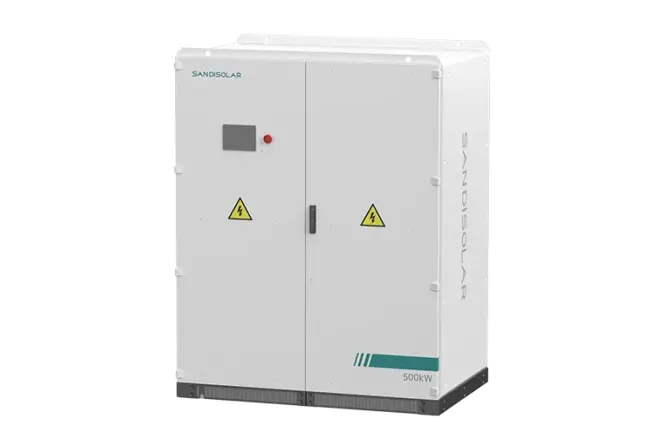
A C&I Energy Storage System (ESS) stores electricity when it's cheap or abundant and delivers it when your facility benefits most. A complete system typically combines:
•Battery modules and a battery management system, packaged in certified enclosures
•A bidirectional power conversion system (PCS) plus transformers and switchgear
•An energy management system (EMS) that monitors, forecasts, and dispatches
•Thermal control and fire protection
•Balance-of-plant hardware and the software that ties it all together
Most facilities adopt storage for three reasons. First, demand charges: short spikes can drive a big share of the monthly bill. Discharging through peaks trims those charges and smooths the load profile. Second, power quality: sensitive equipment and automated lines do better with stable voltage and frequency; fast inverters and smart controls can correct power factor and damp flicker. Third, resilience: storage supports critical loads and executes clean transfers when the grid stumbles so production doesn't.
Two technical choices influence both value and Energy Storage System Price: discharge duration and efficiency. Many C&I users opt for 2 - 4 hours to align with tariff windows and peak events without overspending on capacity. Modern systems deliver round-trip efficiencies around the high-80s to low-90s, depending on design and ambient conditions. Those parameters drive component sizing, cooling needs, and control strategies - choices that ripple through to price and performance.
The 2026 Energy Storage System Price landscape
In 2026, Energy Storage System Price is shaped by far more than the cost of cells. For typical C&I projects in the 1 - 5 MW, 2 - 10 MWh range, fully installed, turnkey pricing commonly lands:
•Around USD 320 - 480 per kWh of energy capacity
•Roughly USD 350 - 550 per kW of power capacity
Actuals vary with permitting, interconnection, site complexity, and local sourcing. Incentives, exchange rates, and utility requirements can move the delivered number meaningfully, for better or worse. Treat these figures as directional, not a quote.
What moves the price up or down:
•Battery chemistry and supply. LFP remains the C&I default for safety and stability; NMC may be chosen where space is tight. Cell pricing and logistics have a direct line to the final Energy Storage System Price.
•Scale and architecture. Larger, standardized blocks drive down per-unit costs and speed integration; bespoke designs tend to add engineering and test time.
•Power conversion and controls. Inverter ratings, transformer counts, protection schemes, and EMS sophistication affect both upfront cost and lifetime savings.
•Balance of system and civils. Switchgear, cabling, foundations, HVAC, and fire systems are real material costs; indoor vs. outdoor installs change the mechanical scope.
•Permitting and interconnection. Utility studies, protection settings, and compliance work add time and cost but are non-negotiable for reliable operation.
•Macroeconomic and trade factors. Inflation, tariffs, local content rules, and FX alter the Energy Storage System Price delivered to your site.
•Revenue stacking. Demand charge cuts, time-of-use arbitrage, backup value, and demand response can improve payback and effectively "lower" net cost per kilowatt-hour saved.
A practical point: total cost of ownership matters more than a low purchase line. The Energy Storage System Price is one lever. Efficiency, availability, warranty strength, service commitments, and degradation over 10 - 15 years determine the real return.
What a Good Quote Should Include - and What Usually Sits Outside
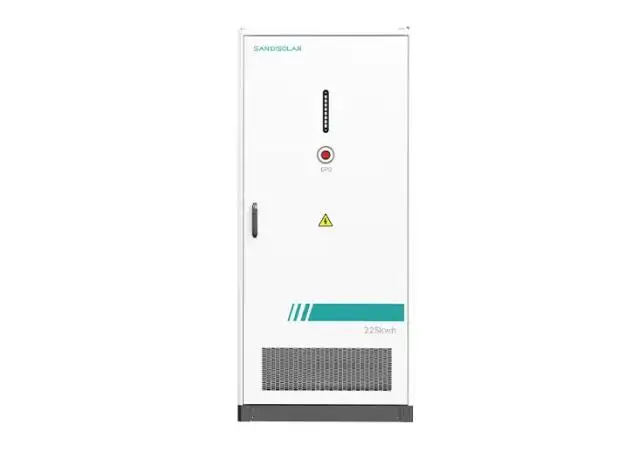
Clarity on scope keeps schedules intact and change orders to a minimum. A well-structured proposal specifies included scope and optional extras.
Included Scope of Supply and Services
•Battery system: Modular, stackable units with integrated BMS, voltage-matched; certified enclosures
•Power conversion and compliance: Bidirectional inverters, transformers, switchgear; grid-code features tuned to site conditions
•EMS/controls: Real-time dispatch and forecasting; SCADA/BMS integration supporting peak shaving, load shifting, and resilience
•Enclosures/thermal management: Climate-controlled housings; high-reliability cooling; thermal monitoring for safety and performance
•Fire protection: Detection and suppression systems with sequences compliant to recognized standards and insurer requirements
•Installation/commissioning: Mechanical/electrical works; FAT/SAT as applicable; performance validation; operator training
•Warranty/service: Product and performance warranties; optional extensions; structured O&M plans
Explicit Exclusions
•Site civil works beyond standard: Nonstandard foundations, structural reinforcement, extensive trenching
•Utility-side modifications: Feeders, relays, substation upgrades outside project fence
•Taxes, permits, fees: Local items billed separately
•Specialized communications/cybersecurity: Beyond standard protocols or enhanced hardening
•Long-term O&M: Offered separately with defined KPIs
Outcomes-Driven Approach
SANDISOLAR ties ESS pricing to verified savings and risk-reduction KPIs, ensuring the specification delivers measurable value.
•Modular scaling, not overbuilding. Expand capacity with demand instead of paying for idle assets at the outset. Increase capacity as loads rise instead of paying for idle assets from day one. That approach tightens cash flows, simplifies financing, and allows maintenance on one module without taking the fleet offline.
•Real-time peak control. Many facilities see demand charges make up 20 - 50% of monthly costs. Fast dispatch that flattens spikes can cut those charges by roughly 15 - 30%, while better power quality helps protect equipment and reduce nuisance trips.
•Voltage-class flexibility. Run LV or HV today and evolve later without tearing up the design.
•Thermal/fire systems on board: Keep cells in the sweet spot to maximize life and yield; compliant fire protection keeps permits and insurance moving, protecting the schedule.
•Island and reconnect without disruption: Carry essential loads through grid issues, then sync back seamlessly to curb downtime.
KPIs That Matter on Day One - and Year Ten
Ask vendors to commit to KPIs you can measure:
•Round-trip efficiency: High-80s to low-90s for contemporary systems; higher RTE means less energy lost and better economics
•Availability: >99% with clear service levels, including response times and spares strategy
•Response speed: Sub-second control for peak clipping and power quality support
•Degradation and guaranteed throughput: Explicit capacity fade expectations and lifetime energy delivery
•Safety and compliance: System-level certifications aligned with relevant standards to ease permitting and insurance
•EMS performance: Forecast accuracy, verified peak shaving results, and integration with plant and building systems
•Islanding performance: Transfer time, voltage/frequency control quality, and resynchronization behavior
Straight Answers to Frequent Technical Questions
- Low-voltage vs. high-voltage battery systems - how to choose?
High-voltage architectures reduce current at a given power, improving efficiency and easing cabling in larger systems. Low-voltage may align better with specific safety practices or legacy interfaces. SANDISOLAR supports both and matches the architecture to site layout, risk posture, and future expansion.
- What actually happens during a grid/off-grid transition?
The PCS maintains the voltage and frequency reference while the EMS monitors grid quality. If the grid crosses set thresholds, the system islands and serves designated loads. When the grid recovers, controls resynchronize phase, frequency, and voltage before a smooth reconnection - avoiding shocks to sensitive equipment.
- How does thermal management affect lifecycle cost?
Temperature control is one of the biggest drivers of battery life. Holding cells in their optimal window slows capacity fade, lowers the risk of thermal events, and cuts unplanned maintenance - all of which improve the value behind your Energy Storage System Price.
- Where's the bigger value: demand charge management or arbitrage?
In many C&I tariffs, demand charge reduction is the most reliable value stream. Time-of-use arbitrage adds upside where price spreads are wide. SANDISOLAR's EMS blends both, prioritizing dispatch based on your actual load and tariff to maximize net savings.
- What should I insist on in warranties?
Look for both product and performance terms. Throughput warranties specify minimum lifetime energy delivered; availability and response-time SLAs ensure day-to-day performance. Tie warranties to an O&M plan with clear KPIs so targets are maintained throughout the asset's life.
How SANDISOLAR Helps You Align Price with Outcomes
The "right" Energy Storage System Price balances acquisition cost with operational gains. SANDISOLAR starts with your data - tariffs, interval loads, critical processes, and growth forecasts - then models demand charge reduction, arbitrage potential, backup needs, and resilience value. Feature - benefit mapping: modular expansion to reduce initial capital expense; fast peak control to stabilize power quality; integrated safety to decrease permitting and insurance scrutiny. Analysis informs transparent pricing and defined scope linked to measurable outcomes.
Delivery approach: detailed inclusions/exclusions list, commissioning per agreed KPIs, and service packages matched to the client's operating model. As your facility evolves, we help you expand capacity without redoing the backbone. The outcome is an asset that pays back with savings and reliability - not a one-time equipment purchase.
Call to Action
Request a 2026 Energy Storage System Price breakdown tailored to your site. Engage SANDISOLAR for a complimentary preliminary load study and savings simulation. See how modular growth, real-time peak control, voltage-class flexibility, integrated safety, and seamless islanding can protect operations and optimize cost. Contact our team to schedule a site assessment and receive a clear, actionable proposal.


Contact Us
In This Article
Related Posts
48V 6kW Off Grid Inverter: Why 48V Battery Systems Are Common for Higher-Power Solar Systems
August 31, 2026
Residential Solar System Installation: Technical Sizing, System Matching and Installation Guide
August 31, 2026
48 Volt Inverter for Solar Battery Storage: Key Specifications Buyers Should Compare
August 27, 2026