
How To Match Inverters & Batteries: Lithium Battery for Solar Energy Storage(2026)
By hqt
2026.02.18Related Posts
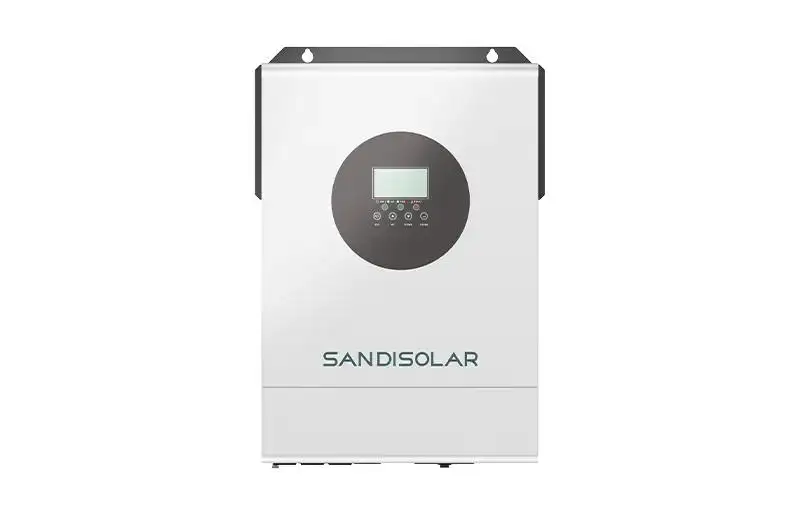
48V 6kW Off Grid Inverter: Why 48V Battery Systems Are Common for Higher-Power Solar Systems
August 31, 2026

Residential Solar System Installation: Technical Sizing, System Matching and Installation Guide
August 31, 2026

48 Volt Inverter for Solar Battery Storage: Key Specifications Buyers Should Compare
August 27, 2026
Lithium Battery for Solar Energy Storage is only as reliable as the inverter and battery settings behind it—so in 2026, matching these two parts correctly is the fastest way to get safe power, long cycle life, and predictable backup time. From SANDISOLAR's service perspective, we see the same pattern: most performance problems are not “bad products,” but simple mismatches (voltage, current, communication, and expansion planning).
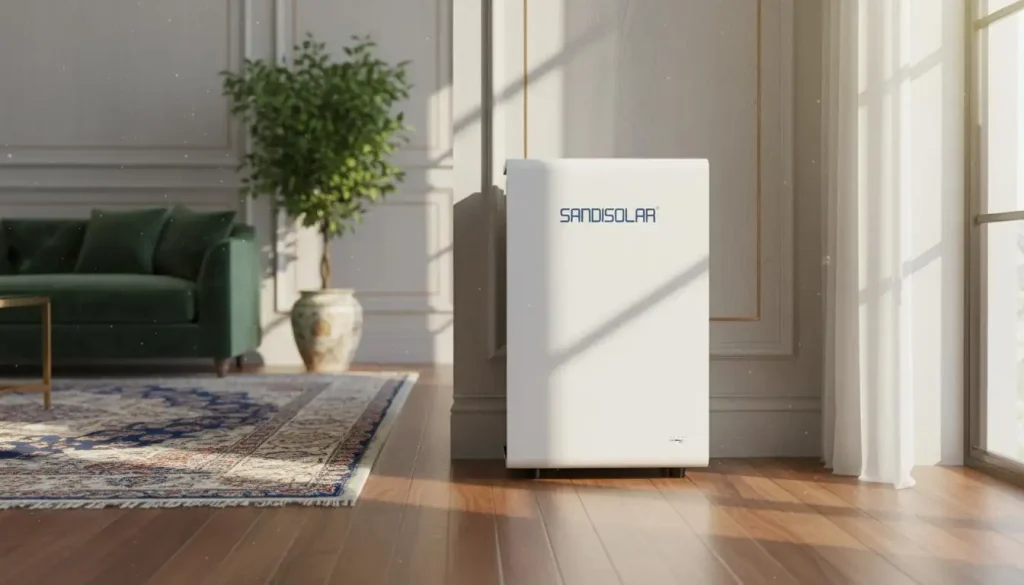
Understand the Two Jobs: Conversion and Storage
An inverter converts DC power into usable AC power for your home, RV, site, or facility. The battery stores energy and releases it when solar input drops or loads spike. When the inverter and battery are matched, the system feels “smooth”: stable voltage, fewer alarms, and better battery longevity.
For beginners, think of it like this: the inverter is the “engine,” while the Lithium Battery for Solar Energy Storage is the “fuel tank + safety system.” If the engine demands more than the tank can safely deliver (or charges it the wrong way), you get shutdowns, slow charging, or reduced lifespan.
A clean match depends on four basics: system voltage, charge/discharge current, battery protection logic, and future expansion. Once you lock these in, brand and model selection becomes much easier.
Choose the Right Battery Voltage for Your Inverter
Voltage is the first gate. If you choose the wrong voltage class, the inverter cannot operate efficiently—or at all. In real projects, the most common options are 12.8V, 25.6V, and 51.2V LiFePO4 packs, plus higher-voltage stackable ESS designs for larger systems.
At SANDISOLAR, we commonly notice that 51.2V systems hit a sweet spot for many solar storage setups because they reduce current for the same power level, which helps with cable losses and heat management. For example, our 51.2V battery family includes options like 51.2V 200Ah, 51.2V 300Ah, and 51.2V 320Ah models—useful when you want more runtime without changing your inverter platform.
To keep it simple:
✅ Match nominal voltage: a 48V-class inverter typically pairs with a 51.2V LiFePO4 battery bank.
✅ Avoid “almost the same” voltage: small differences can cause charging errors or frequent protection triggers.
✅ Plan for expansion early: if you may grow capacity later, pick a voltage platform that supports easy parallel or stackable upgrades.
This is where Lithium Battery for Solar Energy Storage choices become strategic. Voltage selection is not only about today's load—it decides what upgrades will be easy next year.
Match Power and Current: The Most Common Mistake
After voltage, the next mismatch is current. Even with correct voltage, an inverter can demand peak discharge current that a battery bank cannot comfortably supply. That leads to sudden low-voltage cutoffs or BMS protection events during motor starts or large appliance surges.
A practical approach is to size battery capacity to your load behavior, not only your daily kWh target. Batteries with fast response to charge input and load variation can stabilize real-world systems, especially when loads change quickly (worksites, mixed appliances, RV cycling). SANDISOLAR LiFePO4 designs are built for frequent charge/discharge operation, aiming for steady output and lower maintenance for long-term use.
Here are beginner-friendly checks we recommend:
✅ Confirm the inverter's max charge current (from solar + AC/generator). Ensure the battery bank can accept it.
✅ Confirm the inverter's max discharge / surge behavior. Add modules or increase capacity if you expect large start-up loads.
✅ Use shorter, thicker cables on lower-voltage systems to reduce voltage drop and heat.
If you want a simpler, safer sizing method, choose a Lithium Battery for Solar Energy Storage setup that can scale. A stackable structure is not just a design feature—it means you can increase capacity when your loads grow, instead of replacing the whole system.
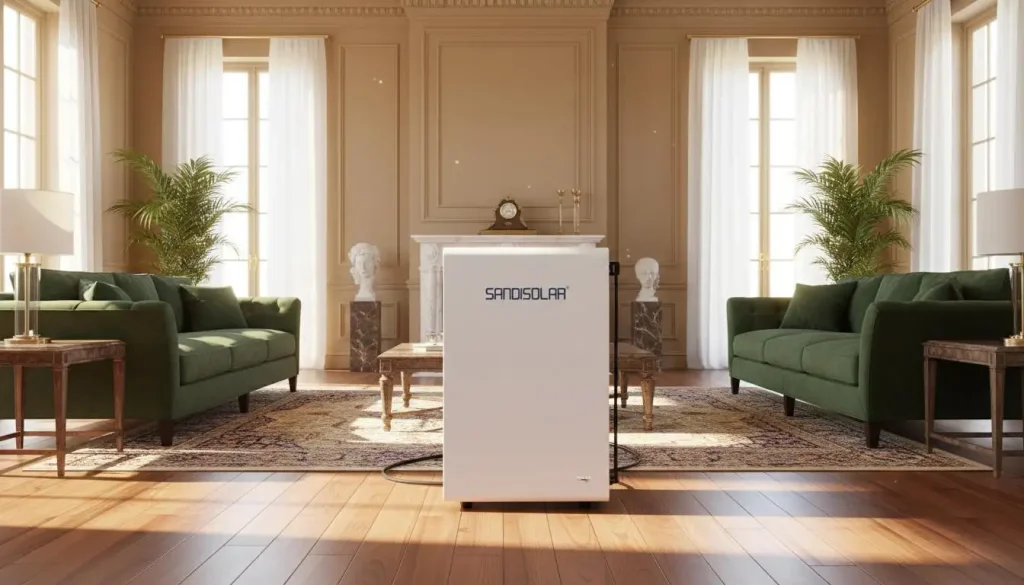
Use BMS Protection and Settings to Improve Safety and Lifespan
A battery is not “just cells.” A modern Lithium Battery for Solar Energy Storage system relies on a Battery Management System (BMS) to prevent the most costly failures: overcharge, over-discharge, and short circuit.
SANDISOLAR LiFePO4 chemistry is selected for a strong safety profile, helping reduce fire and thermal risk compared with many other lithium chemistries. With built-in BMS protection, the battery can react quickly to abnormal conditions and protect the system hardware.
For long-term value, settings matter as much as hardware. We typically guide customers to:
✅ Set conservative charge and discharge limits for daily cycling
✅ Use stable temperature and ventilation planning in the battery area
✅ Keep firmware and monitoring configurations consistent across modules (especially in larger banks)
In real deployments, LiFePO4's long cycling strength is a major advantage. Under standard conditions, designs may reach 6000 cycles, which supports multi-year use for solar self-consumption and backup planning. When customers follow correct inverter settings and avoid constant “full-to-empty” behavior, the battery bank keeps more usable capacity over time.
Plan Capacity With Real Numbers: kWh, Runtime, and Expansion
Capacity planning should start with outcomes: “How many hours do I need?” and “Which loads must stay on?” A common mistake is choosing a battery only by Ah without converting to energy.
One practical reference point is a rack module like 5.12kWh (51.2V, 100Ah). For a beginner, this helps you estimate how many modules you need for your desired runtime. If your essential loads are around 1kW, one 5.12kWh module could provide several hours of backup depending on inverter efficiency and your discharge limits.
For larger storage, high-voltage ESS designs can improve system efficiency and wiring simplicity. In SANDISOLAR's high-voltage ESS line, we highlight ≥97% efficiency and a designed lifespan ≥10 years as planning targets for customers building long-term energy independence, including megawatt-hour-scale applications.
A simple planning routine:
• Identify essential loads (refrigeration, lighting, network, medical devices, critical outlets)
• Estimate daily energy in kWh
• Add margin for cloudy days and seasonal variation
• Choose modular expansion if you expect future load growth
This is why we emphasize stackable and rack-mounted options: your Lithium Battery for Solar Energy Storage setup should grow with your project, not limit it.
A Practical Matching Checklist and a Clear Next Step
When customers ask SANDISOLAR to review a system design, we focus on a short checklist before discussing models. You can use the same checklist to avoid 80% of common issues:
✅ Inverter DC voltage class matches the battery nominal voltage (12.8V / 25.6V / 51.2V / HV ESS)
✅ Battery bank current capability matches inverter charge/discharge limits
✅ BMS protections align with inverter behavior (especially during surge loads)
✅ Monitoring/communication method is planned (for easier troubleshooting)
✅ Expansion method is defined (parallel capacity or stackable modules)
✅ Certifications and compliance match your market and installation needs (e.g., CE, RoHS, ISO 9001, UL, IEC 62109)
CTA: If you're planning a 2026 upgrade and want a clean match, send SANDISOLAR your inverter model, target loads, and preferred battery voltage (12.8V / 25.6V / 51.2V or high-voltage ESS). We can recommend a Lithium Battery for Solar Energy Storage configuration—rack-mounted or stackable—so your system charges smoothly, runs quietly, and stays protected for the long haul.
Share on Social:


Contact Us
In This Article
Related Posts
48V 6kW Off Grid Inverter: Why 48V Battery Systems Are Common for Higher-Power Solar Systems
August 31, 2026
Residential Solar System Installation: Technical Sizing, System Matching and Installation Guide
August 31, 2026
48 Volt Inverter for Solar Battery Storage: Key Specifications Buyers Should Compare
August 27, 2026