WORKSITE POWER · GUIDE
2026
Generators are the only option
Reliable power for remote worksites
without the diesel drag
solar inverter · hybrid backup · industrial use
📦 11 Parts + Conclusion
👉 Slide
PART 01
Why worksites are adopting solar inverters
Power demand is changing fast
PART 02
What is a worksite solar inverter?
Core system basics
PART 03
Key benefits on worksites
Cost, quality, comfort
PART ///
写在最后
Summary and next steps
When grid access is limited, a well-designed inverter system keeps work moving.
Solar power is now a practical worksite option
Solar power has become a practical alternative to generators on many modern and remote worksites. Laptops, lighting, welding machines, drills, pumps and site offices all depend on a stable electricity supply, yet grid access can be limited and diesel generators can be expensive, noisy and maintenance-heavy. In these situations, a solar inverter for worksite use offers a clean, reliable option for professional operations.
Sandi Solar designs and manufactures inverter and energy solutions for project owners, contractors and industrial users who need dependable off-grid and backup power without sacrificing performance, safety or cost control. The sections below outline how worksite solar inverters function, what to consider when choosing equipment, and how to set up a system that fits your operating needs.
Why worksites are adopting solar inverters
WORKSITE SHIFT
Construction and industrial sites are more tool- and data-intensive than in the past. Alongside power tools, they often rely on temporary offices, control rooms, IT equipment, safety systems, lighting, CCTV, water pumps and even EV chargers in some regions.
Temporary offices and containerized control rooms
IT and networking equipment
Safety and access control systems
Water pumps and small machinery
EV chargers for electric tools or vehicles in some regions
Conventional generators can supply power but often create problems. Fuel costs keep rising, delivery and storage add logistics pressure, and noise plus exhaust fumes affect workers and nearby communities. They also need frequent servicing and can introduce voltage and frequency variations that damage sensitive electronics.
Rising fuel costs and logistics for delivery and storage
Noise and exhaust fumes that affect workers and nearby communities
Frequent servicing and potential downtime
Voltage and frequency variations that can damage sensitive electronics
A well-designed solar inverter system delivers stable, clean electricity. It can serve as the primary power source or work alongside existing grid and generator supplies in a hybrid setup.
What is a worksite solar inverter?
SYSTEM BASICS
A solar inverter for worksite applications is an industrial-grade inverter that converts DC electricity from solar panels and batteries into AC power for tools and equipment. Compared with typical residential units, worksite inverters are built for higher surge power, longer operating hours, rugged enclosures and operation with multiple power sources.
Higher surge power to handle motor start-up
Longer operating hours and higher duty cycles
Rugged, often portable or semi-portable enclosures
Operation with solar, grid, generator and battery sources
A typical worksite solar power system includes solar panels, a solar inverter, a battery bank, a charge controller or integrated MPPT, and a distribution board with protective devices. Sandi Solar applies its experience in off-grid and hybrid inverter systems to design solutions that fit demanding worksite conditions.
Key benefits of solar inverters on worksites
BENEFITS
1
Lower operating costs: solar can cut diesel run time, reduce fuel transport and storage, and lower the frequency of generator maintenance and repairs.
2
Better power quality: stable voltage, pure sine wave output and built-in protections help prevent tool failures, unplanned downtime and data loss.
3
Cleaner and quieter sites: solar generation produces no local noise and no exhaust fumes, improving comfort and compliance.
4
Flexible operation: a worksite solar inverter can run off-grid, work in parallel with grid supply, or integrate with generators in a hybrid arrangement.
Core features to consider in a worksite solar inverter
SPEC CHECKLIST
1
Power rating and surge capability matter because grinders, compressors and pumps can draw higher current at start-up. The inverter should cover continuous demand and offer strong surge capacity, often two to three times the rated power.
2
Robust design for harsh conditions is essential on dusty, hot and vibration-heavy sites. Look for industrial housings, effective thermal management and suitable protection guidance for the environment.
3
Smart control and safety functions should include automatic source transfer, programmable priority modes, alarms, protection functions and monitoring interfaces.
4
Battery and solar compatibility should match the chosen chemistry, battery voltage and solar input limits. An integrated MPPT controller improves yield under changing conditions.
Practical steps for sizing a worksite solar inverter
SIZING
1
Define the load profile: list all equipment, rated power, duty cycles and simultaneous loads to estimate peak demand and average daily energy consumption.
2
Choose the operating mode: decide whether the inverter will be the main source, part of a hybrid system or mainly backup power during outages.
3
Select inverter power and battery voltage: keep continuous power above peak demand and consider higher voltages such as 48 V for efficiency and lower cable losses.
4
Size the solar array and storage: aim to cover most consumption with solar, then size batteries for night loads, cloudy periods and short-term peaks.
The best balance depends on project timelines, critical loads and available budget. Working with an experienced supplier like Sandi Solar can help confirm sizing decisions and the overall system architecture.
Common worksite uses for solar inverters
USE CASES
Remote construction and mining camps
Where grid connection is impractical or very costly, solar inverter systems can power accommodation areas, processing equipment and water treatment or pumping, with generators providing extra security during poor weather.
Temporary site offices and project containers
Stable power keeps computers, networking equipment, meeting systems, lighting, heating or cooling, and safety and monitoring devices running without constant generator noise.
Mobile maintenance and service teams
Portable solar and inverter systems support cordless tool charging, small welders, soldering stations, diagnostic gear and temporary lighting for crews moving between sites.
Events, film work and temporary industrial setups
These applications benefit from quiet operation, better air quality and modular layouts for lighting, audio, production equipment and temporary installations.
Working alongside generators and grid supply
HYBRID MODE
For many operators, the goal is to use generators more efficiently rather than remove them entirely. A hybrid strategy lets solar cover daytime base loads, batteries handle short-term peaks and night-time use, and generators step in only when solar and storage cannot meet demand.
Battery
Peaks and night use
Generator
Backup when needed
Smart inverters coordinate sources so fuel use drops and efficiency rises.
On grid-connected sites with unreliable service, solar inverters can provide seamless backup during outages, help with peak shaving in some markets and improve resilience for critical tools and systems.
Implementing a solar inverter system on a worksite
INSTALLATION
Before installation, consider local electrical safety rules, site layout, future expansion potential and maintenance access. Engaging a specialist supplier helps ensure these points are covered from the outset.
STEP 02
Installation practices
Mount solar panels securely, use correctly sized cables and protective devices, follow manufacturer guidance for inverter placement and ventilation, and apply clear labeling plus lockout procedures for maintenance. Commissioning should include functional testing with realistic loads.
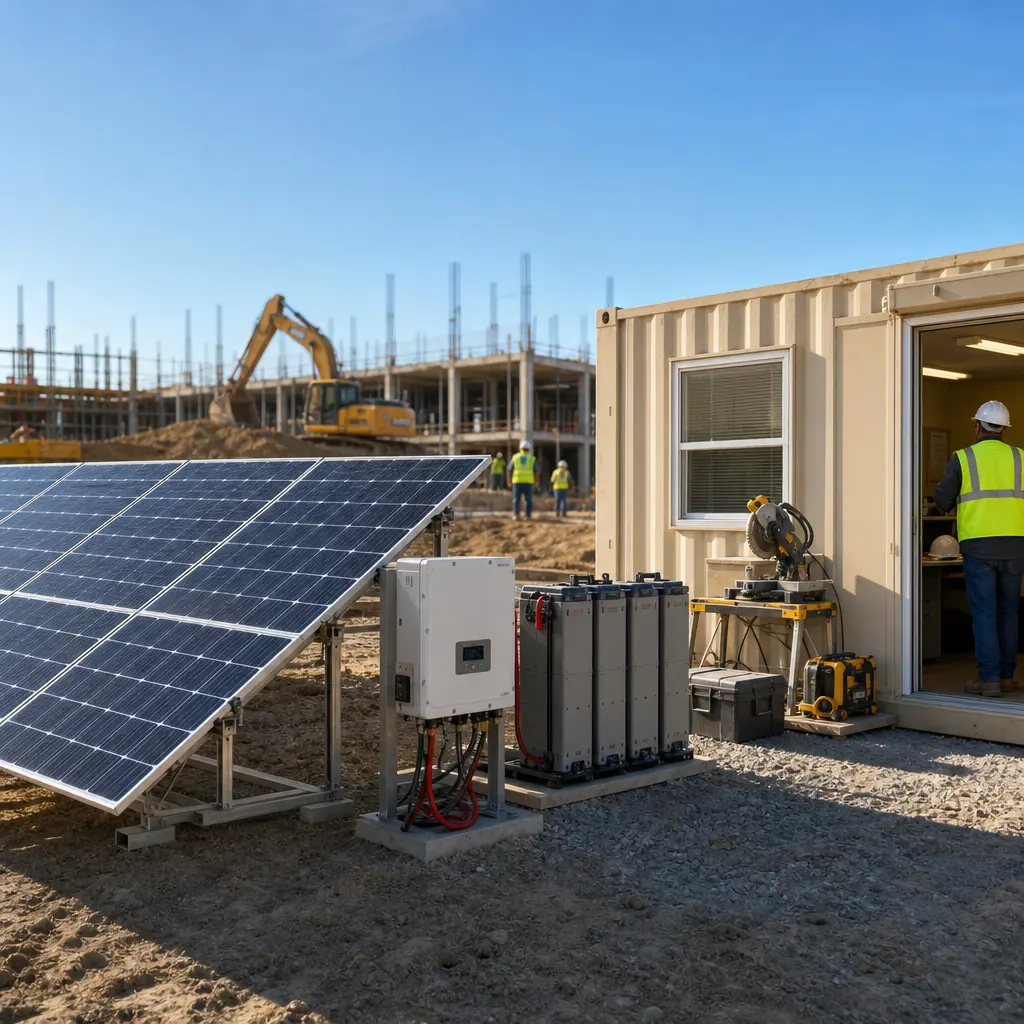
Construction worksite with ground-mounted solar panels connected to an inverter and battery bank powering a temporary office and tools, 1600x900
How Sandi Solar supports worksite projects
SUPPORT
Sandi Solar focuses on professional inverter and energy solutions for customers worldwide. For worksite and industrial power needs, the company offers support with inverter selection, tailored off-grid or hybrid setups, designs suited to challenging environments, and a focus on safety, reliability and long-term service.
Support with inverter selection and system design
Tailored setups for off-grid, hybrid and backup applications
Designs suited to challenging environments
Focus on safety, reliability and long-term service
By combining engineering knowledge with field experience, Sandi Solar helps project teams move from concept to working systems with confidence.
FAQ: solar inverters for worksites
FAQ
1
What size solar inverter does a worksite need? It depends on simultaneous load, surge requirements and whether the inverter is the main supply or works with grid or generator support. Many small and medium sites start in the low kilowatt range and expand as needs grow.
2
Can a solar inverter fully replace a diesel generator? Sometimes yes, especially on smaller or efficient sites. Many projects still choose hybrid systems so generators remain available for long low-sun periods, very high peaks and critical backup situations.
3
Are solar inverter systems suitable for temporary projects? Yes. Modular equipment can serve short-term construction sites, seasonal industrial work, temporary events and installations, and it can be moved to new projects later.
4
How does weather affect system performance? Cloudy or rainy weather reduces panel output, but the inverter continues to operate as long as solar or battery input is sufficient. Critical loads can be protected by adding batteries and, where needed, generators.
5
What maintenance do these systems need? Typical maintenance includes visual checks, panel cleaning, inspection of electrical connections and protective devices, plus performance and event-log monitoring.
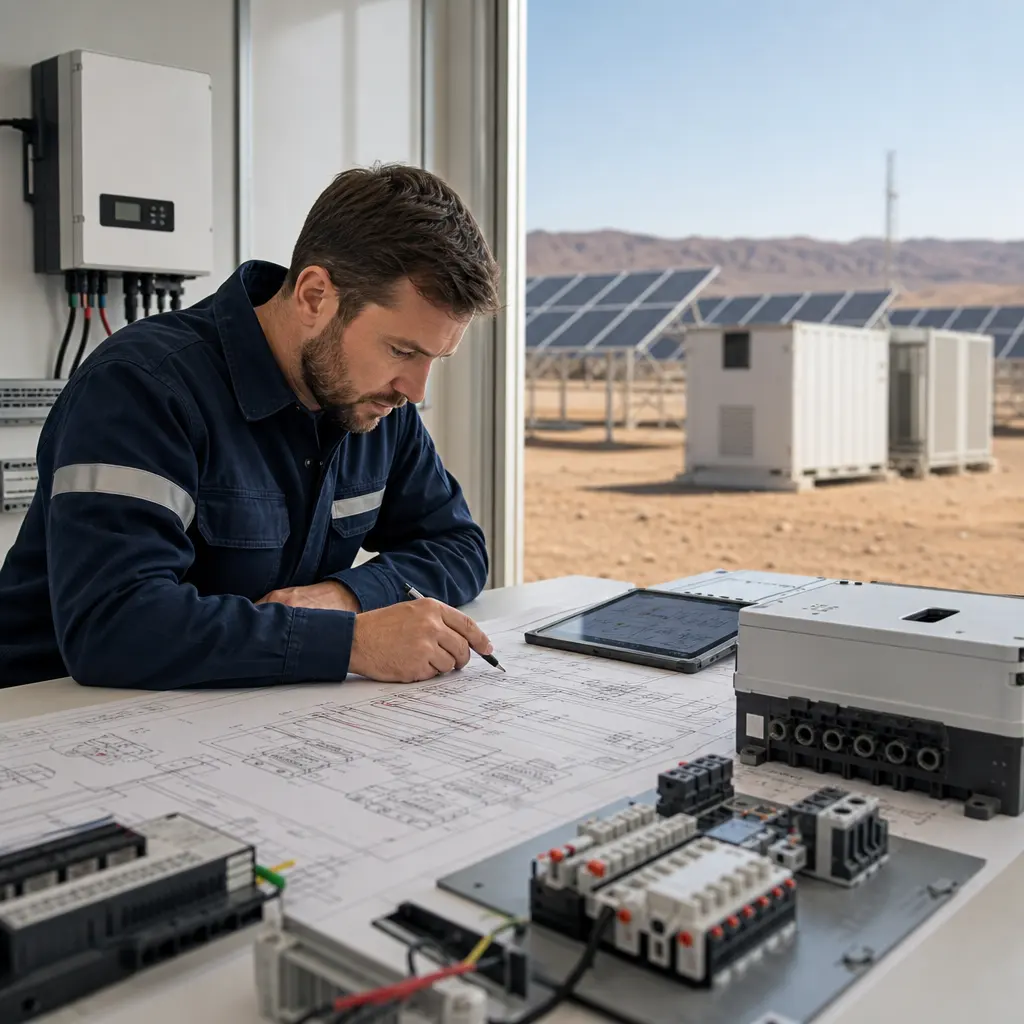
Technical engineer reviewing a solar inverter system design for a remote industrial worksite, with diagrams and component layout on a table, 1600x900
Choosing an appropriate solar inverter for worksite applications helps construction and industrial operators reduce fuel and operating costs, improve power quality, create quieter and lower-emission sites, and increase resilience in remote locations and unstable-grid environments.
When inverter capacity, solar array size and storage are matched to real load profiles and integrated sensibly with existing infrastructure, the result is a power system that supports productivity, safety and long-term value.
Sandi Solar works with professional users to deliver dependable inverter solutions and sound system design. For teams planning or running worksites and considering solar power, Sandi Solar can help evaluate options and define configurations that meet both technical requirements and day-to-day operating needs.
Reliable power is a system choice, not just a generator choice.
Match the inverter, battery and solar array to the real load profile, then keep a hybrid path ready when conditions change.
既然看到这里了,如果觉得有用,随手点个赞、在看、转发三连吧。
THANKS FOR READING