
From Hurricanes to Wildfires: US 110V Solar Inverter Saves the Day
By hqt
2026.06.18Related Posts
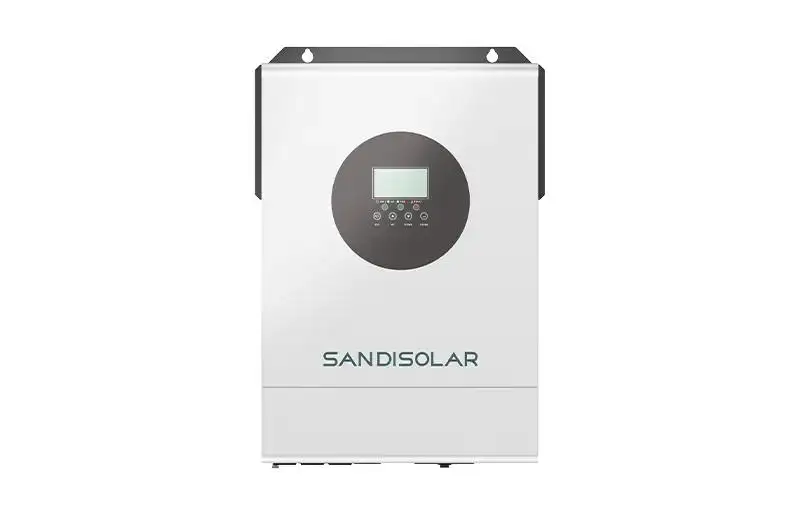
48V 6kW Off Grid Inverter: Why 48V Battery Systems Are Common for Higher-Power Solar Systems
August 31, 2026

Residential Solar System Installation: Technical Sizing, System Matching and Installation Guide
August 31, 2026

48 Volt Inverter for Solar Battery Storage: Key Specifications Buyers Should Compare
August 27, 2026
Intense weather is now the norm. Annual hurricanes on the Gulf Coast, wildfires in California, winter storms in Texas, and power grid crises in the Northeast have created millions of power outages across the US. These situations demonstrate that an emergency back-up power supply is essential. Traditional gas-powered generators have dominated the market, but the need to store fuel, along with the noise and carbon monoxide risks make them problematic. Now, US homeowners, RV owners, and small businesses are choosing a better option that is quieter, cleaner, and more flexible: the 110V solar inverter.
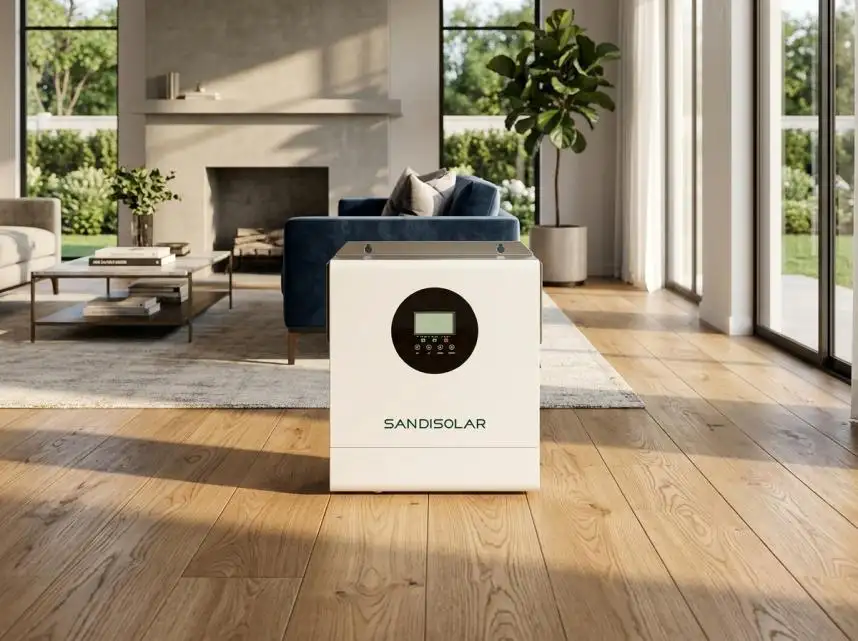
This article outlines the 110V solar inverter, details the US emergency market that it serves, and explains how sophisticated models like the SANDISOLAR 2430W-US (SD-HYM-2430HW-US) prepare for the worst by incorporating solar charging, battery-free design, and pure sine wave output.
The US Demand for Dependable Emergency Power
US power outages are becoming a regular occurrence. The combination of an aging power grid and climate change have resulted in extended blackouts in formerly urban safe regions.
• East Coast and Southeast Hurricanes: Winds and flooding make power line repair impossible for blacked out fuel delivery.
• West Coast Wildfires: A safety-driven power shutoff occurs to prevent igniting wildfires, where homes are left without power during peak heat.
• Texas and Midwest Winter Storms: The 2021 Texas Power Crisis is a prime example of an energy abundant state experiencing a total grid failure with below freezing the render natural gas inoperable.
In these situations, a traditional generator depends on stored propane or gasoline, which are limited especially when you can't access the roads. A better option is a solar-powered system like a US 110V solar inverter with solar panels. It provides a self-renewing energy system every sunny day.
Understanding U.S. 110V Solar Inverters
A US 110V solar inverter is a system that takes the DC electricity produced by solar panels and transforms them to AC electricity at 110–120V / 60Hz, which conforms to the standards of most US residential appliances. As opposed to grid-tied inverters, US 110V solar inverters do not shut down during a power outage.
Key characteristics of a US 110V solar inverter designed with emergencies in mind are:
• Voltage compatibility - works with US NEMA 5-15 and NEMA 5-20 outlets.
• Provides pure sine wave output: Delivers electrical form perfectly aligned with US power grid.
• MPPT charge controller (Maximum Power Point Tracking).
• Battery optionality: Some solar inverters offer the option to dispense with battery banks during the day.
The SANDISOLAR 2430W-US incorporates the aforementioned design features in emergency situations and is a good example within the market.
Key Benefits of the SANDISOLAR 2430W-US for Emergency Situations
The SANDISOLAR 2430W-US is a 3kW (3KVA) off-grid inverter, with a nominal 110/120VAC output. Below, we analyze additional core attributes related to emergency preparedness.
A. Battery-Free System for Fast Access to Daytime Power
• No batteries required: This inverter can access energy from the solar array directly to supply loads in the presence of solar irradiance. It therefore eliminates the investment in a battery bank.
• Reduced cost: In an emergency, the first phase of the system can consist of only the inverter and a few solar panels, with the LiFePO4 battery bank added subsequently when resources allow.
• Useful for loads: This makes it possible to run a refrigerator, a CPAP machine, or charge phones during the day.
B. 100A MPPT, Allowing for the Capture of 5000W of Solar Energy
• Rapid capture of energy: The 100A MPPT solar charge controller integrated into the inverter captures the most energy possible from the solar array, even with rapid fluctuations in the weather.
• Robust PV input: The inverter can support a number of high-voltage solar panels, allowing for a significant reduction in a number of wiring considerations.
• Greater power = lower cost: Legislation designed to capture the most solar energy possible will maximize the power available in an emergency response situation, thus decreasing the cost per unit of power captured.
C. Pure Sine Wave Output for Sensitive Electronics
• Stable and clean power: The inverter provides pure sine wave AC identical to that of the grid. This eliminates error and overheating in refrigerators with digital controls, medical oxygen concentrators, and laptop chargers.
• No harmonic distortion: The pure sine wave design safeguards your valuable appliances during long power outages.
D. Power Factor (PF) of 1.0 – Grid-Friendly Efficiency
• A PF of 1.0 is of minimal reactive power: The inverter uses real power almost to perfection, eliminating the circulation of current that may cause overload in extension cords and small backup circuits.
• Less line loss: A 110V system with higher currents than a 230V system, a higher power factor is of great advantage in long runs of cables from the solar arrays to the inverter.
E. RS485 Communication for LiFePO4 Battery Integration
• Easy battery management: When you decide to add energy storage, the inverter uses RS485 to communicate with the LiFePO4 batteries and the battery management system (BMS) to relay the state of charge and temperature.
• Battery performance and service life: The emergency system becomes more sustainable over the years of infrequent use with the improved performance of the batteries through equalization charging.
F. Detachable Dust Cover for Harsh Environments
• Reliable under challenging conditions: After a hurricane or wildfire, dust, ash, and debris are everywhere. The removable dust cover protects the internal electronics, and helps the inverter stay functional when you need it.
• Easy cleaning: The cover is designed to be removed for cleaning and/or replaced. This can help prolong product longevity when used in off-grid garages, barns, or in RV compartments.
G. Built-in Wi-Fi for Remote Monitoring
Real-time status of the system: With built-in Wi-Fi, and the mobile app or web portal, you are able to monitor solar system generation, system output power, battery voltage (if connected), and the fault status of the system from almost anywhere.
Proactive troubleshooting: During an evacuation, the backup system can be checked for functionality, and the obstruction of a solar panel by debris can be verified.
Practical Applications: From Hurricane Shelters to Wildfire Evacuation Sites
The US 110V solar inverter is ideal for several emergency situations where fuel-based generators are unfeasible.
• Hurricane aftermath (Florida, Louisiana, Texas coast): After heavily impacted areas of the storm, gas stations can be closed for many days or even weeks. A solar inverter with 5000W of panels can provide daytime power for a chest freezer, fans, and communications gear without ever needing fuel.
• Wildfire PSPS events (California, Oregon, Colorado): When utilities deliberately cut power, a silent solar inverter does not produce sparks or carbon monoxide, making it safe to use indoors (as long as batteries are placed outside or ventilated).
• Winter storm blackouts (Texas, Oklahoma, Arkansas): On sunny winter days, cold temperatures actually improve solar panel efficiency. The inverter can power a furnace blower (gas heating requires only electricity for the fan) and sump pumps.
• RV and mobile command centers: Emergency responders and displaced families living in RVs can use the inverter to run 110V air conditioners and medical devices without idling a noisy generator.
How to Build a Basic 110V Solar Emergency Kit with the 2430W-US
You do not need a complex installation to gain emergency benefits. A minimal setup includes:
• SANDISOLAR 2430W-US inverter (3kW continuous output, 110/120VAC).
• Four to six 400W solar panels (total 1600–2400W, well within the 5000W PV limit).
• MC4 connectors and 10 AWG solar cables (to handle the current safely).
• Optional but recommended: One or two 48V LiFePO4 batteries (via RS485 communication) for nighttime power.
Manual transfer switch or heavy-duty extension cord to connect the inverter to critical loads (refrigerator, router, phone chargers, LED lights).
During daylight, the inverter runs directly from solar panels. At night, if you have batteries, it seamlessly draws stored energy. Without batteries, the system simply waits for sunrise—but it still keeps food cold all day.
Conclusion
US disasters demand better backup. Gas generators fail. A US 110V solar inverter like SANDISOLAR 2430W-US offers silent, fuel‑free, pure sine wave power—even without batteries. When storms strike, sunlight becomes instant, usable electricity.
FAQs
Q1: Can the inverter function without batteries?
A. An inverter modifies energy that solar panels produce and also energy that solar panels charge and store in battery. Inverters modify energy that is consumed in daytime, thus they can only operate in daytime.
Q2. Can it power a refrigerator?
A. The SANDISOLAR 2430W-US 3kW Model can power a standard refrigerator.
Q3. Can this inverter run sensitive electronics such as a CPAP?
A: Yes, it is a pure sine wave output and provides nice clean power as if it were from the grid.
Q4: Is this inverter weather resistant if used outdoors?
A: The inverter has a Dust Cover that is removable however; it should be placed in a dry and protected area.
Q5: How much power does the inverter take from solar panels?
A: The inverter system has a solar charge controller of 100A so it handles 5000W of panels.


Contact Us
In This Article
Related Posts
48V 6kW Off Grid Inverter: Why 48V Battery Systems Are Common for Higher-Power Solar Systems
August 31, 2026
Residential Solar System Installation: Technical Sizing, System Matching and Installation Guide
August 31, 2026
48 Volt Inverter for Solar Battery Storage: Key Specifications Buyers Should Compare
August 27, 2026