
How Much Backup Time Can a 12.8V 300Ah LiFePO4 Battery Provide?
By hqt
2026.07.21Related Posts
48V 6kW Off Grid Inverter: Why 48V Battery Systems Are Common for Higher-Power Solar Systems
August 31, 2026

Residential Solar System Installation: Technical Sizing, System Matching and Installation Guide
August 31, 2026

48 Volt Inverter for Solar Battery Storage: Key Specifications Buyers Should Compare
August 27, 2026
A 12.8V 300Ah LiFePO4 Battery is capable of storing adequate energy for supporting basic loads in the household such as freezers, lights, comms equipment, TVs, fans, etc. Still, runtime cannot be predicted with capacity alone.
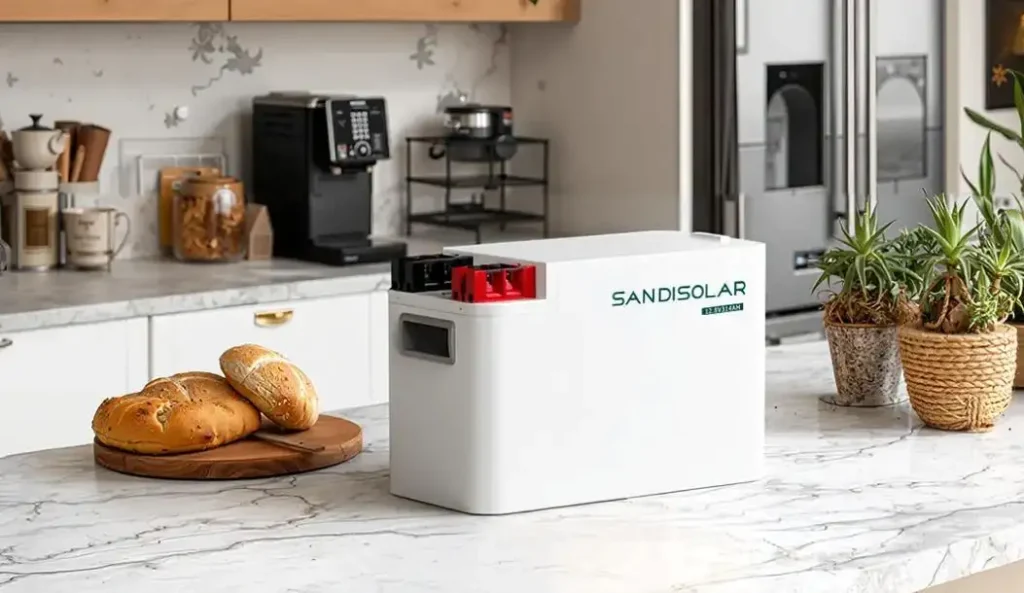
Actual operating time depends on usable battery energy, inverter efficiency, appliance power, startup current, temperature, cable losses, and the selected depth of discharge.
From SANDISOLAR's perspective, a reliable runtime estimate should begin with the complete energy system rather than a single battery specification.
How Much Energy Does a 12.8V 300Ah LiFePO4 Battery Store?
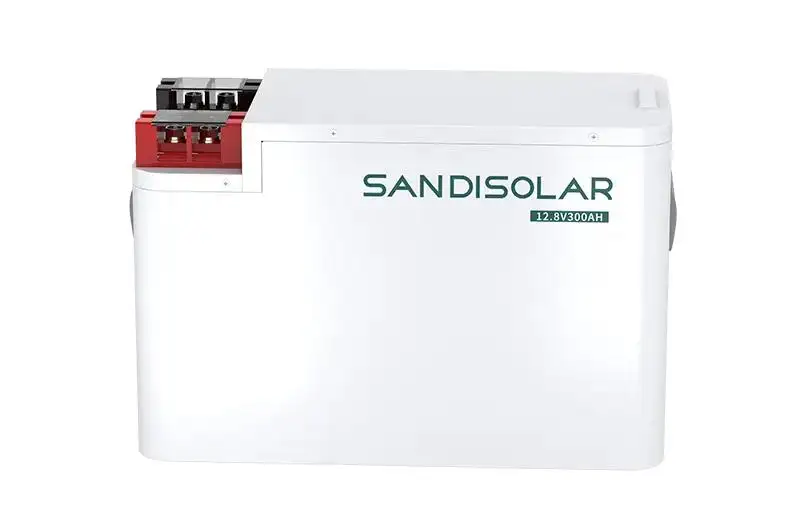
The SANDISOLAR SD-12300LFPJ1 Specification
•Nominal Voltage: 12.8V (System Voltage while in Operation)
•Rated Capacity: 300Ah
•Rated Energy: 3.84kWh
•Recommended Charge Voltage: 14.4V
•Operating Voltage Range: 10.8V to 14.4V
Rated Energy = 12.8V x 300Ah = 3840Wh
This equivalates to a 100W device running for 38.4 hours. This assumes the device draws all the available energy. In practice, the run time will be much shorter because the device will not draw all the stored energy.
Rated Energy vs. Usable Energy
Household appliances normally use AC electricity, while the battery supplies DC electricity. An inverter is therefore required, and part of the stored energy is lost during conversion.
For a pragmatic example of how to plan, let's assume the following:
•Depth of discharge: Using an 80% depth will eliminate planning around total discharge of the battery.
•Inverter efficiency: Taking a 90% efficiency works as an acceptable average.
•System Losses: Final energy output will be affected by loss of energy caused by cabling, standby losses of inverter and connection losses.
Calculating Usable AC Energy:
3840 Wh * 80% * 90% = ~ 2765 Wh
This is a planning estimate and will not be an assured output. Usable energy of a 12.8V 300Ah LiFePO4 Battery will depend on the inverter, load profile, installation, temperature, and battery state.
Estimated Runtime for Common Household Appliances
The following table uses approximately 2765Wh of usable AC energy and assumes that only one appliance is operating.
| Household Appliance | Typical Power | Estimated Runtime |
| Wi-Fi router | 15W | About 184 hours |
| LED lighting group | 50W | About 55 hours |
| Electric fan | 60W | About 46 hours |
| Laptop computer | 65W | About 42 hours |
| LED television | 100W | About 27 hours |
| Refrigerator running load | 120W | About 23 hours |
| Microwave oven | 1200W | About 2.3 hours |
| Electric kettle | 1500W | About 1.8 hours |
These figures show why a 12.8V 300Ah LiFePO4 Battery can support low-power appliances much longer than heating equipment or other high-resistance loads.
Runtime for a Group of Essential Loads
During a grid outage, several appliances may operate together. Consider the following example:
| Essential Load | Average Power |
| Refrigerator | 120W |
| Four LED lights | 40W |
| Wi-Fi router | 15W |
| Television | 100W |
| Phone chargers | 20W |
| Combined load | 295W |
Estimated runtime:
2765Wh ÷ 295W = approximately 9.4 hours
Actual runtime may differ because a refrigerator cycles on and off, while lighting, television, and charging devices are not always used continuously.
The Limitations of Using Appliance Wattage
There are several factors beyond wattage that will affect estimates of how long an appliance will run.
•Duty cycle: Refrigerators and air conditioners, for instance, will not run at full power for prolonged periods of time.
•Starting surge: With the exception of compressors and pumps, nearly every other appliance, pump and motor, will draw a high amount of current for a brief period of time when powering on.
•Variable power: Many modern appliances vary the amount of energy they consume based on the demands of the task.
•Standby consumption: Televisions, routers, inverters, and chargers, for example, consume energy in between uses.
Environmental conditions: High ambient temperatures may increase refrigerator or ventilation-system operating time.
For appliances with variable loads, daily energy consumption in watt-hours or kilowatt-hours is often more useful than the rated wattage.
Output Power and Inverter Matching
The SD-12300LFPJ1 is described with a maximum continuous charge and discharge current of up to 200A. At 12.8V, this corresponds to a theoretical DC output of:
12.8V × 200A = 2560W
However, the technical parameter table also lists a 100A charge/discharge current. This indicates an expected operating current of 100A and a maximum continuous current of 200A. The final operating current must be confirmed in the approved technical datasheet before making a selection on the inverter.
The following considerations must be made for the system:
•Inverter voltage: The inverter must be for a 12V-class LiFePO4 battery system.
•Continuous output: The total load of the appliances must be within the limits of the battery, BMS, inverter, and cables.
•Surge capacity: The inverter should be capable of handling surge currents for the starting of refrigerators, pumps and motors.
•Cable sizing: Short and appropriately sized cables must be used for the high DC current to reduce heat and voltage drop.
•Circuit protection: There must be an appropriate fuse and/or circuit breaker and a means of circuit isolation in the DC circuit.
Using a large inverter does not increase the battery energy. It only enables use of higher-power loads which can lead to a faster discharge of the battery.
Factors That Decrease Battery Runtime
The following conditions are expected to decrease the effective capacity for the 12.8V 300Ah LiFePO4 Battery.
•Low Temperatures: Discharge will likely be limited at low ambient temperatures.
•High Current Draws: Internal resistance of a battery causes a terminal voltage drop. The greater the current draw, the greater the voltage drop.
•Battery Cycling: Total capacity loses cycling the battery.
•Long Run Cables: Run cables that are longer than recommended will result in increased resistance and increased loss.
•Inverter Standby Losses: Inverters will draw power in the absence of a load.
•BMS Protection Settings: Depending on the BMS, the battery may be disconnected before its entire capacity is utilized.
The SD-12300LFPJ1 has a temperature operating range for charging of 0°C to 50°C and discharging of -20°C to 60°C. The SD-12300LFPJ1 should be operated within a controlled environment.
Using a Battery within a Solar Storage System
A 12.8V 300Ah LiFePO4 Battery has the flexibility to store excess PV energy for evening use, use during cloudy days, use during peak rate times, or for back-up use.
A conventional system includes the following:
•Solar Panels: The PV Array generates DC electricity in the presence of sunlight.
•MPPT Charge Controller: The charge controller adjusts the solar power charging based on the battery voltage.
•Battery Storage: This system uses an SD-12300LFPJ1 module which provides 3840Wh of energy storage.
•Inverter: This subsystems elements converts direct current (DC) power to alternating current (AC) power.
•Protection Equipment: Fuses, breakers, and other disconnect devices are used to manage the risk of electricity.
•The Required Amount of Solar Power is Based on: Daily consumption of energy, local sunshine, and the desired time of recharge considering the losses during charge.
SANDISOLAR's System Level Thinking
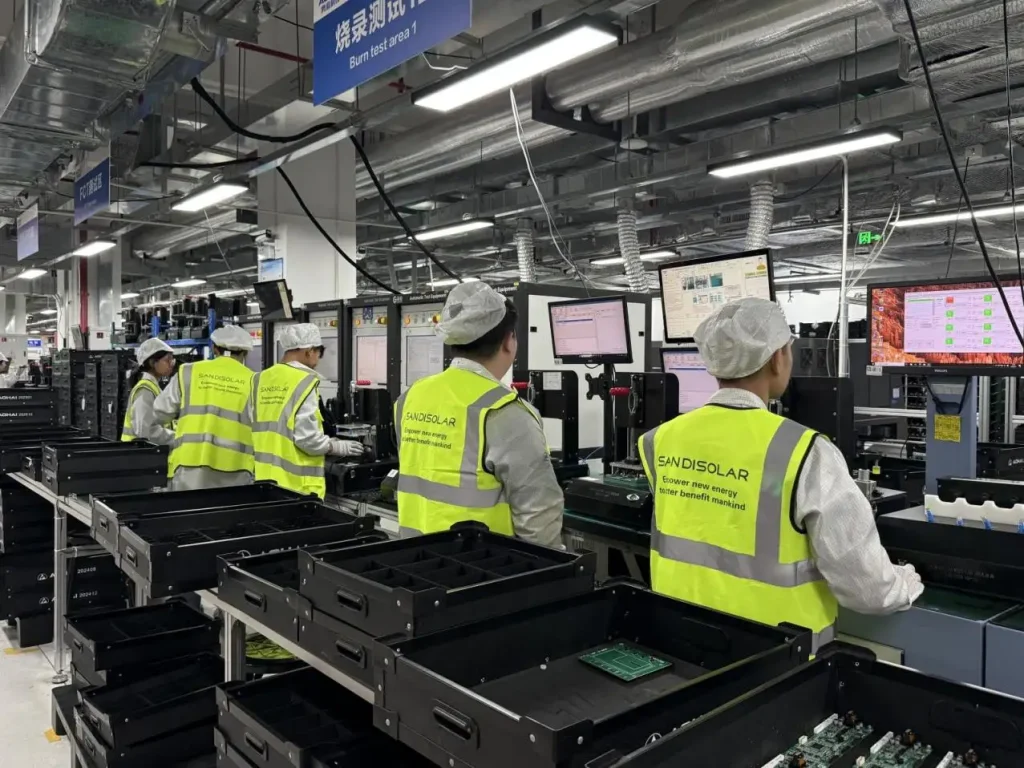
SANDISOLAR looks within a system to evaluate performance, in this case, a battery. The SD-12300LFPJ1 includes a combination of LFP cells, a 200A BMS, SPCC, and a protection rating of IP21.
It has a specified cycle life of 3000 cycles at an 80% depth of discharge under test conditions. The BMS provides a charge control function for the battery, and monitors overcharge, over-discharge, over current and other abnormal conditions.
Because IP21 provides limited protection against solid objects and vertically falling water drops, the battery is better suited to indoor or sheltered installations than direct outdoor exposure.
Final Words
A 12.8V 300Ah LiFePO4 Battery provides 3840Wh of rated energy. Factoring in an 80% depth of discharge and 90% inverter efficiency, roughly 2765Wh is likely available for AC loads in a typical planning scenario.
About several hours of operation for small household appliances, or operation extending several days for small low power devices, is to be expected. To achieve precise estimates of runtime, actual appliance consumption, inverter and appliance starting losses, installation losses, and confirmed battery circuit limits should be used.
FAQs
Q1. What is the energy storage capacity of a single 12.8V 300Ah LiFePO4 Battery?
At the rated conditions, this battery can store 3840Wh, or 3.84kWh.
Q2. How long can a 12.8V 300Ah LiFePO4 Battery power a 100W appliance?
The battery can theoretically run a 100W appliance for 38.4 hours. However, the total time will be significantly less due to system losses.
Q3. What is the appropriate inverter size for use with a 12.8V 300Ah LiFePO4 Battery?
The appropriate inverter must be for a 12V battery system and must adhere to the continuous discharge limit.
Q4. What is the total usable AC energy for a 12.8V 300Ah LiFePO4 Battery?
At 80% DoD of the battery and 90% efficiency of the inverter, the total usable energy is approximately 2765Wh.
Q5. Can other appliances be powered in addition to the above?
Yes, as long as the combined power is within the limits of the battery, BMS, inverter and cables.


Contact Us
In This Article
Related Posts
48V 6kW Off Grid Inverter: Why 48V Battery Systems Are Common for Higher-Power Solar Systems
August 31, 2026
Residential Solar System Installation: Technical Sizing, System Matching and Installation Guide
August 31, 2026
48 Volt Inverter for Solar Battery Storage: Key Specifications Buyers Should Compare
August 27, 2026