
Off Grid Inverter with Zero Export: How CT-Based Energy Control Works
By hqt
2026.07.20Related Posts
48V 6kW Off Grid Inverter: Why 48V Battery Systems Are Common for Higher-Power Solar Systems
August 31, 2026

Residential Solar System Installation: Technical Sizing, System Matching and Installation Guide
August 31, 2026

48 Volt Inverter for Solar Battery Storage: Key Specifications Buyers Should Compare
August 27, 2026
Solar energy systems may combine PV generation, battery storage, utility power, and backup generators. In these applications, an Off Grid Inverter may also need to prevent surplus energy from flowing into the public grid. This operating method is commonly known as zero export, zero feed-in, or export limitation.
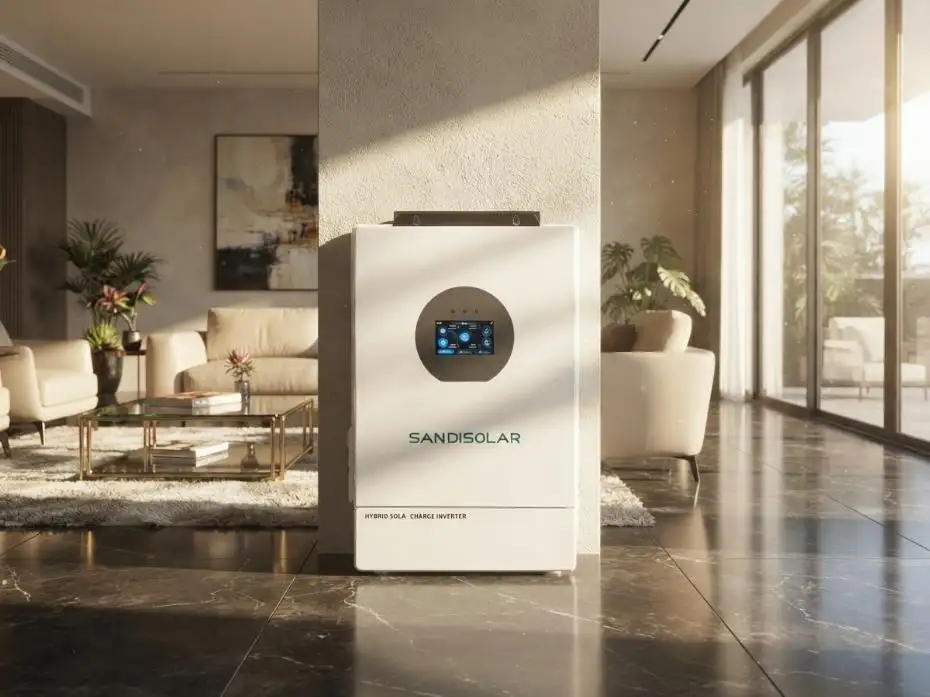
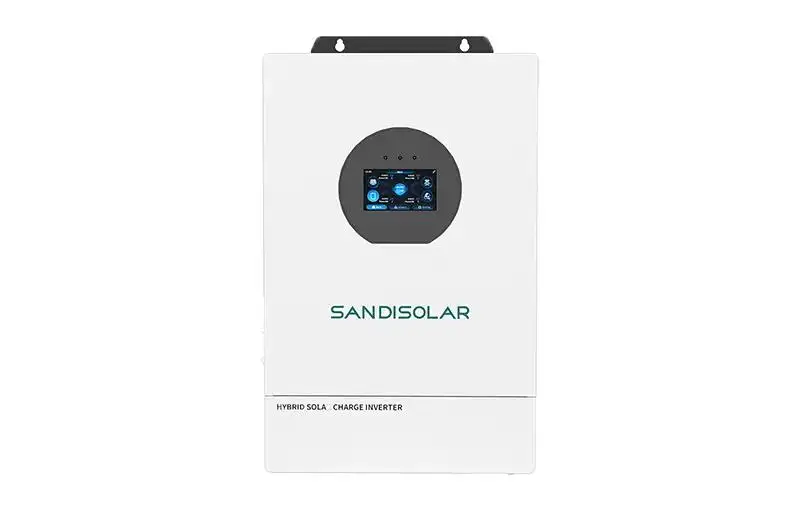
From SANDISOLAR's manufacturing perspective, effective zero-export operation depends on accurate current measurement, responsive power control, and correct commissioning. The SANDISOLAR SD-4872WP-US combines CT monitoring, dual MPPT inputs, 120/240V split-phase output, battery management, and generator support within one energy-control platform.
What Is Zero Export?
Zero export limits reverse power flow at the utility connection point. The property can stay grid-tied, however, the Off Grid Inverter controls the system such that solar energy is used on site or stored.
If photovoltaic (PV) generation exceeds demand, the system can:
• Power local loads: Solar energy can be used to power loads such as appliances, lighting, office equipment, pumps and active circuit loads.
• Charge the battery: Surplus energy can be used to charge the battery, if battery charging capacity and battery storage capacity allows.
• Limit PV conversion: The inverter reduces its output when loads are low and the battery charge is full.
• Maintain limited grid import: A small import from the grid can be used to offset unintentional power export during a temporary change in load.
Export limits and grid interconnection requirements are jurisdiction dependent. It is important to verify the system settings to the requirements of the local utility.
How CT-Based Energy Control Works
A Control Transformer (CT) is installed around a wire at the connection point to the grid. It measures the magnitude of the current and the direction, and does not need to carry the main load current to control the circuit.
| Control Stage | System Action | Purpose |
| Measurement | CT senses grid import or potential export | Identifies the direction of power flow |
| Calculation | The controller evaluates the loads, PV, battery, and AC-source data | Determines what output is required |
| Adjustment | The Off Grid Inverter increases, holds, or decreases power | Prevents reverse power flow |
| Verification | CT senses the newer, updated condition | Ensures ongoing adaptive correction |
This is a closed loop control. The Off Grid Inverter control varies its output based on the state of loads, in particular, the state of the electrical appliances, motors, and HVAC equipment.
CT location, polarity, and phase assignment are important. A reversed CT or an installation point that does not measure the complete site load may cause incorrect control responses.
SANDISOLAR SD-4872WP-US Technical Overview
The SD-4872WP-US is a 7.2kW hybrid Off Grid Inverter developed for US-style split-phase energy systems.
| Parameter | Specification |
| Rated output power | 7,200W |
| Peak output capacity | 10,800VA |
| AC output | 120/240Vac split phase |
| PV input capacity | 4,500W + 4,500W |
| MPPT channels | Two channels, up to 16A each |
| PV operating range | 90–485VDC |
| Maximum PV open-circuit voltage | 500VDC |
| Battery voltage | 51.2V nominal; 40–58.6VDC |
| Maximum charging current | 150A |
| Typical transfer time | 10ms |
| Parallel capability | Up to six units |
The inverter can operate with or without battery storage, although each configuration manages surplus solar energy differently.
Zero Export With Battery Storage
A battery provides another destination for surplus PV power before solar curtailment becomes necessary.
• Surplus absorption: Excess PV energy can charge the battery within the configured voltage and current limits.
• Energy shifting: Electricity that has been stored can help meet demand during evening loads or during times when solar generation is less.
• Back-up support: Per the system design, there may be some circuits that continue to function during a grid disruption.
• Load smoothing: Minor temporary imbalances between energy supply and demand can be managed by implementing controlled charging and discharging cycles of the system.
The SD-4872WP-US supports a nominal 51.2V battery system and up to 150A charging current. Actual charging settings should match the battery management system, battery capacity, cable size, and installation conditions.
Zero Export Without a Battery
Without storage, the Off Grid Inverter depends more heavily on real-time load matching.
• Direct Solar Use: PV power provides for active loads during the day.
• Rapid Load Reduction: Inverters will need to reduce output when there are rapid decreases in load at the site.
• Grid Backing: The service addresses the gap when the supply of PV is below demand.
• Loss of flexibility: Unused PV power cannot be reserved to meet future demand.
It is possible to operate without batteries in some self-consumption projects. However, the daytime load demand and the pattern of the load demand should be analyzed.
How Dual MPPT Assists with Energy Management
Dual MPPT and CT control have different but complementary functions.
MPPT adjusts the operating point for each PV array. CT control determines the amount of inverter output the site load can utilize, while keeping the inverter output close to the desired export limit.
Dual MPPT can accept different orientations of PV arrays as well as different operating conditions. However, within the limits of each string, the voltage, current, and open-circuit voltage should not exceed 500VDC.
Split-Phase Load Design Considerations
The SD-4872WP-US provides 120V line-to neutral and 240V line-to-line output.
Designers should consider the following:
• Phase Demand Balance: 120V loads should reasonably be distributed between L1 and L2.
• Starting Demand: Load such as motors, pumps, and other HVAC components may have large demand during load starting.
• Protected Loads: Backup circuits should remain within the continuous and peak output ratings.
• Motor Capacity: The stated capacity of the system should be evaluated for the starting method and load.
Generator-Hybrid Operation
The SD-4872WP-US can accept generator input during extended outages or low-solar periods.
• Generator sizing: Available output should cover connected loads and the intended battery-charging demand.
• Charging control: A low cutoff charge setting can overload a small generator.
• Input stability: The generator voltage and frequency must be within the tolerable range of the inverter.
• Reverse-power prevention: Control settings should prevent inverter energy from feeding toward the generator.
Generator start and stop logic may also be coordinated through dry-contact control where supported by the external generator controller.
Monitoring and Commissioning
The SD-4872WP-US supports touchscreen control, CAN, RS485, USB, Wi-Fi, remote diagnostics, and OTA updates. These functions help users review power flow, charging status, operating mode, and fault records.
Installers must review the following before an operation is carried out.
• CT Installation: Confirm correct placement and polarity of the CTs, assignment of CT phase, and wiring of CT communication.
• Export response: Assess the behavior of the export response for low and high load conditions, various conditions for the state of charge of the battery, and load changes that occur within a short time frame.
• Electrical protection: Check that all conductors, all circuit breakers, all disconnect switches, all ground conductors, and all overcurrent devices are adequately sized and installed for protection.
• Compliance documentation: Verify that UL and FCC documentation for that specific inverter model (not for the general product documentation) is current.
Closing Words
A CT-controlled Off Grid Inverter can coordinate PV generation, battery storage, local loads, utility input, and generator power while limiting reverse energy flow.
For SANDISOLAR, the value of the SD-4872WP-US lies in combining zero-export control with split-phase output, battery-optional operation, dual MPPT inputs, generator integration, remote monitoring, and parallel expansion. Reliable performance still depends on appropriate system design, accurate CT installation, and careful commissioning.
FAQ
Q1. What is a zero-export Off Grid Inverter?
A zero-export Off Grid Inverter prevents the overproduction of solar energy from being exported to the utility grid.
Q2. What is the purpose of a CT sensor?
A CT sensor determines the grid-side current and the direction of imports and exports.
Q3. Can an Off Grid Inverter operate without a battery?
Yes, there are models of Off Grid Inverters that can operate without a battery and balance the photovoltaic output with the active loads.
Q4. Where should the CT sensor be located?
The CT sensor is typically located closest to the main connection to the grid.
Q5. What occurs when solar production reaches and then exceeds the demand?
When solar production exceeds demand, the inverter will either reduce the output of the solar production (PV output) or charge the battery.


Contact Us
In This Article
Related Posts
48V 6kW Off Grid Inverter: Why 48V Battery Systems Are Common for Higher-Power Solar Systems
August 31, 2026
Residential Solar System Installation: Technical Sizing, System Matching and Installation Guide
August 31, 2026
48 Volt Inverter for Solar Battery Storage: Key Specifications Buyers Should Compare
August 27, 2026