
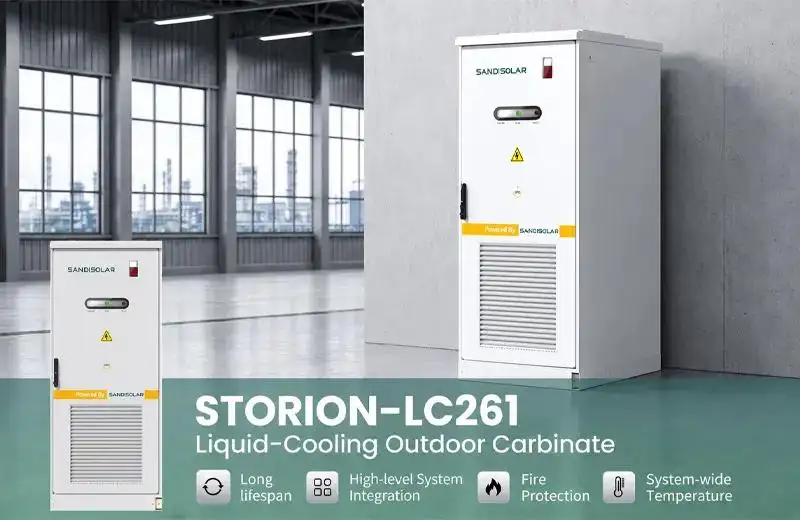
125KW 261KWH All-in-one Liquid Cooling Outdoor Cabinet for Microgrids & Off-Grid Power
By hqt
2026.07.24Related Posts
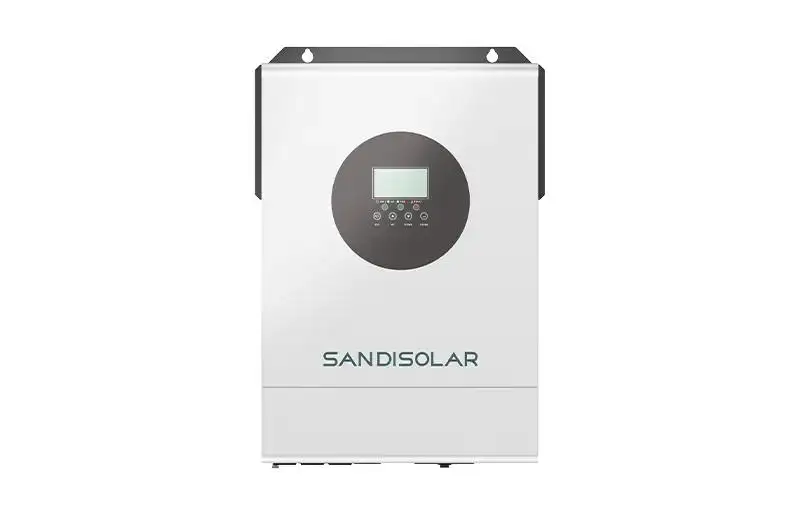
48V 6kW Off Grid Inverter: Why 48V Battery Systems Are Common for Higher-Power Solar Systems
August 31, 2026

Residential Solar System Installation: Technical Sizing, System Matching and Installation Guide
August 31, 2026

48 Volt Inverter for Solar Battery Storage: Key Specifications Buyers Should Compare
August 27, 2026
Microgrids and autonomous power systems incorporate many different considerations. There is a balance to be struck between renewable generation, battery sizing, load demands, grid limitations, and backup requirement services. In these considerations, energy storage involves more than just storing energy. Power conversion, thermal management, transition management, protection management, and even remote monitoring all fall under the umbrella of energy storage.
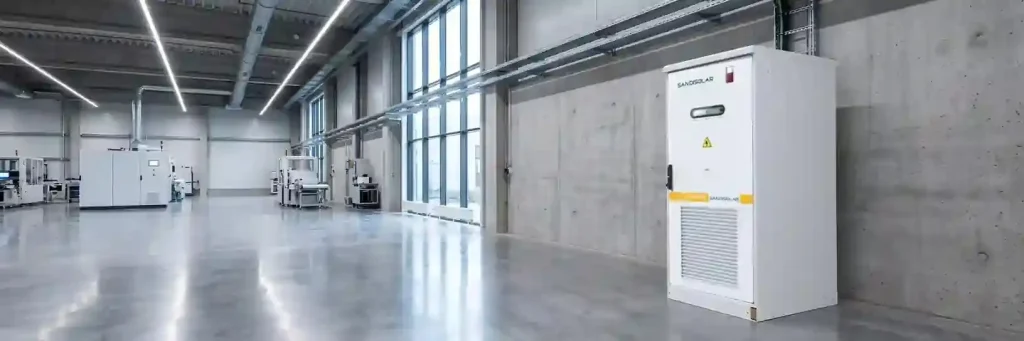
The 125KW 261KWH All-in-one Liquid Cooling Outdoor Cabinet from SANDISOLAR houses a 125KW power conversion system and a 261KWh LiFePO4 battery all within a single outdoor Cabinet. This system is tailored to the Commercial and industrial sectors for applications around peak shaving, the utilization of solar, backup power, or operating a microgrid.
What Does the Integrated Cabinet Include?
An all-in-one energy storage cabinet simplifies the design and typically the number of installed components at the storage integration site, as it combines the major components required for power and control in a system.
| System Item | Configuration |
| Rated PCS Power | 125kW |
| Battery Capacity | 261kWh |
| Battery Chemistry | LiFePO4 |
| Cell Capacity | 314Ah |
| Cooling Method | Liquid cooling |
| On/Off-Grid Switching | Approximately 20ms |
| Unbalanced Load Support | Up to 100% |
| Overload Capability | Up to 120% |
| Off-Grid/Hybrid Parallel Units | Up to 5 |
| On-Grid Parallel Units | Up to 50 |
Actual performance depends on ambient temperature, battery state of charge, load type, system settings, wiring, and project design.
How the Cabinet Facilitates Microgrid Functionality
A microgrid can be connected to the grid, completely off the grid, or be a combination of the two. The 125KW 261KWH All-in-one Liquid Cooling Outdoor Cabinet has the capability to store energy as well as assist in the operation of solar energy systems, peak shaving loads, and backup generators.
• Solar Self-Consumption: Loads and systems utilize surplus solar energy to form a charge and then consume it at a later time.
• Peak Shaving: Surplus energy is used to reduce or eliminate demand during the time of highest energy consumption.
• Load Shifting: The charge is formed and consumed during times of energy costs.
• Off-Grid Functionality: The system provides energy to locations where the energy grid is either non-existent or is unreliable.
• Emergency Backup: Loads are maintained during a temporary interruption of the supply of electricity.
Fast Switching for Business Continuity
Short interruptions in the supply of power can disturb manufacturing, communication, refrigeration, pumping, and a number of industrial control processes.
The 125KW 261KWH All-in-one Liquid Cooling Outdoor Cabinet is designed to reduce disturbance to the processes during a grid outage by providing on-grid and off-grid switching in about 20 ms.
• Control equipment: Rapid switching reduces the risk of control equipment resets.
• Commercial facilities: Switching reduces the risk of interruptions to the operations of control, security, lighting, payment, and communication systems.
• Remote sites: Battery power can cover the switching period until a generator is started.
• Critical loads: Distribution of loads can be done strategically so that the critical loads of the system remain powered.
System engineers and commissioning engineers must consider loads with a high degree of sensitivity.
Heavy and Unbalanced Starting Loads
Many applications in industry and commerce create uneven three-phase loads. Motors and similar machines create starting surges that last several seconds.
The enclosure can accept unbalanced three-phase loads as well as 100% and 120% overload conditions.
• About imbalanced loads: The PCS manages imbalances in all three phases.
• For motor starting: The PCS is capable of handling short surges of demand.
• Load prioritization: Loads of a lower priority may be disconnected to sustain the demand for higher priority loads.
• Protection of site equipment: The settings for protection and dispatch may be optimized to deal with the site equipment.
The Importance of Liquid Cooling
The performance of a battery depends on its temperature and influences charge acceptance and available capacity. It also affects how efficient the system is and the aging of the battery. Outdoor energy storage systems may have uneven temperature distribution, and may even have extreme temperature variances especially when deployed in hot climates or in systems that are frequently and intensely charged or discharged.
Compared to natural cooling or conventional air cooling systems, liquid cooling is more effective as the coolant is circulated directly in close proximity to the battery modules.
• Temperature distribution: Liquid cooling reduces the temperature difference between cells, leading to uniform cell behavior.
• Battery management: Liquid cooling may help manage the aging of the cells.
• Energy savings: Liquid cooling may help efficient control of the cooling output.
• Exterior: Liquid cooling is suitable for projects in changing ambient temperature conditions.
SANDISOLAR estimates a design energy throughput of approximately 1,070MWh under specified operating assumptions, compared with an 835MWh reference for certain air-cooled configurations. Actual lifetime throughput will vary with cycling frequency, depth of discharge, temperature, maintenance, and control strategy.
DC and AC Coupling Options
The 125KW 261KWH All-in-one Liquid Cooling Outdoor Cabinet supports both DC-coupled and AC-coupled system designs.
| Coupling Method | Typical Application |
| DC Coupling | New solar-plus-storage installations |
| AC Coupling | Existing photovoltaic system retrofits |
| Hybrid Configuration | Solar, battery, grid, and generator integration |
This flexibility allows the cabinet to be used in both new energy projects and storage upgrades without necessarily replacing existing PV equipment.
Backup Duration and Parallel Expansion Capacity
The length of the backup period is a function of battery energy and the average power of the connected loads. With the addition of a second battery cabinet, backup can be extended to about four hours for a specified load profile.
The capacity can be increased by parallel expansion to meet the growing energy demand.
• From 1 to 5 units: Suitable for large off-grid or hybrid microgrid systems.
• From 1 to 50 units: Suitable for on-grid parallel configurations.
• Expandable storage: The operating time can be increased by adding battery capacity, with no increase to the amount of power from the PCS.
Monitoring and Layered Safety
The SANDISOLAR cloud platform provides access to state of charge, power flow, temperature, alarms, operating mode, and historical energy data through web and mobile interfaces.
The safety architecture includes BMS monitoring, aerogel cell insulation, fuses, MCCBs, electrical isolation, multi-sensor detection, aerosol suppression, and pressure-release design.
From SANDISOLAR's system integration perspective, selecting a 125KW 261KWH All-in-one Liquid Cooling Outdoor Cabinet should begin with the site load profile, outage duration, solar capacity, electricity tariffs, environmental conditions, and future expansion plan. Evaluating these factors together helps create a more practical microgrid or off-grid energy storage system.
FAQs
Q1. What is the storage capacity of the cabinet?
This cabinet offers 125kW of power and 261kWh storage capacity.
Q2. What type of battery chemistry is utilized?
We use LiFePO4 battery chemistry.
Q3. Is the liquid cooling system implemented?
The cabinet is equipped with a liquid cooling system.
Q4. Can it function off the grid?
The system is designed to function off the grid.
Q5. Is it capable of connecting to a microgrid?
The system is adaptable to microgrid settings.


Contact Us
In This Article
Related Posts
48V 6kW Off Grid Inverter: Why 48V Battery Systems Are Common for Higher-Power Solar Systems
August 31, 2026
Residential Solar System Installation: Technical Sizing, System Matching and Installation Guide
August 31, 2026
48 Volt Inverter for Solar Battery Storage: Key Specifications Buyers Should Compare
August 27, 2026