Selecting a Complete Solar Energy System with Inverter and Battery
By hqt
2026.09.28


A solar energy system with an inverter and battery should be considered as a single system, not two separate systems. The battery backup time will be short if the battery is too small, and the power of the inverter will not support loads if the BMS current of the battery is insufficient.
There are five relationships that are crucial to successful system selection: inverter power versus load, battery capacity versus battery runtime, battery voltage versus inverter input, BMS current versus battery discharge demand and communication protocol versus control strategy.
So it's not about an individual inverter or battery specification, but about the energy service needed.
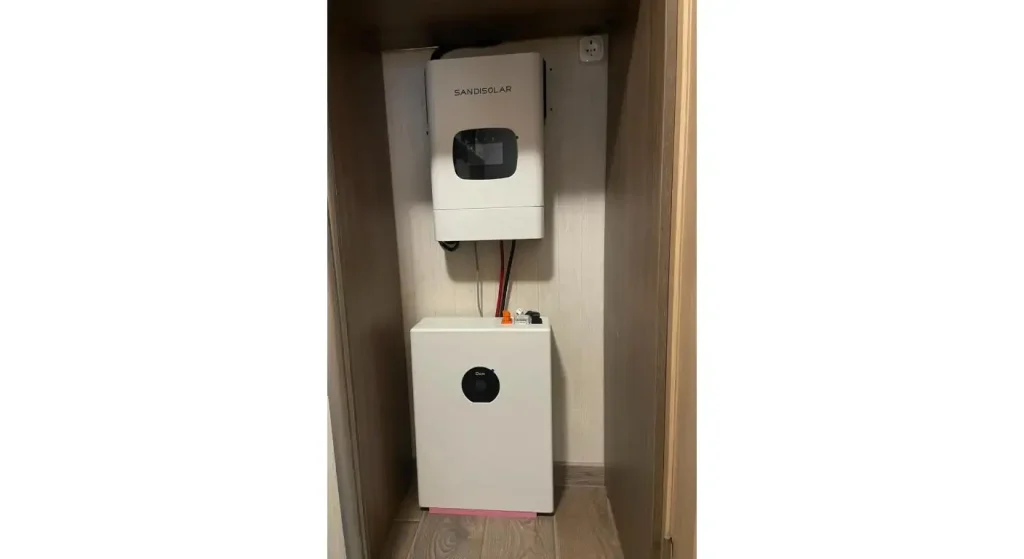
What is an Inverter and Battery Solar Energy system?
The inverter converts the DC electricity generated by the battery or photovoltaic array to AC electricity for use by household appliances. It can also handle charging, utility input and generator input and backup transfer, depending on model.
Energy is stored in the battery for use after sunset, during cloudy times, at high electricity rates or during a power outage from the utility. The amount of energy it can give is determined by its capacity, and how fast it can be charged or discharged is determined by the BMS.
The two components make up the control and storage part of a solar energy system. Residential energy storage with Sandisolar provides an example of the use of stored solar energy for household energy use and backup.
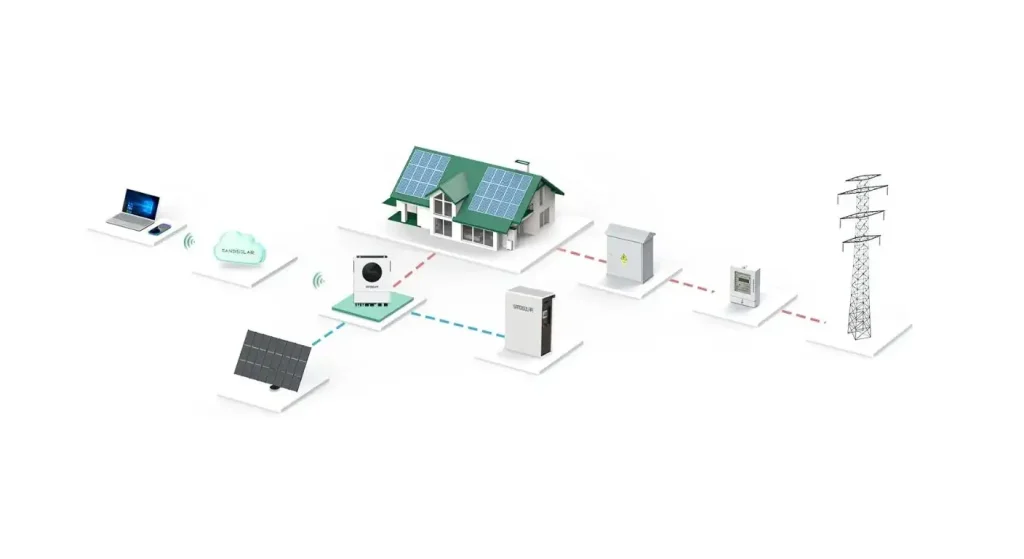
Describe the Primary Job of the System
An electricity-bill-reduction system might be a different system than an emergency backup or off-grid system.
One way for a self-consumption system to be realized is to store energy produced during the day and use it after dark. The time of use system stores or releases energy at times when electrical power is cheap, and releases it when charging rates are high.
A backup system provides a portion of the battery reserve for when the power goes out. An off-grid system needs to account for all the loads that are needed, as well as the weather and the amount of charging it receives.
Several functions can be served by a single system but it is important that the buyer should decide what is most important. This will impact battery reserve, charging schedule, inverter operating mode and daily capacity.
Determine the size of the Inverter for Simultaneous Loads
The inverter power should be determined by the largest set of loads that will be on at any given time. The sum of all the appliance ratings is generally unrealistic and the use of average demand can underestimate short peaks.
Divide loads into continuous, intermittent and motor loads. Refrigerators, pumping and air conditioning systems need extra starting power, even if the power they use when operating is not so great.
Inverter should deliver the proper AC voltage, frequency and phase sequence for its destination market. Split phase 120/240V may be required for the North American market, and many other markets will be 230V single phase.
Sandisolar's off grid inverter portfolio features various output and system-voltage combinations for homes.
Calculate Battery Capacity as per Runtime requirement.
Electricity that is stored in batteries is typically measured in kilowatt-hours:
For example, if a battery has a Nominal Voltage of 12, and an Amp-Hour Capacity of 200, the Battery Energy is 12 x 200 or 2400 amp-hours.
The rated capacity of the battery is about 10.24kWH. Standing losses and loss of energy due to DoD and inverter losses reduces the energy available to the AC loads.
An estimation of runtime can be made by:
Runtime is the number of hours that the battery provides useful energy, based on the average load.
A 10kWh sized battery might be able to power critical appliances for many hours, but could run out of juice fast if electric space heaters, cooling or cooking equipment are working around the clock.
Capacity of batteries should be based on the hours of backup or the night time consumption of the project and not necessarily on the inverter kW rating.
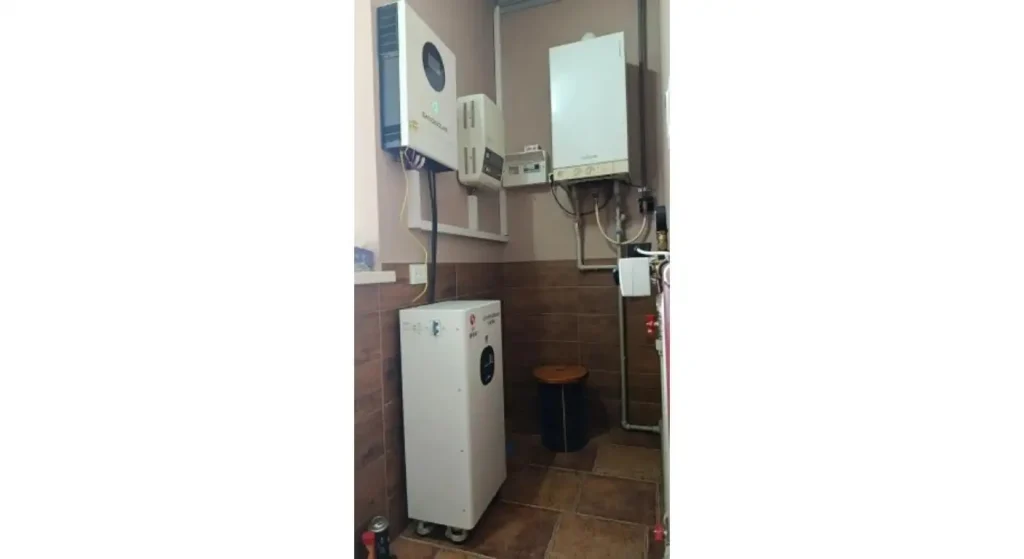
Match Voltage and Current – Not Just Capacity
The nominal voltage of the battery bank is the same as the DC input voltage of the inverter. A 48V class inverter is normally used in conjunction with a 51.2V LiFePO4 battery, but it is important that the voltage operating and voltage charging ranges still overlap.
The existing actor relationship is crucial, too. For instance, if a battery is producing 51.2V and 5kW, it will need around 98A, before conversion loss. As the output increases, so does the current.
All components of the battery (BMS, terminals, cables, fuse and disconnect device) should have the ability to handle the continuous and peak currents. Even if the kilowatt hour capacity of the battery is sufficient, a battery can still turn off if the discharge-current limit is exceeded.
| Matching Area | Inverter Parameter | Battery Parameter |
| DC voltage | Permitted input range | Nominal and operating voltage |
| Load output | Continuous and surge power | BMS discharge-current limit |
| Charging | Maximum charge current | Recommended charge current |
| Communication | CAN or RS485 protocol | Supported protocol and pinout |
| Expansion | Supported battery quantity | Parallel or series permission |
Verify BMS Communication
Full system compatibility will not be guaranteed unless voltage compatibility is guaranteed. For a Lithium Battery and Inverter, communication via CAN or RS485 may be required for transferring State of Charge, temperature, alarm and current-limit data.
Verify the communication protocol, port type, cable pinout and the approved battery set up. Even if the cable fits physically, it could be that a different pin definition or software protocol was used for the cable.
Once the communication is set up properly, the Inverter can adapt charging/discharging based on the actual BMS limits. If communication isn't used, an installer might have to program conservative voltage based settings.
Sandisolar's LiFePO4 battery family comprises various low and high voltage versions of energy-storage systems.
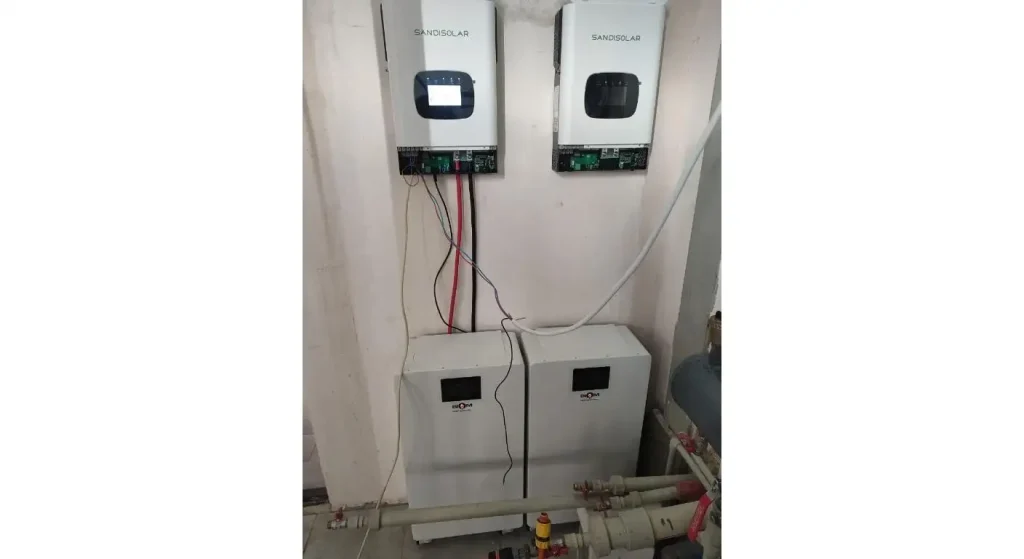
Match the charging power of the battery to the load current.
The speed at which the battery is charged after use during the night or after an outage is dictating by the charging power. But the charging current of the inverter cannot be used automatically.
The maximum current is determined by the battery's size, BMS restrictions, cell temperature and recommendations. Charging at too slow a rate may not allow complete recovery before the following evening and charging at too fast a rate could result in protection or stress on the battery.
Solar power can also be distributed to both running loads in the home and charging the batteries. The net battery charging power, if daytime loads use up most of the PV array output, will be less than the PV's nominal power.
Prioritize energy and set energy goals.
A hybrid inverter typically will have the ability to be programmed to use solar power, battery power, or utility power first. These settings are what the system will do during the day.
Solar-first operation is operating the loads with the PV energy that is available before charging the battery. Operation with backups maintains a minimum SOH. Time-of-use operation: sets battery charging and discharging schedules based on electricity costs.
The correct mode should be representative of the primary use of the system. Wrongly chosen priorities may result in the battery running out of power before the outage or in not enough power being saved between outages.
Plan for Monitoring and Protection of the Product
The monitoring should include solar input, domestic load, battery charging, discharging and state of charge, and alarm logs. Remote access is important for installers who service many systems or sites that are very distant from service locations.
Protection can consist of properly rated breakers, fuses, DC disconnects, surge protection and grounding. The battery protection provided by the BMS is not a substitute for protection provided at system level.
Cable size to be determined by maximum current, distance and acceptable voltage drop. All terminals must be properly tightened as loose high current DC connections can cause heat which is dangerous.
Use the complete system to collect data.
The inverter and battery should be commissioned in conjunction with each other. Check DC polarity, battery voltage, communication status, charge limits, discharge limits and state of charge readings prior to the application of large loads.
Test each of the following independently: solar charging, utility charging and battery discharge. Then turn on the biggest anticipated load and check the voltage, current and BMS status.
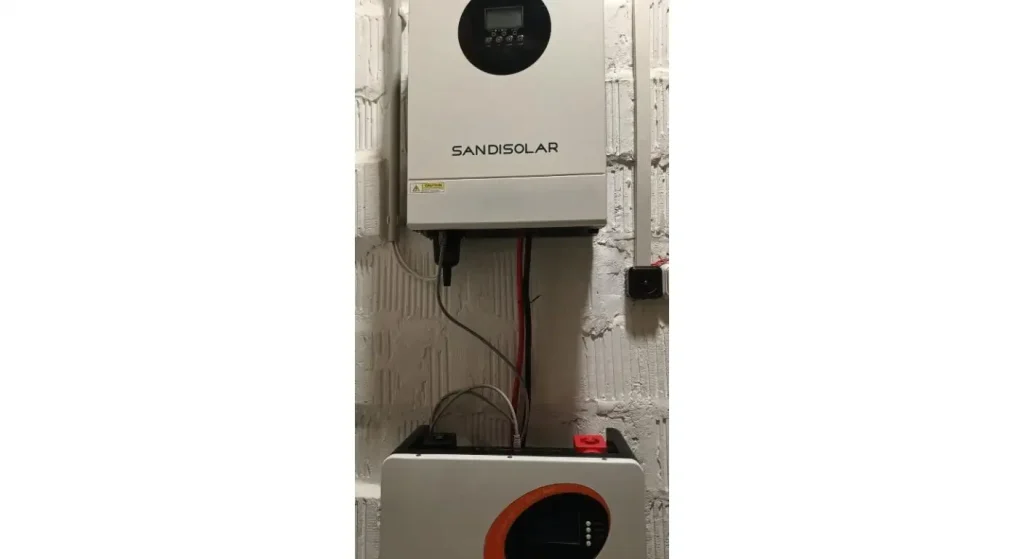
Transfer operation and behavior of backup circuits should be confirmed by a simulated grid outage. Recovery after utility power is back—be sure to test for this as well as at the time of failure.
The download centre of Sandisolar can be consulted to download relevant product documentation prior to installation.
| Inspection Area | Acceptance Focus | Verification Method |
| Battery connection | Correct polarity and secure terminals | Meter and torque inspection |
| BMS communication | Correct SOC and no protocol alarm | Inverter monitoring screen |
| Charging | Current and voltage within limits | Solar and utility charge test |
| Load operation | Stable output under expected demand | Controlled load test |
| Backup transfer | Essential circuits remain supplied | Simulated grid outage |
| Protection | Breakers and disconnects operate correctly | Functional inspection |
Conclusion
The inverter and battery are matched as a coordinated solar energy system, which guarantees the reliability of energy use. Power of the inverter indicates what loads will be able to run and capacity of the battery indicates how long.
The other factors that need to match up are voltage, BMS current, communication, charging power and operating priorities. If these interfaces are verified prior to purchase, the final system can easily be installed, commissioned and expanded.
FAQs
Q1. Should Battery capacity be equal to the inverter?
Not directly. The power of an inverter is measured in kilowatts, while battery capacity is measured in kilowatt hours: the former is related to how much load a battery can handle; the latter to how long a battery will last.
Q2. Is it possible for any 48V battery to be used with a 48V inverter?
Not automatically. Check voltage range, BMS current, charging limits and CAN or RS485 communication protocol.
Q3. What size battery do you need for home backup?
Average essential load times number of backup hours. Then also account for depth of discharge and inverter loss.
Q4. Is it possible for the system to work without BMS communication?
Some systems may be voltage operated, but limited functionality may apply. Direct communication offers greater accuracy in terms of control & fault information.
Q5. Are there any extra batteries that can be added at a later time?
Yes, provided that inverter and battery are expandable. Employ appropriate models and comply with manufacturer's parallel-connection specifications.