
Off Grid Inverter Factory Insights: Pure Sine Wave for Safe Power
By hqt
2026.02.16Related Posts
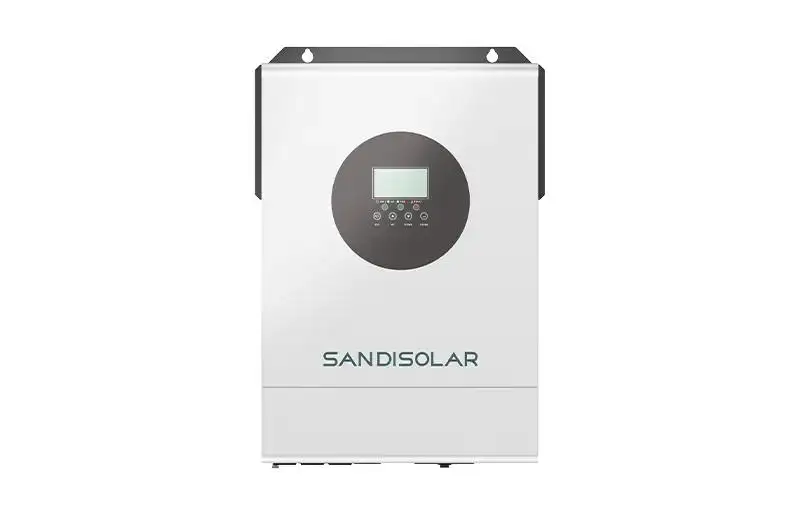
48V 6kW Off Grid Inverter: Why 48V Battery Systems Are Common for Higher-Power Solar Systems
August 31, 2026

Residential Solar System Installation: Technical Sizing, System Matching and Installation Guide
August 31, 2026

48 Volt Inverter for Solar Battery Storage: Key Specifications Buyers Should Compare
August 27, 2026
In 2026, most users want the same thing: power that feels steady, quiet, and “normal,” even when the grid is distant or unreliable. As an Off Grid Inverter Factory, SANDISOLAR sees this in rural homes, remote worksites, and growing businesses that want energy independence without sacrificing safety. The best place to start is not with a long spec sheet. Start with two clear ideas: what an off-grid inverter does, and why pure sine wave output is the safest choice for real-world loads. With these basics in mind, the rest—PV input, surge power, battery options, and monitoring—fits into a simple decision path.
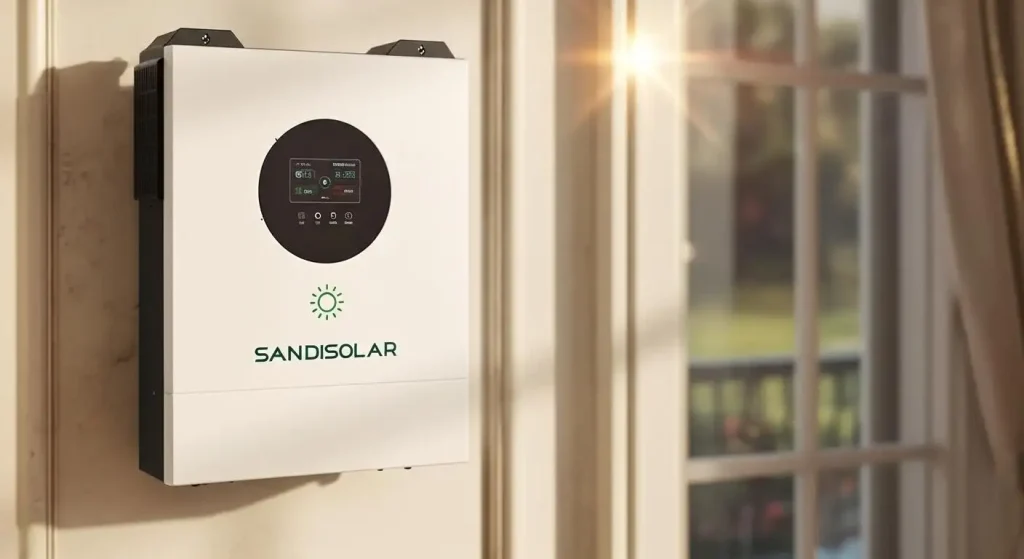
What an Off-Grid Inverter Is and What It Actually Does
An off-grid inverter converts DC power from solar panels or batteries into AC power that most appliances use. But conversion is only part of the job. In a strong system, the inverter behaves like a power manager. It aims to keep the output voltage and frequency within safe limits, so your refrigerator, lights, and electronics get stable power instead of “wild” power that changes with sun, load, or battery state.
People choose off-grid systems for different reasons, but the practical outcomes are similar. They want power they can count on. They want to reduce the impact of outages. They want better cost visibility over time. Some also want cleaner energy and lower emissions.
Here is how those benefits show up in daily life:
✅ Energy Independence: Keep essentials running without grid dependence
✅ Cost Predictability: Use solar to reduce long-term energy spending
✅ Cleaner Energy Mix: Rely more on renewable generation
✅ Operational Continuity: Stay productive when the grid is unstable
From an Off Grid Inverter Factory standpoint, the “right” inverter is the one that matches your lifestyle and load reality—not the one with the longest feature list.
What Pure Sine Wave Means and Why It Protects Equipment
Pure sine wave describes the shape of the AC waveform produced by the inverter. Utility electricity is usually a pure sine wave. Most appliances and sensitive electronics are intended for that waveform. When the wave is uneven or distorted, they can power on but may act unpredictably. Motors can run noisier. Power supplies can heat up more. Some equipment may show random faults. Over time, poor power quality can reduce lifespan.
This matters even more off-grid because conditions change constantly. Solar generation rises and falls through the day. Batteries charge and discharge. Loads start and stop. If the inverter does not regulate output well, the system can feel unstable.
A pure sine wave inverter is a practical safeguard because it supports a wide range of real loads:
✅ Sensitive Electronics: Computers, routers, monitoring devices
✅ Motor Loads: Refrigerators, small air conditioners
✅ System Transitions: Smoother behavior when sources or loads change
In short, pure sine wave is not a “premium” label. It is a safer foundation for power that behaves like the grid.
Off Grid Inverter Factory Features That Matter More Than Marketing
Beginners often get stuck comparing numbers that are hard to translate into real use. Our advice is to focus on features that reduce failure points and simplify operation.
SANDISOLAR off-grid inverters built-in MPPT and support up to 500Vdc PV input. MPPT helps the inverter track the best operating point of the solar array, which improves energy harvest in changing sunlight. A higher PV input limit can also provide more design flexibility for PV strings (within proper engineering rules), which can make installation cleaner in many projects.
We also design around practical stability and control. An excellent inverter stays calm when stressed. It handles fluctuating demand without nuisance resets. It features smart configuration so you can protect your batteries and optimize for the time of year.
Key functions that deliver daily value include:
✅ MPPT Controller Included: Reliable solar input under mixed skies
✅ PV Input up to 500 Vdc: Easier, flexible string configurations
✅ Short Transfer Interval: Smoother operation as loads come on/off
✅ Adjustable Charging/Discharging: Promotes battery longevity and stable behavior
✅ AC Input Compatible with Generators: Dependable operation beyond solar
✅ Communication Interface: Improved visibility and integration
As a set, they minimize off-grid frustrations—false shutdowns, generator conflicts, and unclear performance insights.
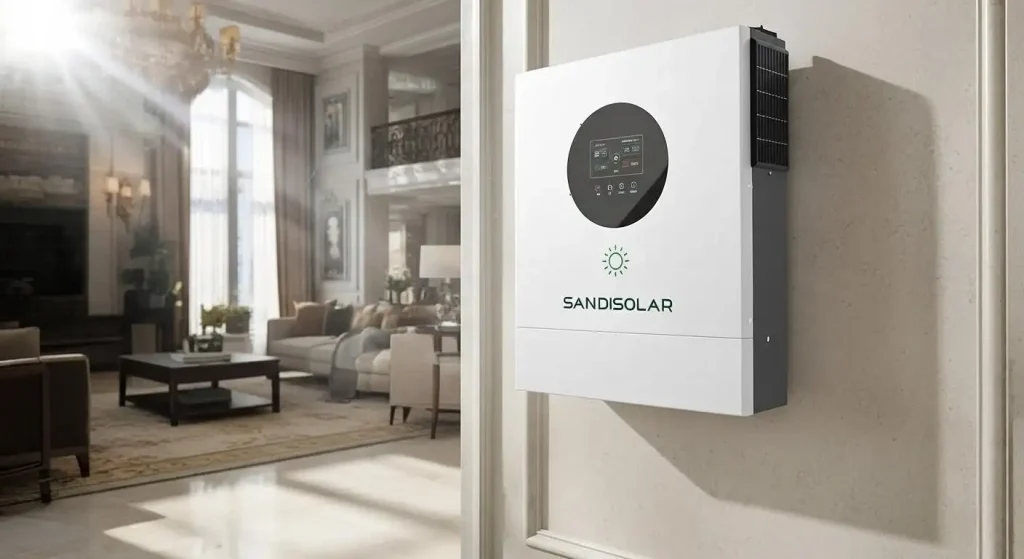
How to Size an Off-Grid Inverter Without Guesswork
Sizing missteps hurt. Oversize and you overspend; undersize and you struggle every day. Focus first on two numbers: continuous power and surge power.
It’s the continuous rating that carries normal operation when loads overlap. Surge power handles short bursts when motors and compressors start. If surge capacity is too low, the inverter may trip, the load may fail to start, or the system may reset.
This is why surge ratings are meaningful in product selection. For example, SANDISOLAR’s 11kW (11KVA) 48V pure sine wave off-grid inverter is designed for 230VAC input voltage and lists a 22,000VA surge power output. That surge headroom can help start demanding loads more smoothly, especially when refrigerators or workshop tools cycle on.
For mid-range needs, our 6.2kW (6.2KVA) 48V pure sine wave model is also designed for 230VAC input voltage and lists 12,400VA surge power output. That level often fits many home, cabin, or light commercial scenarios when users plan loads realistically.
If you prefer 24V systems for compact installations, SANDISOLAR also offers options such as 4.2kW 24V models with built-in WiFi, which can suit smaller footprints and phased upgrades.
A simple way to start your sizing list is to note:
• Your essential loads (always on)
• Your motor loads (high surge)
• Your planned expansion (future loads)
Building a Flexible System With Solar, Lithium, and Generator Support
Off-grid does not mean “solar only.” Many reliable systems combine solar, batteries, and a generator for tough seasons. Flexibility matters because each site has different weather patterns, usage habits, and budget stages.
SANDISOLAR off-grid inverters are designed to work with low or high voltage lithium battery systems, and certain designs can operate without a battery depending on the application. This can help users start with solar-first operation and add storage later when the budget or usage requires it. It also supports phased upgrades without replacing the core inverter.
Generator integration is another practical tool, not a setback. With AC input for generator compatibility, the inverter can coordinate hybrid operation so the system remains stable when solar energy is limited. In many regions, this approach improves reliability while reducing generator run time.
Useful planning principles include:
✅ Start with a solar-first strategy for daytime loads, then add battery capacity for steady nights
✅ Employ adjustable charge/discharge settings to protect lithium investment
✅ Keep generator capability in the mix for resilience during extended low-sun events
A well-planned hybrid system feels smoother because the inverter maintains safe, steady output while sources change behind the scenes.
Where Off-Grid Inverters Work Best and How to Request a Smart Quote
Off-grid inverters provide the greatest benefit where the grid is unreachable, unreliable, or too expensive to bring in. Typical applications include:
✅ Remote Homes & Cabins
✅ Rural Farms
✅ Mobile Homes & RVs
✅ Remote Offices & Worksites
✅ Telecommunication Towers
✅ Emergency Backup Power
✅ Marine & Offshore Platforms
Since 2008, SANDISOLAR has focused on broader clean energy applications, including PV modules, inverters, batteries, energy storage systems, EV charging, and integrated “solar-storage-charging” solutions. We support product R&D, production, and customization for overseas markets, and we continue to expand globally with a service structure that helps customers plan, deploy, and maintain systems more confidently.
CTA (Call-to-Action): If you are comparing options and want a clearer answer faster, contact SANDISOLAR for a Quick Quote. Send three items: (1) your essential loads list, (2) any motor loads that need surge support, and (3) your solar array and battery plan (current or future). Our Off Grid Inverter Factory team can recommend a pure sine wave inverter with practical surge headroom, MPPT and PV input alignment, and monitoring choices—so your power stays safe, stable, and ready to scale.
Share on Social:


Contact Us
In This Article
Related Posts
48V 6kW Off Grid Inverter: Why 48V Battery Systems Are Common for Higher-Power Solar Systems
August 31, 2026
Residential Solar System Installation: Technical Sizing, System Matching and Installation Guide
August 31, 2026
48 Volt Inverter for Solar Battery Storage: Key Specifications Buyers Should Compare
August 27, 2026